French Crop Haircut:
Does It Suit Your Face Shape?
Styles, Barber Talking Points & How to Style It
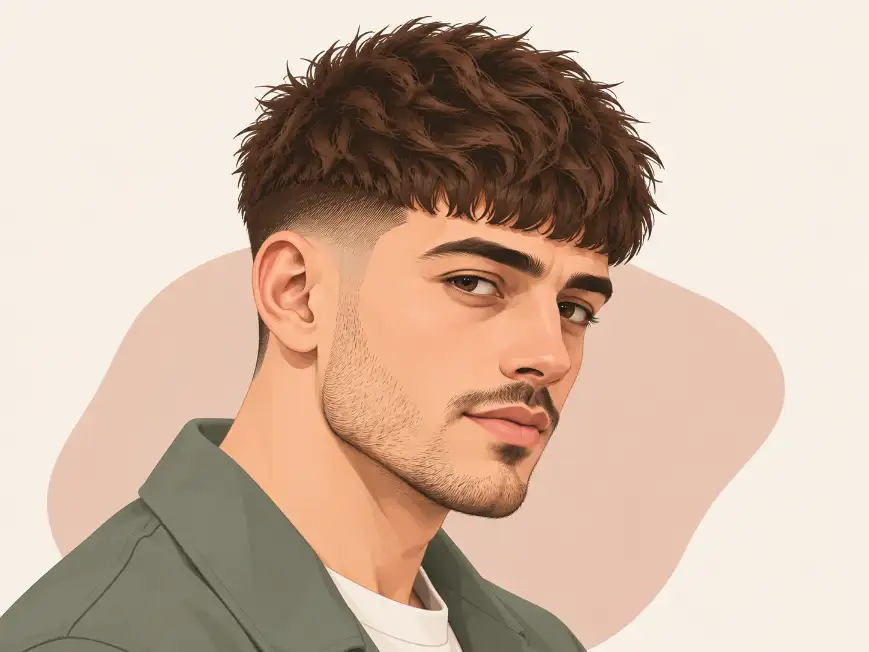
A French crop haircut pairs short, faded sides with a short, textured top and a blunt fringe swept forward across the forehead. It's low-maintenance compared to longer styles, works on most hair types, and reads as sharp without looking severe. This guide covers what actually defines the cut, how it compares to a Caesar and a crop top fade, which face shapes it suits and which need small adjustments, and how to ask for it — and style it — once you're in the chair.
If you want a wider roundup of cuts beyond this one, our men's hairstyles by face shape guide covers more options side by side. This guide goes deeper on the French crop specifically — the cut, the fade choices, and the styling routine.
What Is a French Crop?
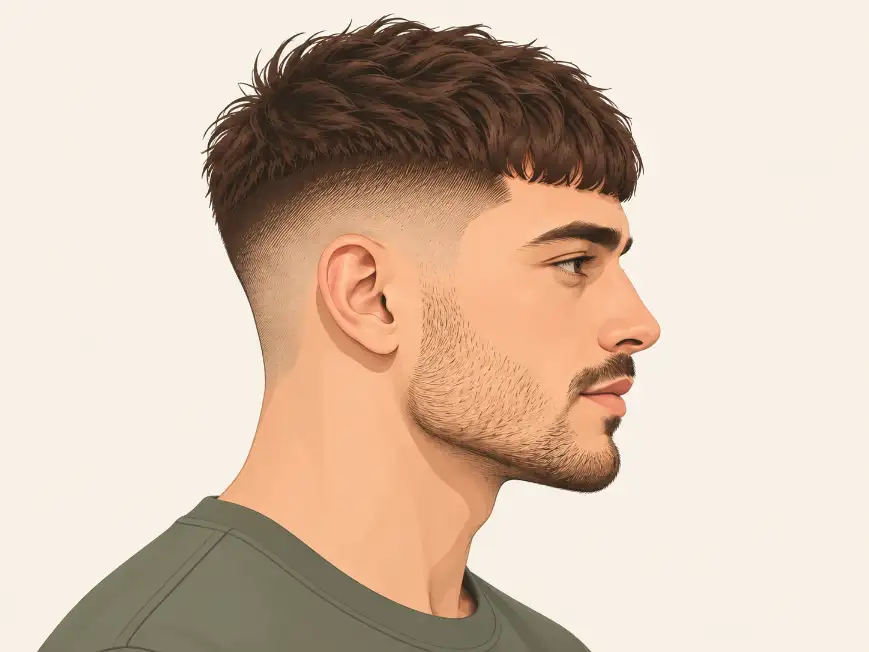
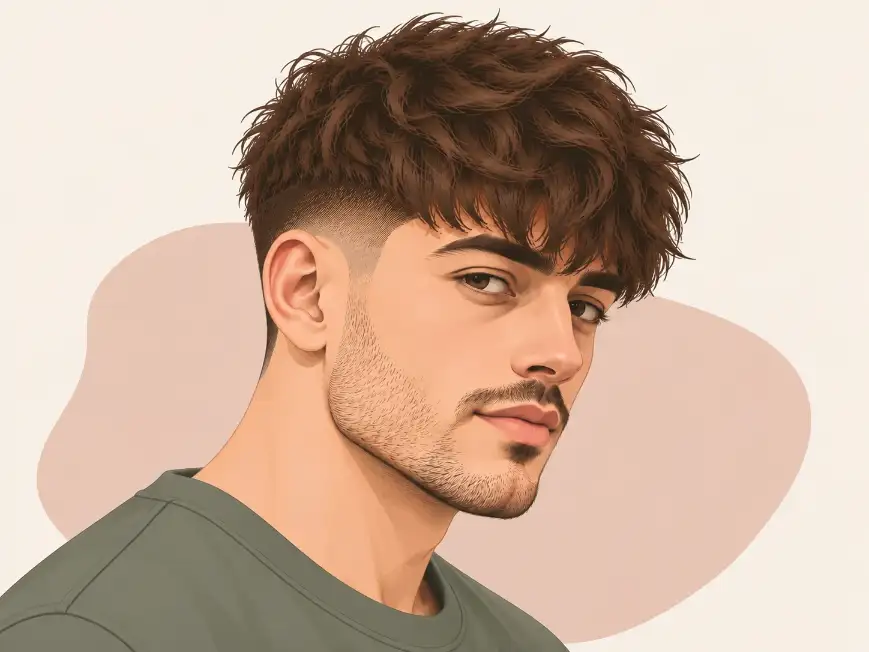
The three parts of a French crop: faded sides, short textured top, and a blunt fringe swept forward.
A French crop haircut is built from three parts. The sides are faded or tapered short, usually shorter than the top. The top is kept short and textured, generally an inch or less, with enough length left at the front to work with. The fringe is the defining feature — it's cut with a straighter, blunter edge than a typical textured crop and swept forward to sit just above the eyebrows, rather than left to fall loosely or styled up and back.
Without that forward, blunt fringe, the cut is closer to a plain crop or a Caesar. The fringe is what a barber is listening for when you ask for a French crop specifically, rather than "a crop" or "something short and textured."
French Crop vs. Caesar vs. Crop Top Fade
These three cuts get confused because they all involve short sides and a short top. The differences come down to the fringe and how much contrast there is between the top and sides.
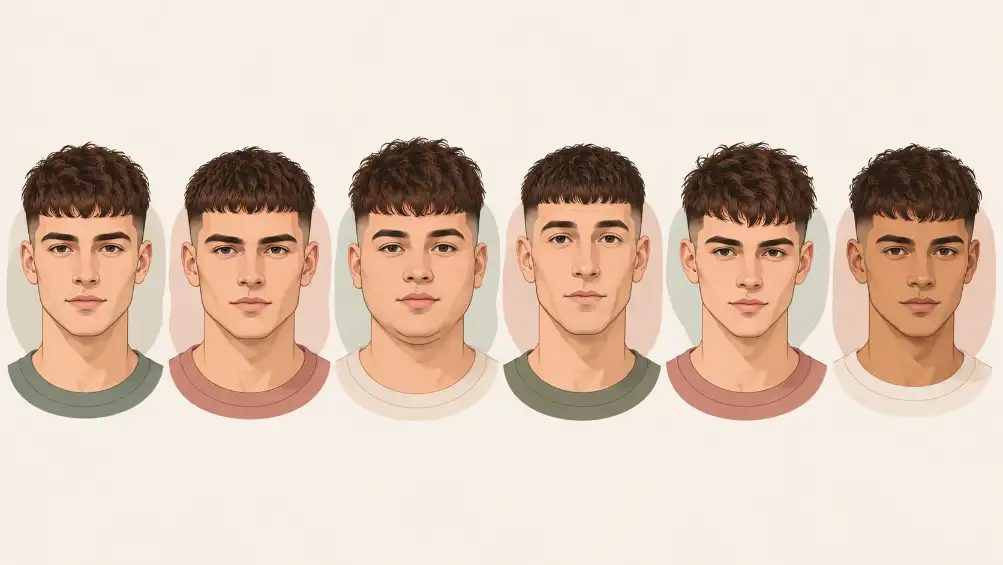
Fringe weight, texture, and fade height are what separate a French crop from a Caesar or a crop top fade — see the table below for how each one differs.
| Cut | Sides | Top | Fringe |
|---|---|---|---|
| French crop | Faded or tapered, usually short to mid | Short, textured, cut with weight kept at the front | Blunt, forward-swept, sits just above the brows |
| Caesar cut | Short, tapered, less commonly a hard fade | Very short, uniform length all over | Short and straight, but not styled forward or built up |
| Crop top fade | Fade, often mid to high or skin | Textured crop, no particular forward direction required | Optional — many crop top fades have no distinct fringe at all |
Does a French Crop Suit Your Face Shape?
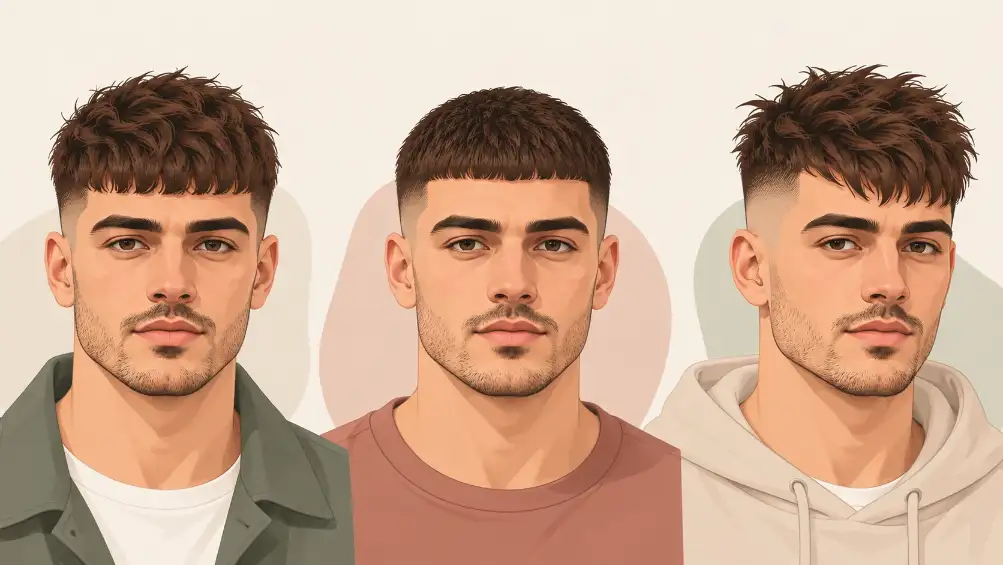
The same cut reads differently across face shapes — fringe weight and fade height are the two levers, covered in the table below.
These are stylist conventions rather than fixed rules — a good barber will still adjust based on your hairline, hair density, and how you actually want to look, not just your face shape on paper.
| Face Shape | Verdict | Adjustment |
|---|---|---|
| Oval | Suits almost every version | Balanced proportions mean fringe length, fade height, and texture level are all flexible. |
| Square | Suits well | A textured, slightly broken-up top and fringe keep it from reading as too blocky against a strong jaw. |
| Round | Works with adjustments | Add height and texture on top, keep sides tight with a mid or high fade, and avoid a heavy flat fringe that widens the face. |
| Oblong | Works with adjustments | The fringe shortens the look of the forehead. Keep the top lower and skip high fades, which add visual length. |
| Heart | Works with adjustments | The fringe balances a wider forehead. Avoid sides faded too tight, which can expose more forehead width. |
| Diamond | Works with adjustments | A textured fringe softens prominent cheekbones. Skip a very tight skin fade, which draws more attention to the cheekbone line. |
| Triangle | Suits well | Volume kept at the top and a fringe with some width help balance a heavier jawline. |
Not Sure of Your Face Shape?
The table above only helps once you know which shape you're working with. Our free AI face shape detector gives you a result from a single photo, and the built-in hairstyle preview lets you try on a short textured crop against your own photo before your next appointment — it doesn't render the French crop's exact fringe line yet, but it's a close enough preview of the base cut to gauge fit.
See the full men's hairstyles by face shape hub for more cuts beyond this one.
Does Your Hair Type Work for a French Crop?
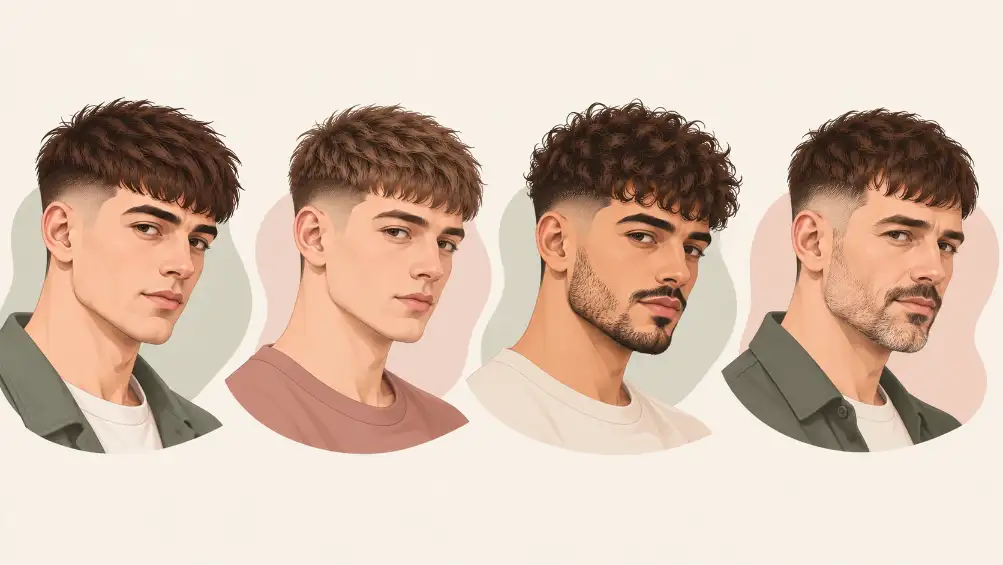
Fringe density and top texture change with hair type — see the breakdown below for thick, fine, wavy/curly, and thinning hair.
- Thick hair — holds the fringe shape well and gives a barber more to texturize; ask for extra thinning at the crown if the top feels heavy.
- Fine hair — can look thin once faded sides remove the visual bulk that hides low density elsewhere; a slightly longer top with texturizing spray can compensate.
- Wavy or curly hair — needs more length left in the fringe than straight hair, since curl pattern shortens the visible length once dry; a curl-specific stylist or barber will account for this.
- Thinning or receding hairline — a forward fringe can disguise mild to moderate recession by covering the temples and hairline; heavy recession limits how full the fringe can look, since there's less density to work with at the front.
French Crop Variations
The core shape stays the same across these — what changes is texture level, fade height, and how precisely the fringe is cut.
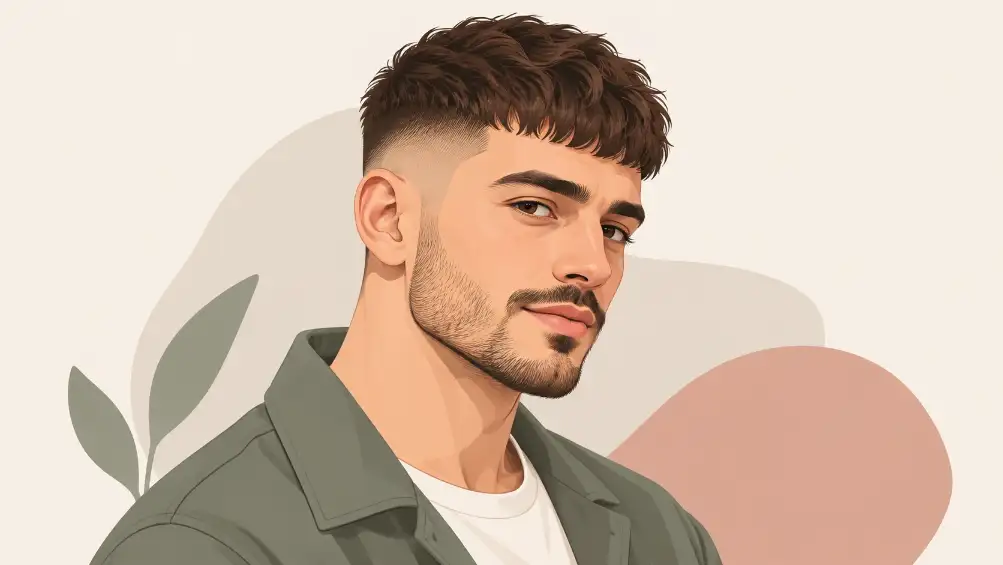
Textured French crop
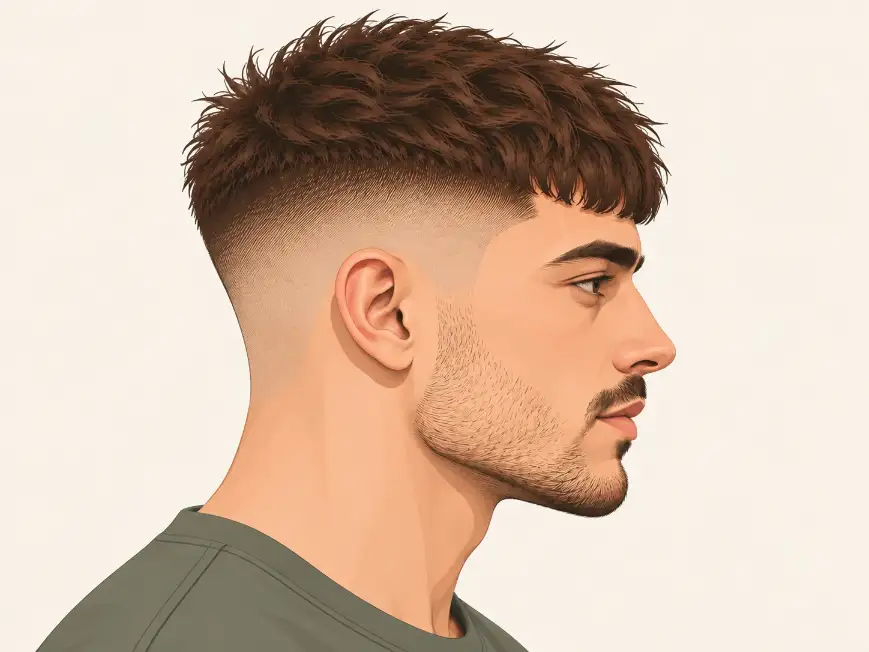
French crop fade
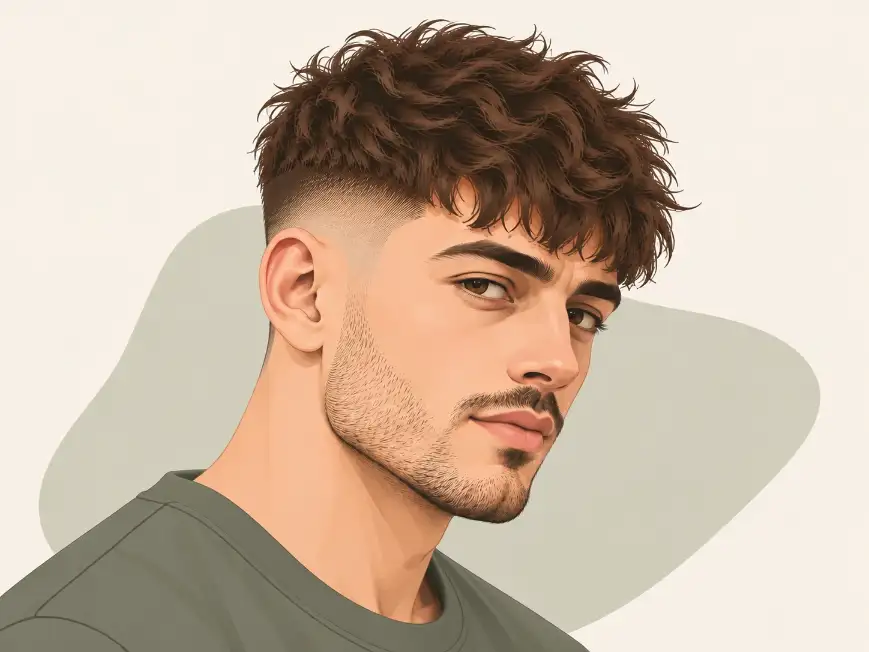
Messy French crop
Long fringe French crop
- Textured French crop — heavier texturizing throughout the top and fringe for a choppier, less uniform edge. Reads more casual.
- French crop fade — pairs the crop with a more dramatic fade, from mid to high to skin, for more contrast between top and sides.
- Messy French crop — a looser, undone fringe instead of a sharp blunt line. Lower daily styling effort.
- Long fringe French crop — leaves more length at the front for a fuller fringe, while keeping the rest of the top short.
Choosing a Fade Height for a French Crop Fade
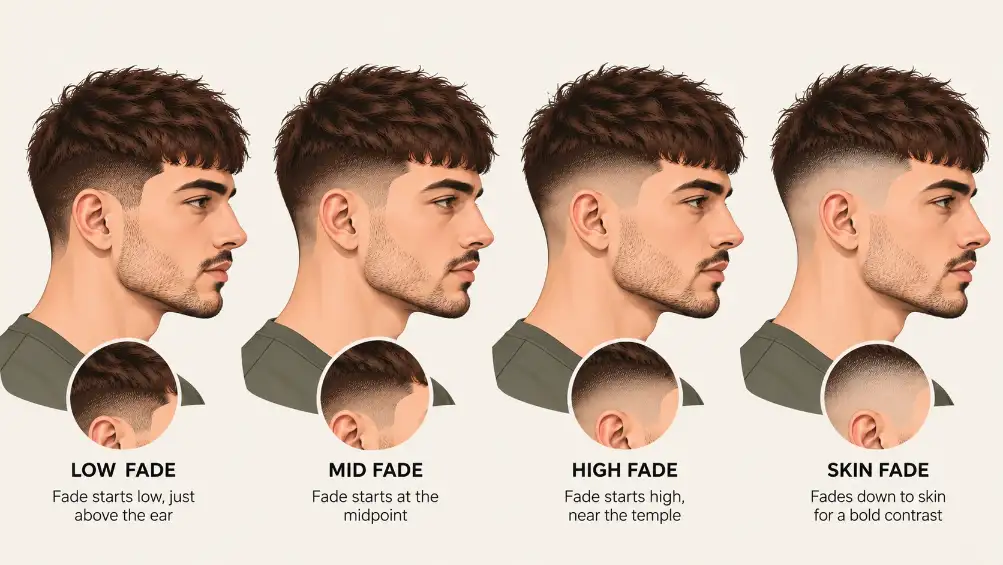
A low fade keeps most of the length on the sides and reads as more conservative. A mid fade is the most common default for a French crop, giving a clear line without much drama. A high fade or skin fade creates the most contrast against the top and tends to add visual height, which is useful on a round face and less useful on an already long one.
What to Tell Your Barber
Being specific about four things gets you a French crop rather than a generic short cut:
- 1Name the sides and the fade height — say 'French crop with a mid fade' or similar rather than 'short on the sides' — fade height is one of the biggest variables in how the finished cut looks
- 2Give a rough top length, not just 'short' — clipper guard numbers vary by brand and by how a barber measures, so a length in fingers or a reference photo communicates more reliably than a guard number alone
- 3Point at your eyebrows for the fringe line — 'just above the brow' is specific enough for most barbers to work from, and prevents a fringe cut shorter or longer than you pictured
- 4Say how much texturizing you want — more texturizing thins the top and softens the fringe edge; less texturizing keeps a denser, blunter look — this is a preference call, not a technical requirement
[TODO: barber quote — a working barber's take on the most common miscommunication when clients ask for a French crop]
How to Style a French Crop
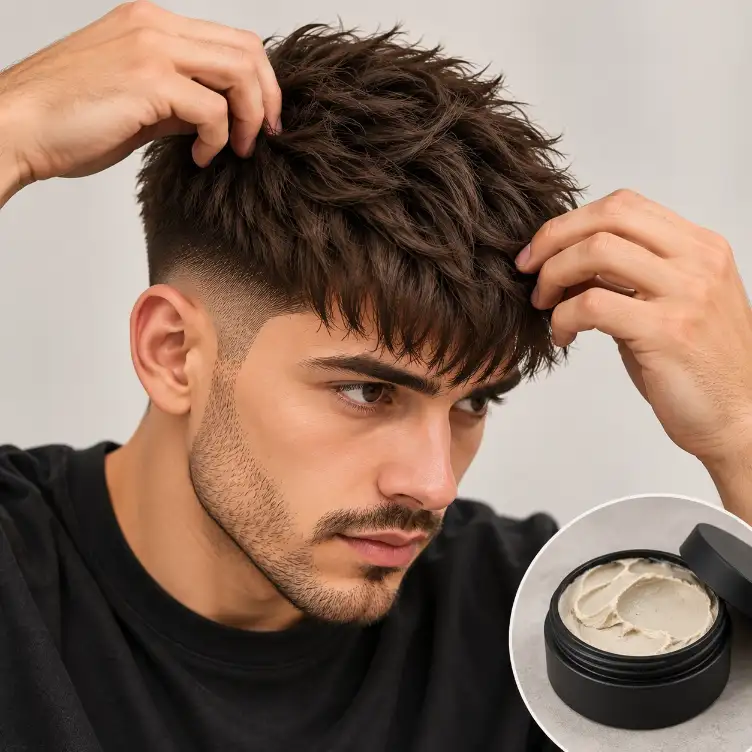
The right product depends on hair type. Matte clay or paste suits thick or coarse hair and gives a firm, non-shiny hold. A lighter cream or pomade works better for fine hair, since heavier clays can weigh it down. Wavy or curly hair generally does better with a cream that adds definition without flattening the natural texture.
- 1Start with towel-dried, not fully dry, hair — product distributes more evenly through slightly damp hair, and it gives more control over the fringe direction while it dries
- 2Work a small amount of product through with your fingers, not a comb — fingers distribute product unevenly on purpose, which keeps the texture looking natural rather than slicked
- 3Comb or press the fringe forward and slightly down — this sets the forward direction that defines the cut — skipping this step is what makes a French crop look like a plain crop instead
- 4Finish with a blast of cool air while holding the fringe in place — cool air locks the direction in place better than warm air, which can relax the hold before the product has set
[TODO: author first-hand note — which product and hold level has worked best for the author's own hair type]
Maintenance and Grow-Out
Most people get a French crop trimmed every three to four weeks. The fade is usually what determines when a trim is overdue, since faded sides grow out and lose their clean line faster than the top does. As the cut grows out, the fringe gets longer and softer rather than losing its shape outright, which makes a French crop reasonably forgiving between appointments compared to cuts that rely on a sharp fade staying crisp.
Frequently Asked Questions
What is a French crop?
What is a French crop haircut, exactly, and how is it different from a regular crop?
How do you style a French crop?
Does a French crop suit a round face?
Can you get a French crop with a receding hairline?
How often do you need to get a French crop trimmed?
The Short Version
A French crop is a short, faded cut defined by its forward fringe. It suits oval, square, and triangle face shapes without much adjustment, and works on round, oblong, heart, and diamond shapes once fringe weight and fade height are tailored to the face. Being specific with your barber about fade height, top length, fringe line, and texturizing is what separates a French crop from a generic short haircut.
Further Reading
Reviewed by [TODO: reviewer name and credential]

Naeem Ullah
Founder, Face Shape Detector • AI & Facial Proportion Researcher
Founder of faceshapedetector.app · 4+ years in facial proportion research · 200,000+ monthly readers
Naeem Ullah is the founder of Face Shape Detector and has spent over four years researching how facial landmark geometry translates into practical styling decisions. His work draws on training principles from professional hairstyling, optician certification programs, and academic literature on facial symmetry and proportion. He built the face detection system at the core of this tool and personally writes and reviews every styling guide published on this site. His guides are read by over 200,000 users monthly across 140+ countries.
Open TODOs on this page
- [TODO: barber quote — common miscommunication when asking for a French crop]
- [TODO: author first-hand note — product and hold level for the author's own hair type]
- [TODO: reviewer name and credential for the "Reviewed by" line]