How to Trim a Beard
with Clippers
Guard Progression, Neckline Setup & Cheek Line Technique
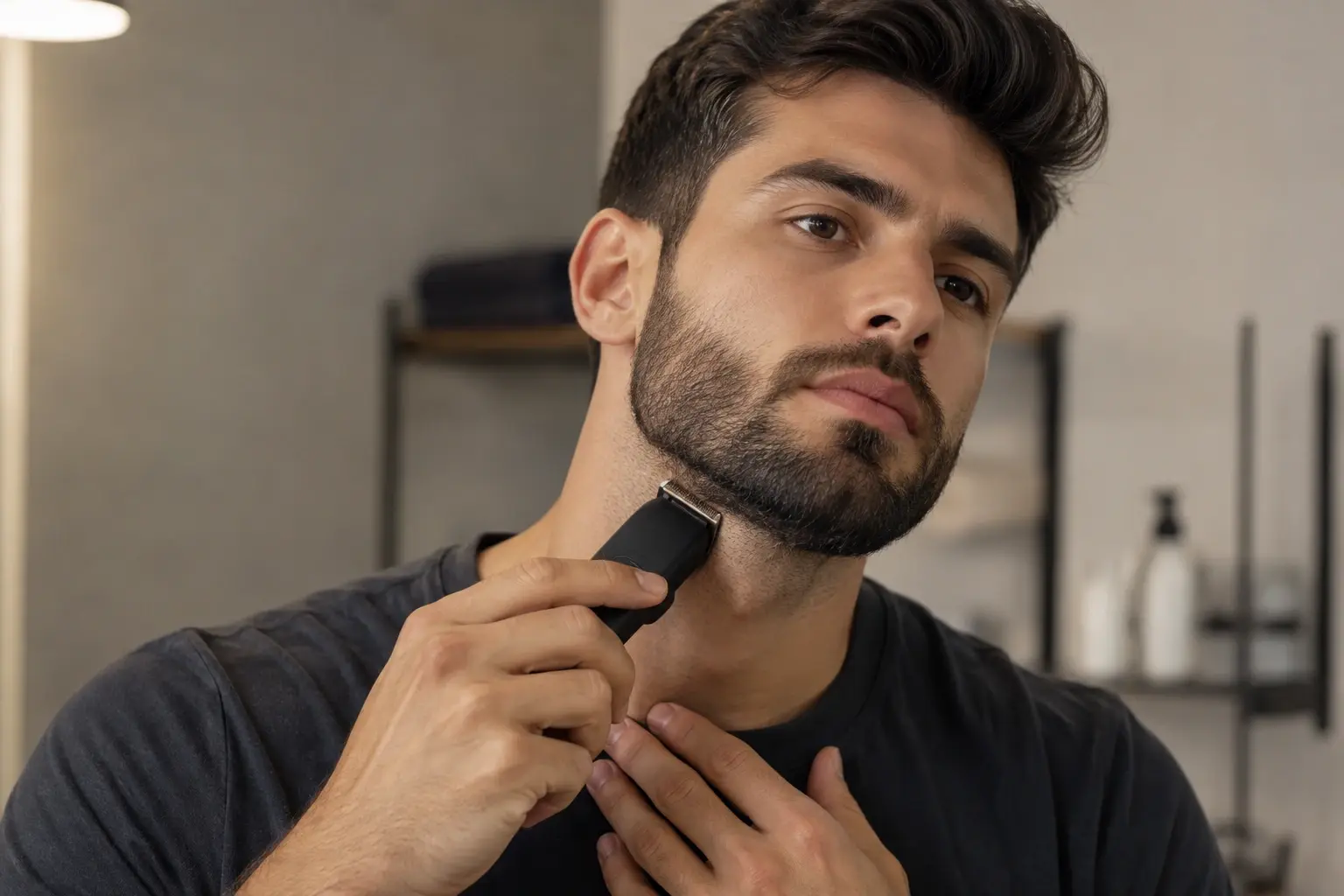
Most bad beard trims aren't a styling problem — they're a technique problem. The shape you're aiming for matters, but so does the order you work in, which tool you reach for at each stage, and how carefully you set the neckline and cheek line before you touch a guard to your jaw. This guide covers the mechanics: how to take a long beard down to length, when to use clippers versus scissors, and how to set clean lines without overcorrecting.
This is a technique guide, not a style guide — it applies the same way regardless of your face shape. If you haven't settled on a target length and silhouette yet, our beard styles by face shape guide covers which shapes and lengths tend to work best for each face shape before you start cutting.
What You Need Before You Start
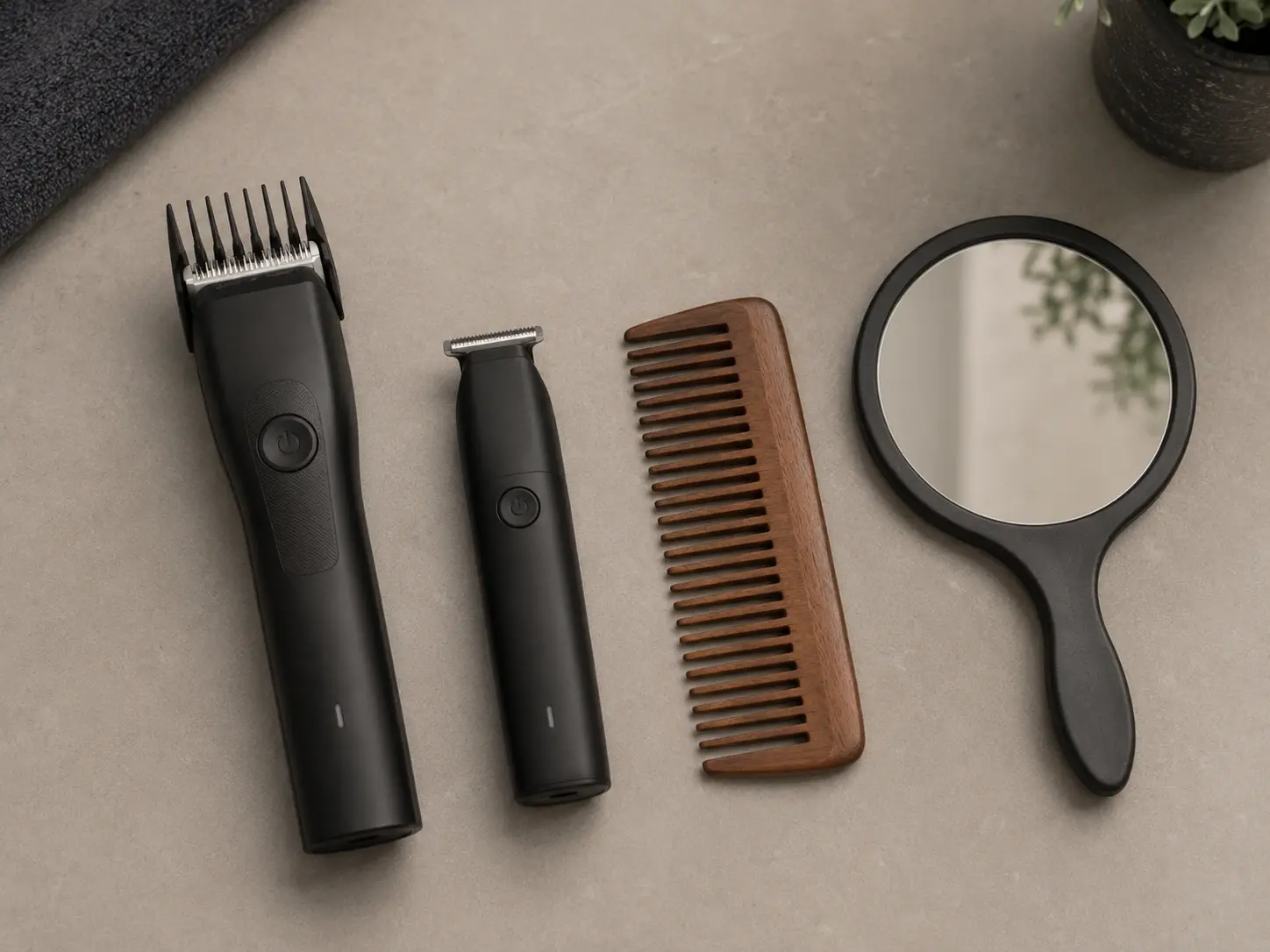
A basic clipper set with a full range of guard attachments (typically numbered by length in eighths of an inch) covers the majority of the work. A separate detail trimmer with a narrow, foil or T-blade head is what makes the neckline and cheek line precise — full-size clippers are too wide to edge cleanly around the jaw and neck. A wide-toothed comb is essential for combing the beard into position before each pass, and good, even lighting (ideally from more than one direction, to avoid shadows hiding unevenness) matters more than any single tool.
A pair of sharp barber scissors is worth having for the mustache and for isolated stray hairs, even if the bulk of the trim is done with clippers.
How to Trim a Long Beard Down to Length
Taking a long or overgrown beard down to a target length works best as a staged process rather than a single pass at the final guard size. Cutting straight to your target length in one go leaves no room to catch unevenness before it's already been trimmed too short.
- 1Comb the beard flat, against and then with the grain — this shows you the true, uncompressed length and reveals which areas are longer or patchier than others before you cut anything
- 2Start one or two guard sizes longer than your actual target — trimming the whole beard evenly at a slightly longer length first gives you a safety margin to correct unevenness on the next pass
- 3Move the clipper against the direction of growth for an even cut, with the grain for a softer, more natural edge — against-the-grain passes remove more hair per stroke; with-the-grain passes are gentler and better suited to the final finishing pass
- 4Step down one guard size at a time, recombing and reassessing after each pass — reassessing before dropping further is what prevents the most common trimming mistake — going too short because an earlier pass looked uneven when it was actually just uncombed
- 5Finish at your target guard length only once the whole beard is visibly even — an even, slightly longer beard looks better and is easier to correct than an uneven beard already cut to final length
Clippers vs. Scissor-Over-Comb
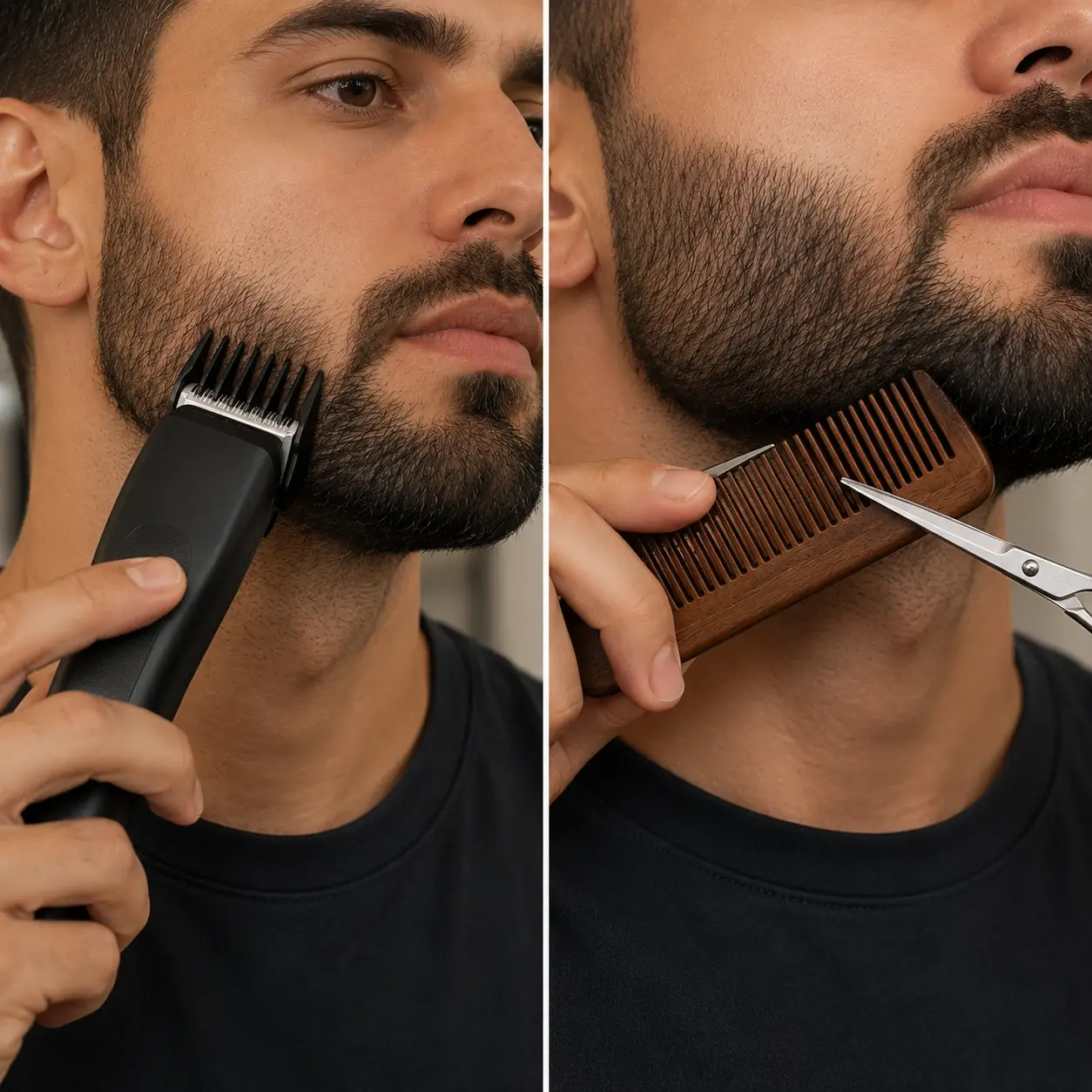
Clippers with guards are the right tool for reducing overall length, especially on a long or overgrown beard, because a guard sets a consistent length across a wide area in a single pass. Scissor-over-comb — combing a small section of hair up and away from the skin, then cutting above the comb's teeth — trades that speed for much finer control over length in small increments.
In practice, most people get the best result by combining both: clippers with guards to do the bulk of the length reduction and even out the overall shape, then scissors for the mustache, for blending small transition areas, and for isolated stray hairs that a guard would either miss or overcut. Once a beard is at maintenance length, scissor-over-comb alone can handle routine upkeep without clippers at all.
Setting the Neckline
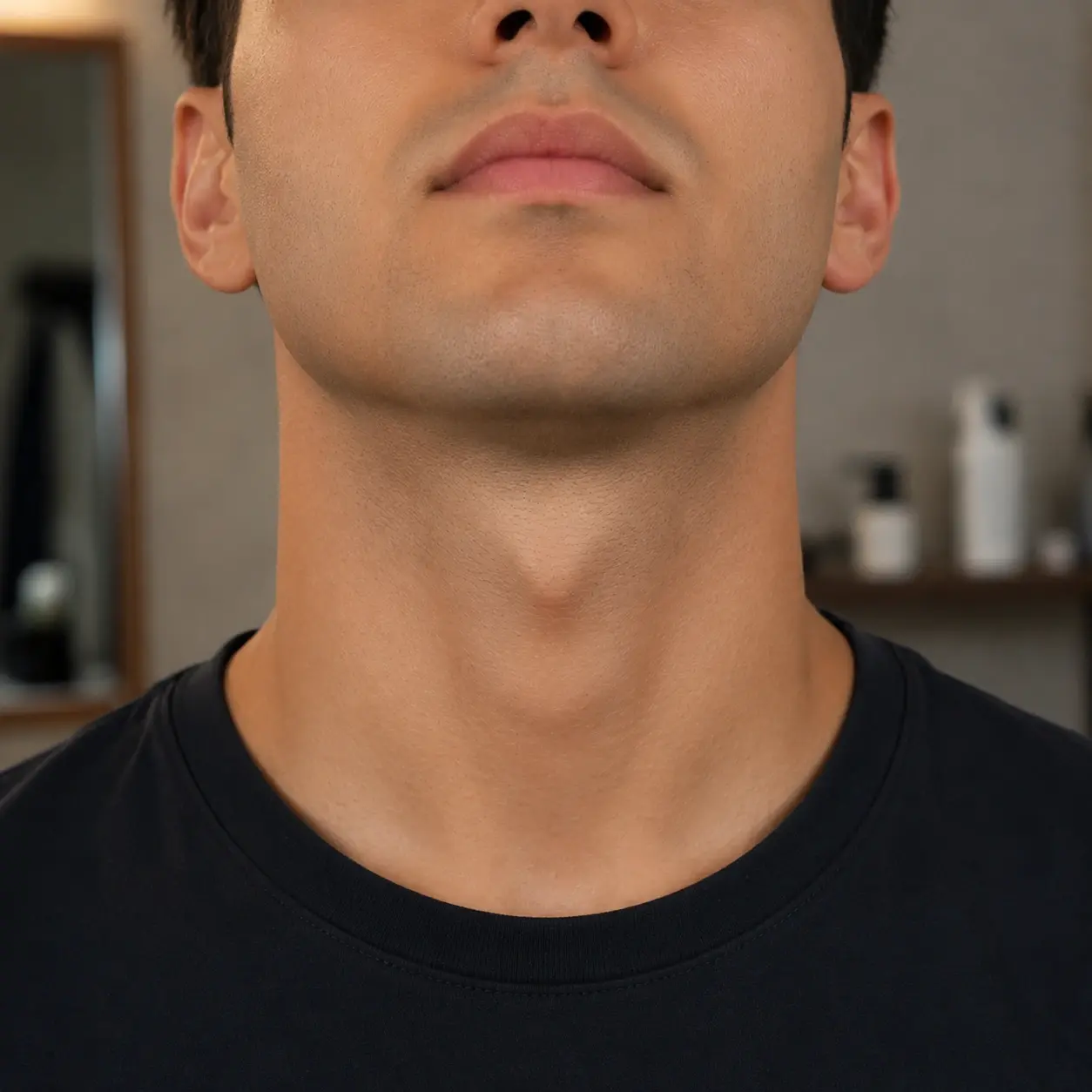
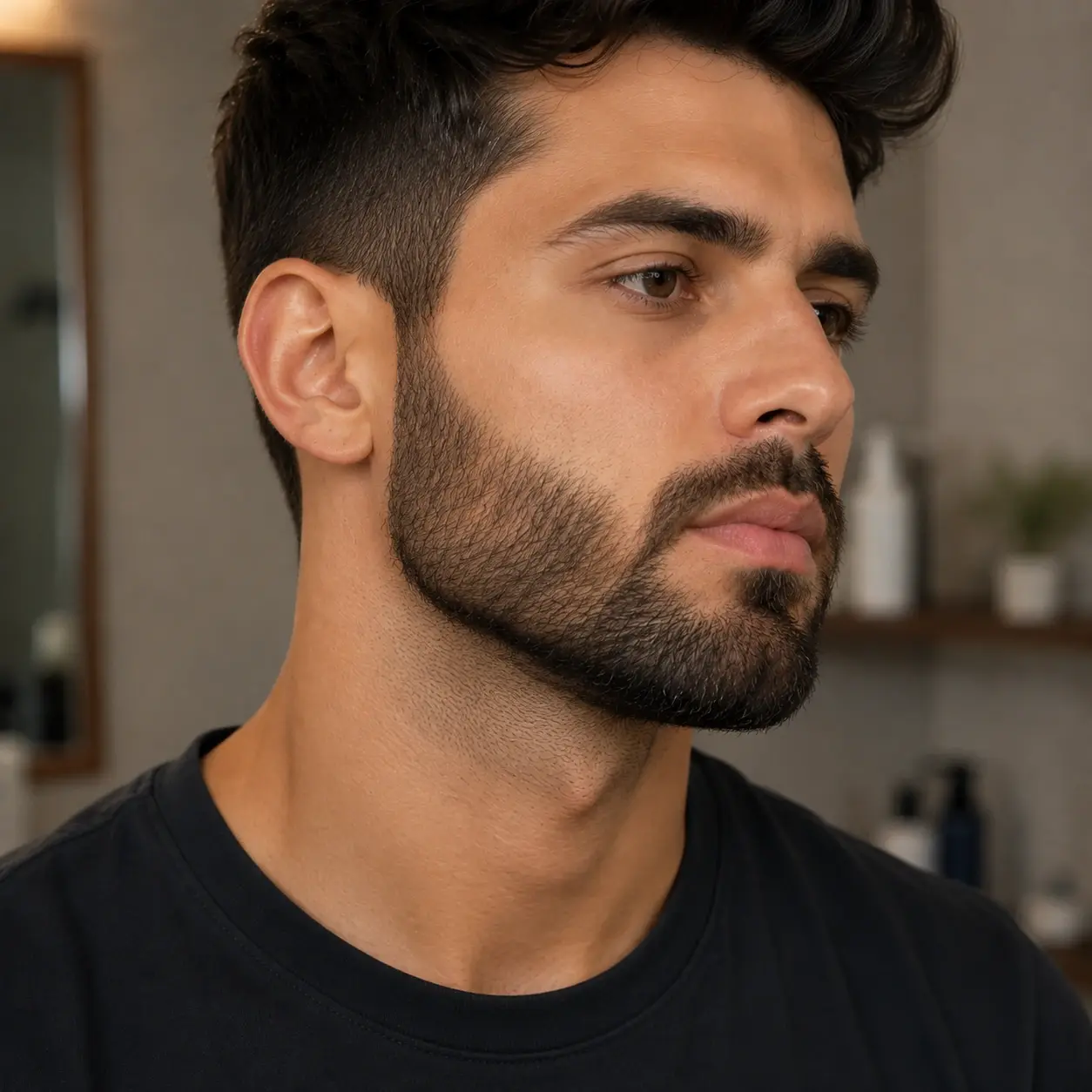
The neckline is where most self-trims go wrong, because it's the one area cut without a mirror showing a direct, unreversed view. Find the baseline first: place two fingers horizontally above your Adam's apple, and that's roughly where the neckline should sit. Clean everything below that line with the trimmer set to its shortest guard or a razor, following the natural curve of your jaw rather than cutting a straight line across the neck.
A neckline set too high makes the jaw look smaller and the neck look thicker. One set too low leaves a heavy, undefined transition between beard and neck with no visible line at all. Tilt your head back slightly to expose the area evenly, and work in short, controlled strokes rather than long ones — a stray long stroke here is the hardest mistake to fix quickly.
Adjusting the Neckline for Your Face Shape
The two-finger baseline above is a starting point that works for most faces. Some face shapes benefit from a deliberate adjustment — a slightly lower neckline for round faces, or a cleaner, higher line for triangle faces, for example. Rather than repeat that breakdown here, see the full neckline placement by face shape section for the shape-specific detail.
Defining the Cheek Line
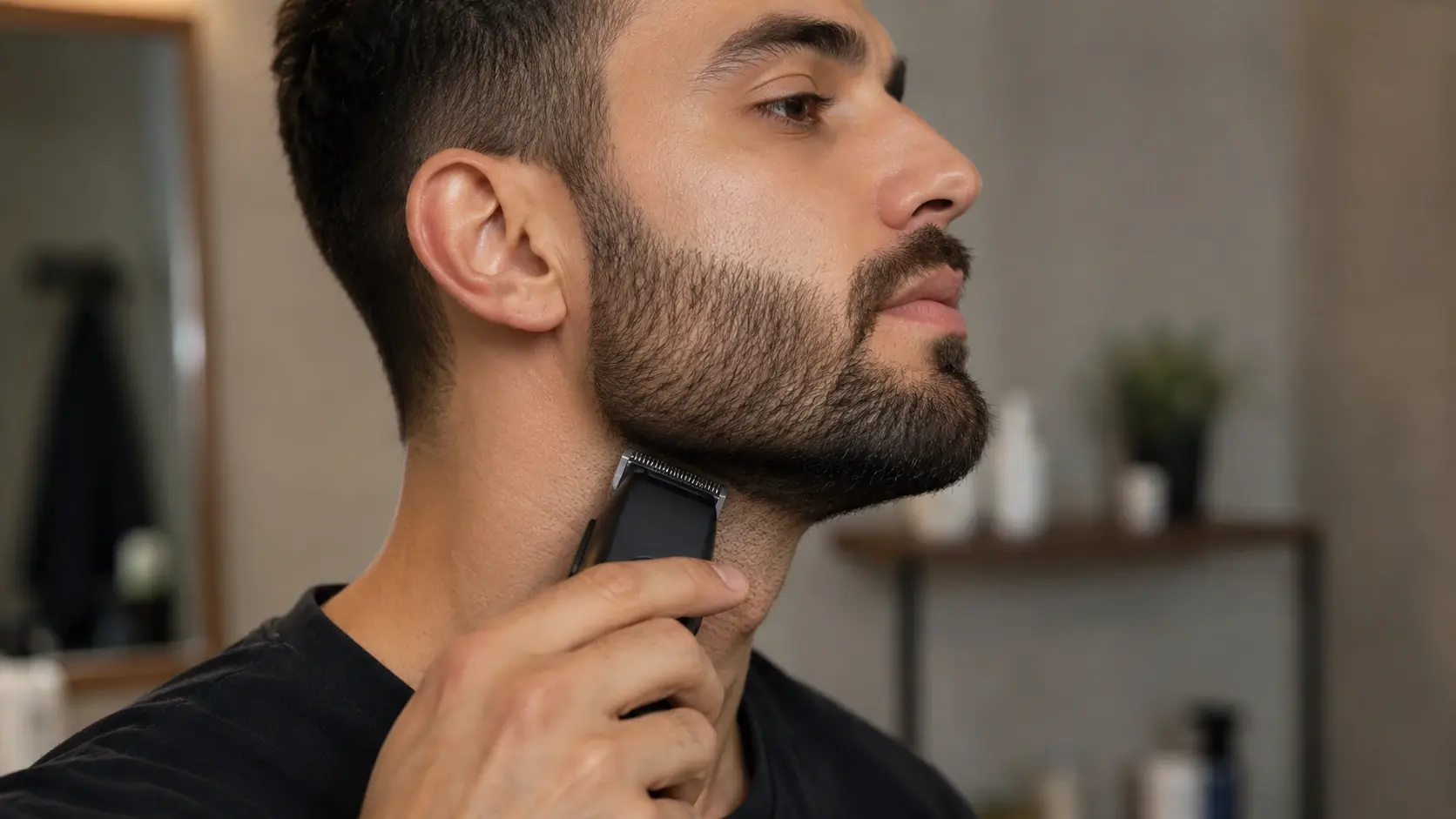
Unlike the neckline, the cheek line generally looks better soft than sharply defined — a beard that transitions naturally into the cheek reads as intentional at almost any length, while an aggressively shaved-in line looks harsh and draws attention to any patchiness above it. Use a trimmer with a guard, not a bare blade, to soften the upper edge of the beard along the cheekbone rather than shaving it clean.
Work gradually and check both sides in the mirror before committing to a line — cheek lines are one of the easiest places to end up asymmetrical, since most people have a dominant hand and unconsciously trim more aggressively on one side.
Keeping the Shape Once You Have It
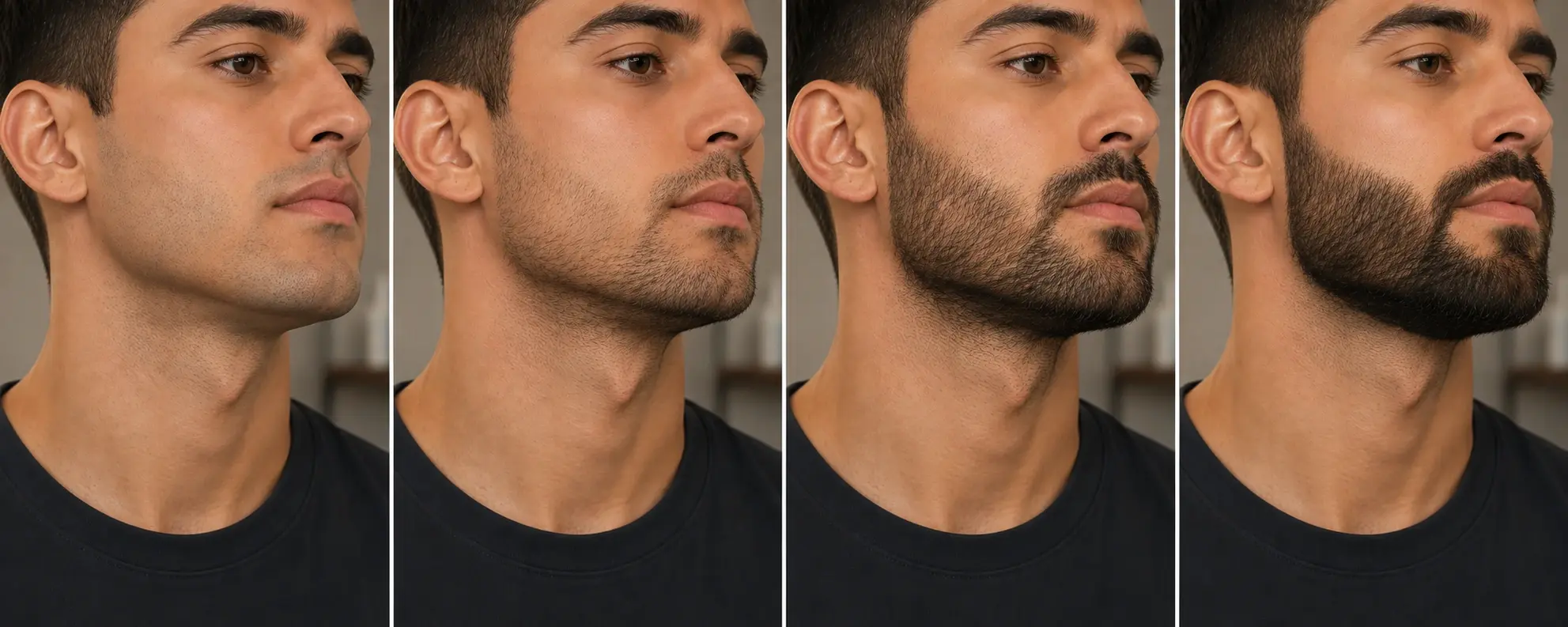
Once a beard has reached its target length and shape, the technique above scales down to routine upkeep: the same guard setting weekly to hold the overall length, with the neckline and cheek line touched up more often since stray growth there is the most visible sign of an ungroomed beard. Beard growth isn't perfectly even, so without this upkeep the silhouette drifts within a few weeks even if the length barely changes.
Beyond Trimming Technique
Trimming keeps a beard in shape, but the day-to-day grooming routine underneath it — washing, oiling, and how long to let new growth settle before judging a style — is covered in the grooming basics section of our beard styles by face shape guide.
Technique Is Universal — Length and Shape Aren't
Every technique in this guide — guard progression, clipper direction, neckline placement, cheek line softening — applies the same way no matter your face shape. What does depend on face shape is which target length and overall silhouette you're trimming toward: some shapes benefit from more width at the jaw, others from a longer, narrower chin point.
Find Your Target Shape First
If you haven't identified your face shape yet, the free AI face shape detector gives you a result in seconds from a single photo. From there:
How We Approached This Guide
This guide covers general, widely established clipper and scissor technique in our own words — the mechanics of guard progression, staged length reduction, and edging are standard barbering fundamentals, not proprietary methods. Where this guide connects to face shape — which length and silhouette to aim for — we use the same landmark-based face-shape classification logic that powers the rest of this site, for consistency with our other styling guides.
Frequently Asked Questions
How short should you trim a beard neckline?
How often should you trim a beard?
Can you trim a beard with scissors only?
How do you trim a beard evenly?
How do you trim a long, overgrown beard for the first time?
Further Reading

Naeem Ullah
Founder, Face Shape Detector • AI & Facial Proportion Researcher
Founder of faceshapedetector.app · 4+ years in facial proportion research · 200,000+ monthly readers
Naeem Ullah is the founder of Face Shape Detector and has spent over four years researching how facial landmark geometry translates into practical styling decisions. His work draws on training principles from professional hairstyling, optician certification programs, and academic literature on facial symmetry and proportion. He built the face detection system at the core of this tool and personally writes and reviews every styling guide published on this site. His guides are read by over 200,000 users monthly across 140+ countries.