Written by Naeem Ullah·Face Shape Analyst, faceshapedetector.app·Reviewed March 2026
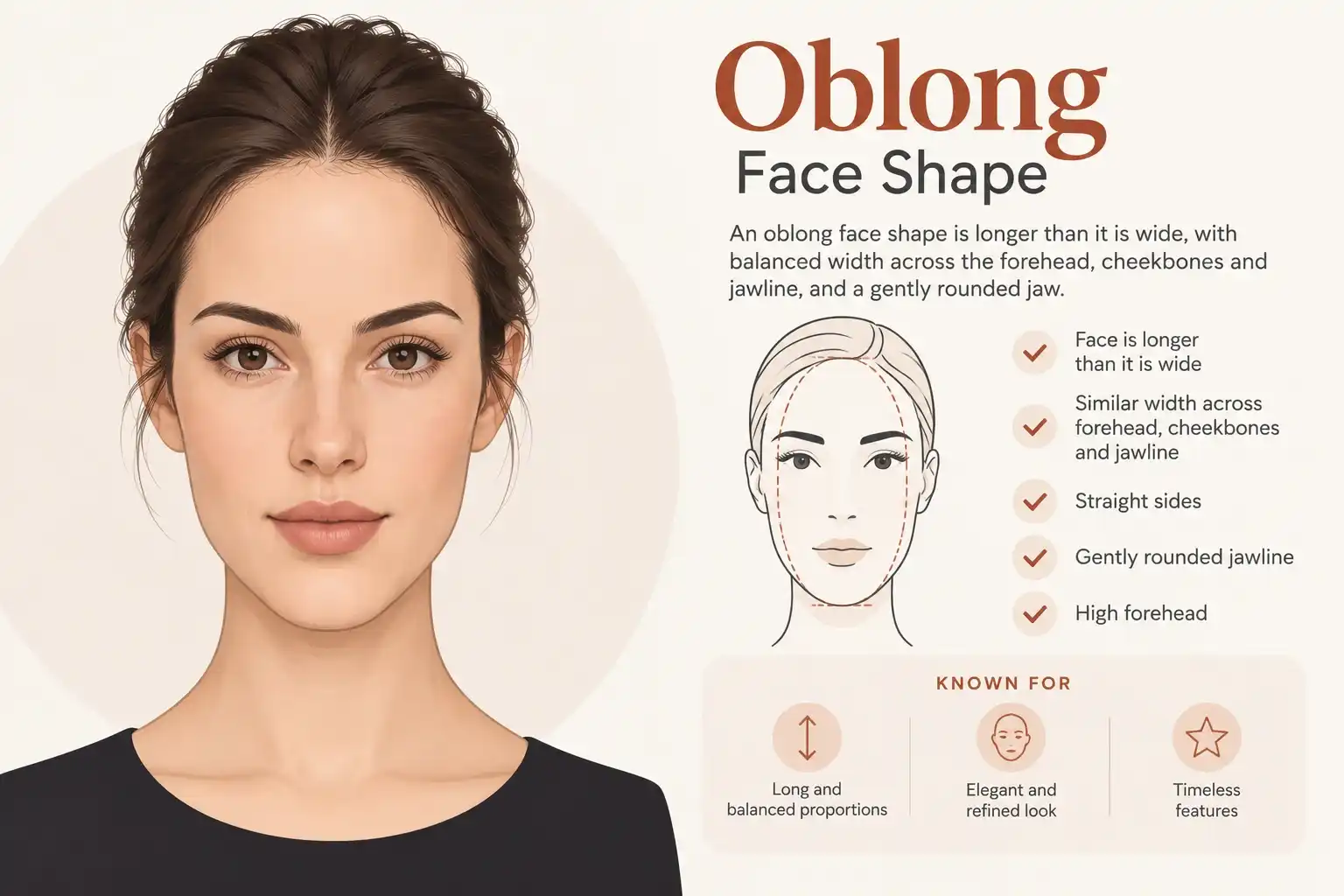
Oblong faces are noticeably longer than they are wide, with a forehead, cheeks, and jawline that are all similar in width. Unlike oval faces, which have a gentle curve and balanced proportions, oblong faces have relatively straight cheek lines and a more elongated overall silhouette. The styling goal for oblong faces is to add visual width and break up the length — shortening the appearance of the face through horizontal elements in hair, frames, and makeup.
The oblong face shape is sometimes confused with oval because both are longer than wide, but the key difference is in the cheek line and proportions. Oblong faces have flatter, straighter sides and a more dramatic length-to-width ratio. Hairstyles with horizontal volume — waves, curls, layers at cheek level — are the most effective tools for reducing the appearance of length. Full fringes or side-swept bangs also help by creating a horizontal line that shortens the upper face. Wide glasses frames and horizontal makeup techniques reinforce these effects.
What Is an Oblong Face Shape?
An oblong face shape is one where the face is noticeably longer than it is wide, with the forehead, cheekbones, and jawline all measuring roughly the same width. The sides of the face run in nearly parallel straight lines, and the chin is typically squared or flat rather than pointed.
Stylist's note: Oblong is the most commonly misidentified face shape overall: the majority of oblong-faced people believe they have an oval face, because both are longer than wide. The practical consequence is years of receiving styling advice calibrated for the wrong shape — and wondering why recommended cuts do not look quite right. The single most useful self-check: look at your cheek lines from the front. Oval has a slight inward curve at the sides; oblong has sides that run nearly parallel.
Want the full styling playbook — outfit pairing, contouring steps, and more? See our complete Oblong Styling Guide.
How to Identify an Oblong Face Shape
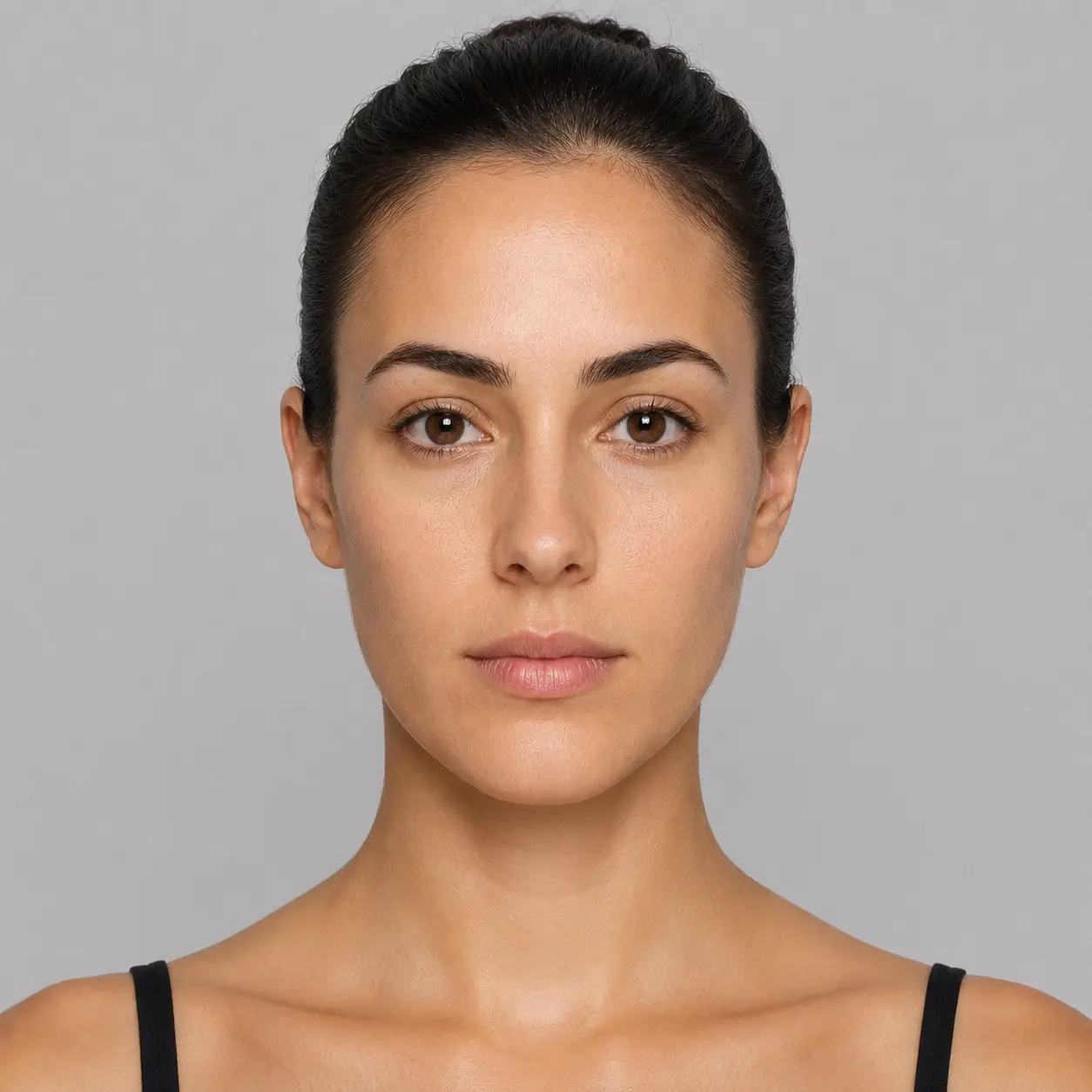
Pull your hair back and compare the width at your forehead, cheekbones, and jawline — for an oblong face, these measurements are all similar. Then compare face width to face length: the length from hairline to chin will be significantly greater than the width. The cheek lines are relatively straight rather than curved, and the chin is often somewhat squared or flat. If the length is clearly greater than width but the sides are straight, you likely have an oblong face.
Key characteristics
- 1Face length is significantly greater than width
- 2Forehead, cheeks, and jawline are all similar in width
- 3Straight, flat cheek lines with little inward curve
- 4Elongated overall appearance from hairline to chin
- 5Chin is often slightly squared or flat rather than pointed
Not sure which shape you have?
Best Hairstyles for Oblong Face Shape
The right haircut works with your natural proportions. Here are the best cuts for oblong faces — with separate recommendations for women and men:
Women's hairstyles
- ✓Full blunt fringe — creates the strongest horizontal line possible, visually shortening the face more than any other single change; the most effective cut for oblong faces
- ✓Chin-length bob with volume at the sides — adds horizontal width and ends at the face's midpoint rather than extending the elongation further downward
- ✓Waves and curls with side volume — the horizontal movement of waves adds width perception; styles with volume at the sides rather than the top are the critical distinction
- ✓Side-swept bangs with body at the sides — the partial fringe adds a horizontal anchor while body at the sides adds width; avoids the full-length exposure of no bangs
- ✓Shoulder-length styles with layers at cheek level — layers at this level add horizontal interest at the face's midpoint without extending further down to add length
Men's hairstyles
- ✓French crop — arguably the most effective single cut for oblong faces; the horizontal fringe directly and aggressively shortens the apparent face length
- ✓Low to mid fade with textured sides — retaining volume at the sides adds horizontal width; the main styling error for oblong men is high skin fades that remove all side volume
- ✓Side part swept sideways, not upward — horizontal direction of the part creates width impression rather than adding the height that oblong faces already have too much of
- ✓Horizontal fringe of any style — any cut that pushes some hair forward and down across the forehead shortens the long face; the exact style matters less than having a fringe element
- ✓Short back and sides with a wider, less structured top — spreads visual attention horizontally without adding crown height that would worsen the oblong proportions
Best Glasses for Oblong Face Shape
Choosing frames that complement — rather than compete with — your natural proportions makes a significant difference:
- ✓Wide frames that extend beyond the widest point of the face add horizontal width
- ✓Oversized rectangular and square frames create bold horizontal lines
- ✓Decorative upper frames draw attention across rather than down the face
- ✓Avoid narrow or small frames that emphasise length rather than adding width
- ✓Avoid very tall frames that add vertical visual weight to an already-long face
Makeup Tips for Oblong Face Shape
Contouring and highlighting can enhance the strengths of a oblong face and bring proportions into balance:
- ✓Contour along the very top of the forehead, blending 1–2cm into the hairline, to shorten its apparent height — the biggest single contributor to face length
- ✓Contour the cheekbones horizontally (not diagonally), blending straight toward the ear, to widen rather than slim the mid-face
- ✓A small amount of contour at the chin tip, blended softly downward, reduces apparent chin length
- ✓Apply highlighter across the cheekbones in a horizontal sweep from the outer eye corner to the temple — avoid the forehead top or chin tip, which would add length
- ✓Apply blush horizontally across the cheeks toward the ears, not diagonally upward, to reinforce width rather than height
- ✓Flat or gently arched brows keep the visual emphasis horizontal — a high arch adds unwanted vertical height
Styles to Avoid for Oblong Face Shape
These choices tend to work against the natural proportions of a oblong face:
- ✕Narrow or small glasses frames that emphasise the length rather than adding width
- ✕Long, straight hairstyles with no volume that elongate the face further
- ✕High crown volume that adds height to an already-long silhouette
- ✕Styles with no horizontal element — vertical lines in hair or frames worsen the effect
Accessories & Necklines for Oblong Face Shape
Beyond hairstyles and glasses, accessories and neckline shapes can reinforce or undermine your face shape balance:
- ✓Wide, statement earrings add horizontal width at face level — ideal for oblong faces that need horizontal balance
- ✓Choker necklaces create a strong horizontal line at the neck, effectively shortening the elongated face-neck proportion
- ✓Wide boat necklines and off-shoulder styles add horizontal visual weight at the shoulders, balancing the elongated face
- ✓Avoid very long pendant necklaces that add further vertical length to the already-elongated proportion
- ✓Wide-brimmed hats with flat or low crowns add horizontal emphasis and keep the vertical silhouette lower
Famous People with Oblong Face Shapes
Seeing oblong face shapes on well-known faces makes the proportions easier to recognise:
Notice how their styling choices often reflect the recommendations above — experienced stylists work with natural face proportions, not against them.
Oblong vs Oval — What's the Difference?
Oblong is the most commonly confused face shape — many oblong-faced people believe they have an oval face because both are longer than wide. Key differences: oval faces have gently curved cheek lines and a proportional length-to-width ratio (approximately 1.5:1), while oblong faces have noticeably straighter, flatter sides and a more dramatic ratio. Oval faces also have a gently rounded chin, while oblong faces often have a somewhat flat or squared chin. If your face appears very elongated with straight sides, it's likely oblong. Rectangle face shape and long face shape are informal synonyms for oblong in modern classification — all three terms describe the same proportions, and the same styling principles apply.
Not sure which applies to you? Use our free AI face shape detector for an instant result — it analyses your exact measurements from a photo rather than relying on self-assessment. You can also read the Oval face shape guide directly.
Is an Oblong Face Shape Attractive?
Oblong faces are well-represented among people widely considered attractive — Liv Tyler, Adam Driver, Sarah Jessica Parker, and Meryl Streep all have oblong faces. The elongated silhouette is associated with elegance and strong bone structure. No face shape is inherently more or less attractive than any other; the proportions of an oblong face simply call for specific styling choices — wide glasses frames and horizontal hairstyle elements — to bring the length-to-width ratio into visual balance.
Oblong Face Shape — Frequently Asked Questions
What is an oblong face shape?
An oblong face shape — also called an oblong shape face — is one where the face is noticeably longer than it is wide, with the forehead, cheekbones, and jawline all measuring roughly the same width. The sides run nearly parallel with less inward curve than an oval, and the chin is typically squared or flat rather than pointed. The overall silhouette is elongated, giving the face a narrow, rectangular appearance. Oblong face shape hairstyles focus on adding horizontal width to balance this length.
What are the best oblong face shape hairstyles?
The best oblong face shape hairstyles add horizontal width to balance the elongated length. For women, the top choices are a full blunt fringe, a chin-length bob with volume at the sides, waves and curls with side volume, and shoulder-length layers at cheek level. Every oblong-face hairstyle should include a horizontal element — a fringe, side bangs, or side volume — to break up the vertical length. Avoid long straight styles with no volume, high-crown styles that add more height, and narrow cuts that reinforce the elongated appearance.
What are the best hairstyles for oblong face shape male?
The best oblong face shape hairstyles for men focus on horizontal width and avoiding crown height. The French crop is the top recommendation — the horizontal fringe directly shortens the apparent face length. A low to mid fade with textured sides and a side part swept sideways rather than upward work on the same principle: keep a fringe element, and retain side volume rather than reaching for a high skin fade that removes all horizontal width. Avoid high skin fades with no side volume, quiffs and pompadours that add crown height, and slicked-back styles with no fringe.
What shape glasses for an oblong face?
The best glasses shape for an oblong face is wide and horizontal — frames that extend beyond the face's widest point create a strong corrective horizontal line. Wide rectangular frames, oversized square frames, and frames with decorative upper rims all work well. Narrow frames, small frames, and very tall frames are the ones to avoid, since they add vertical emphasis to an already-elongated face. As a rule, the wider the frame extends horizontally, the stronger the balancing effect.
How do I know if I have an oblong face shape?
Pull your hair back and compare widths at your forehead, cheekbones, and jawline — if all three are roughly equal and your face length is clearly greater than its width, you likely have an oblong face. The clearest distinguishing sign is the cheek line: oblong faces have straight or nearly straight sides, whereas oval faces have a gentle inward curve. For a definitive result, use our free AI face shape detector.
Is oblong face shape attractive?
Yes — the oblong face shape is well-represented among people widely considered attractive, including Liv Tyler, Adam Driver, and Meryl Streep. The elongated silhouette is associated with elegance and strong bone structure. Oblong proportions look their best with wide glasses frames and horizontal hairstyle elements that bring the length-to-width ratio into visual balance.
What's the difference between an oblong and a rectangle face shape?
In contemporary face shape classification, oblong and rectangle are used interchangeably — both describe a face that is significantly longer than wide with relatively straight sides. Some older beauty guides distinguished them by jaw definition, but this has no practical effect on styling recommendations. Long face shape is another informal synonym. All three terms point to the same proportions and the same styling principles.
Is oblong the most commonly misidentified face shape?
Yes — oblong is widely considered the most frequently misidentified face shape in self-assessments. Because it shares the longer-than-wide proportion with oval, many people classify themselves as having an oblong oval face shape when they are actually purely oblong. The straight, flat sides and the more dramatic length-to-width ratio are the distinguishing features, but both are difficult to assess in a mirror without measuring or AI analysis.
What is the fastest styling fix for an oblong face?
A full fringe (blunt bangs) is the single fastest and most effective fix. A straight fringe across the forehead creates an immediate horizontal line that visually shortens the face more than any other single change. It works on the same principle as wide glasses frames, but has a stronger effect because hair fills the entire forehead width. Side-swept bangs achieve a similar result with slightly less corrective power.
What is the best beard style for an oblong face?
An oblong face benefits from a beard that adds width rather than length. A fuller beard kept relatively short, with volume built out at the sides of the jaw rather than a long, pointed chin, breaks up the vertical length in the same way a fringe does. Avoid long, narrow beards that extend past the chin, since they exaggerate the elongated proportions this face shape already has.
Further Reading
- →Oval vs Oblong Face Shape: What's the Difference?
- →Best Hairstyles for Every Face Shape in 2026
- →Best Glasses for Your Face Shape: The Complete 2026 Guide
- →How to Find Your Face Shape: From a Photo, Mirror, or Measurements
Find Out If You Have an
Oblong Face Shape
Upload a photo to our free AI face shape detector and get an instant result — plus personalized hairstyle, glasses, and makeup recommendations.
Detect My Face Shape — FreeNo sign-up · 100% private · Works on all devices