Written by Naeem Ullah·Face Shape Analyst, faceshapedetector.app·Reviewed March 2026
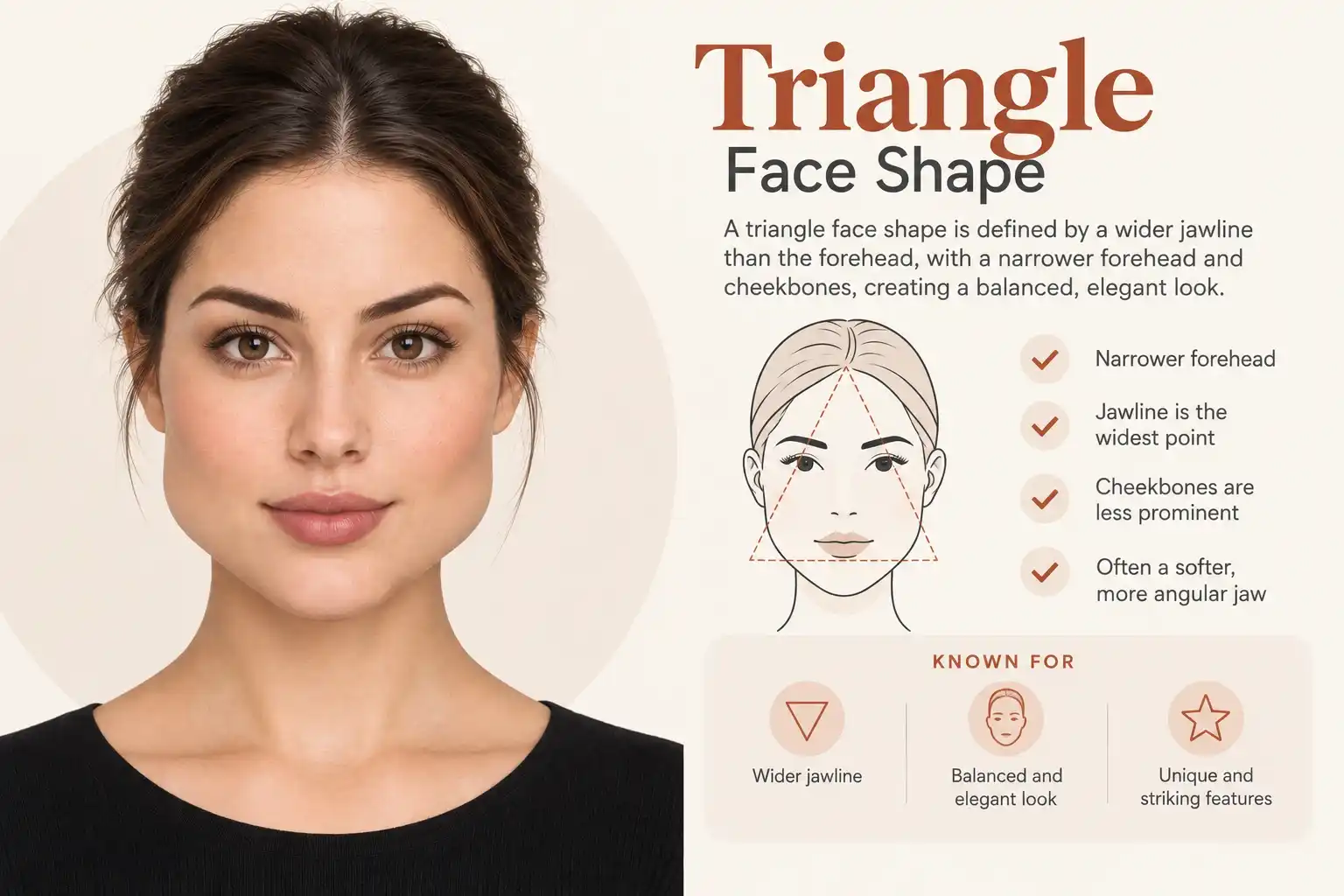
Triangle faces are narrow at the forehead and widen progressively toward the jaw, creating a strong, broad lower face. This is effectively the inverse of the heart shape. The wide jawline and narrow forehead give this shape a distinctive bottom-heavy appearance. Styling for triangle faces focuses on adding visual width and volume at the top of the head to bring the forehead and jaw into proportion, while avoiding anything that draws further attention to the wide jaw.
The triangle face shape is one where the jaw is the dominant feature — and the primary styling task is balancing it. Volume at the crown, top-heavy hairstyles, and frames that draw attention to the upper face all help counteract the wide jaw. Makeup contouring can slim the jaw while highlighting the forehead to add the impression of width at the top. Avoiding styles that end at the jaw, add width at the sides, or are bottom-heavy in design is equally important. When the right styling choices are made, the strong jaw becomes an asset rather than a feature that unbalances the face.
What Is a Triangle Face Shape?
A triangle face shape — sometimes called a pear face shape — is characterised by a jaw that is the widest part of the face, with the face narrowing as it moves upward toward a relatively narrow forehead. This creates a bottom-heavy silhouette. The triangle face shape is the opposite of the inverted triangle face shape (also called the upside down triangle face shape or heart face shape), which is wider at the forehead and narrows to a pointed chin. The simple test: if your jaw is your widest measurement, you have a triangle face. If your forehead is your widest measurement, you have an inverted triangle or heart face.
Stylist's note: Triangle is the rarest confirmed face shape in AI scan data — roughly 0.03% of classifications. Part of the rarity is genuine biological frequency; part is that many people with triangle tendencies are classified as square or round when the jaw-to-forehead difference is moderate. When a triangle classification is confirmed, it carries specific, reliable styling advice that differs in direction from every other shape: add everything to the top, reduce emphasis on the bottom.
Want the full styling playbook — outfit pairing, contouring steps, and more? See our complete Triangle Styling Guide.
How to Identify a Triangle Face Shape
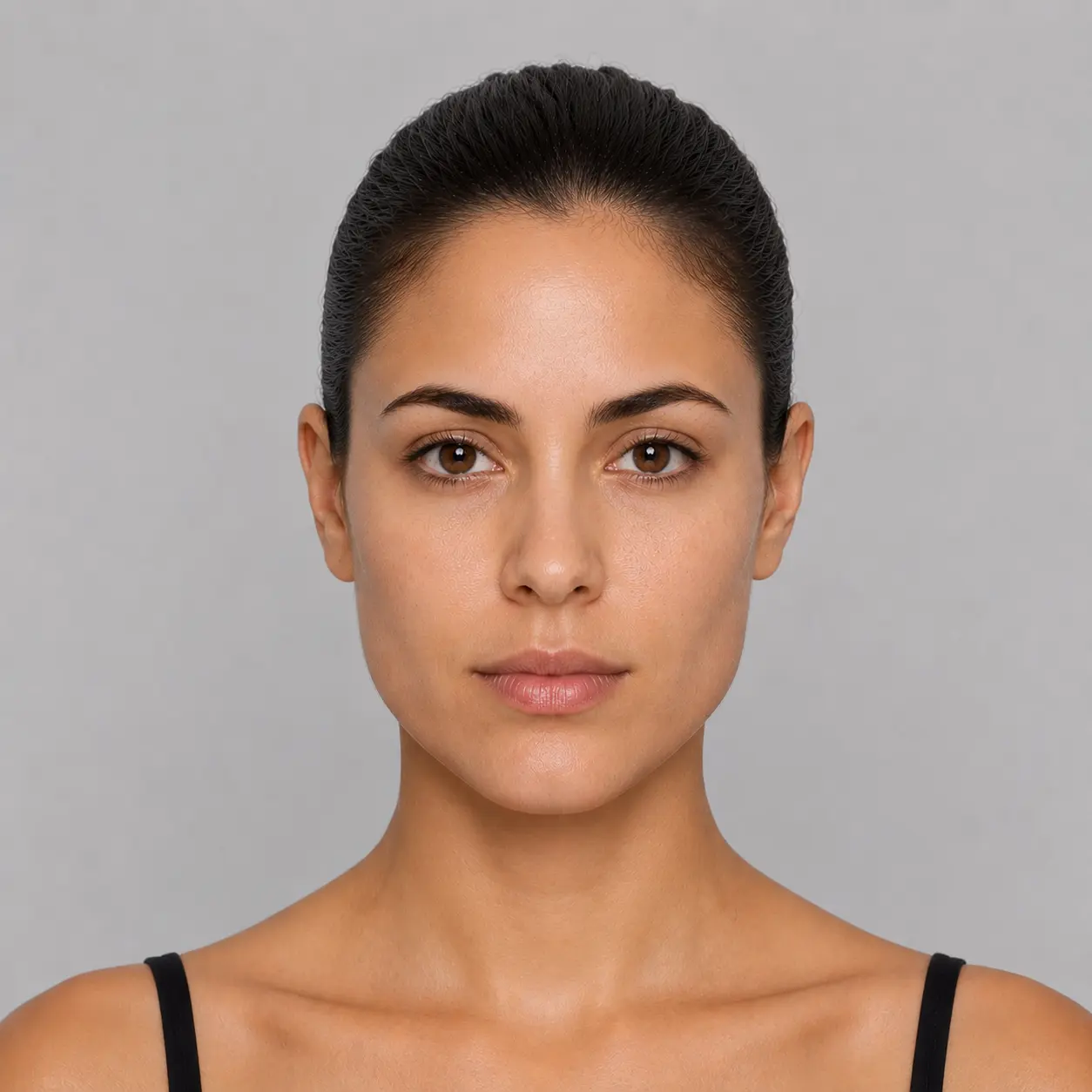
Pull your hair back and compare the width at your forehead, cheekbones, and jawline. For a triangle face, the jawline measurement is the widest, followed by the cheekbones, with the forehead being the narrowest. The face widens as you move downward — the opposite progression to a heart-shaped face. The jaw will often appear square or wide, and the chin may be relatively flat or broad rather than pointed.
Key characteristics
- 1Jawline is the widest part of the face
- 2Forehead is narrow — significantly narrower than the jaw
- 3Face widens from the forehead down toward the jaw
- 4Strong, broad lower face
- 5Chin is often relatively flat or wide rather than pointed
Not sure which shape you have?
Best Hairstyles for Triangle Face Shape
The right haircut works with your natural proportions. Here are the best cuts for triangle faces — with separate recommendations for women and men:
Women's hairstyles
- ✓Volume at the crown — any style with lift at the roots and fullness at the top balances the wide jaw by adding visual width to the narrow forehead; the most important principle for triangle faces
- ✓High bun or updo with volume — gathered height at the crown is the single most effective tool for triangle faces; the higher the volume, the stronger the corrective effect
- ✓Textured pixie with volume at the top — the short sides and tall, textured top create exactly the balance triangle faces need; one of the few face shapes where a high-volume pixie is the most flattering choice
- ✓Side-swept top knot or messy bun — volume high on the head with loose face-framing pieces draws attention to the upper face
- ✓Layered cuts with texture at the top and close, smooth sides below cheek level — layers at the crown only; anything that widens below the cheekbones is counterproductive
Men's hairstyles
- ✓Quiff with high fade — height and volume at the crown directly addresses the narrow forehead; the high fade prevents any width being added at the jaw level where width already exists naturally
- ✓Pompadour — upward volume creates a strong impression of a wider, more balanced upper face; the height compensates for the narrow forehead
- ✓Textured fringe pushed forward — adds horizontal width across the narrow forehead when swept forward rather than up; combine with high fade for best effect
- ✓High-volume texture with volumising spray — any product that adds lift and volume at the crown without adding horizontal width at the sides works well; a light clay or mousse rather than a heavy pomade
- ✓Faux hawk or mohawk — an extreme but effective application of the crown-volume principle; tight sides with high central volume is a strong corrective for triangle faces
Best Glasses for Triangle Face Shape
Choosing frames that complement — rather than compete with — your natural proportions makes a significant difference:
- ✓Frames that are wider at the top — cat-eye, browline — draw attention to the upper face
- ✓Embellished or decorative temples add visual interest at eye level
- ✓Lighter-coloured frames on the upper portion balance the heavier lower face
- ✓Avoid bottom-heavy frames or aviators that draw attention downward to the jaw
- ✓Avoid wide, equally-proportioned frames that mirror the width of the jaw
Makeup Tips for Triangle Face Shape
Contouring and highlighting can enhance the strengths of a triangle face and bring proportions into balance:
- ✓Contour along the sides of the jaw and chin to slim and narrow the widest part of the face
- ✓Highlight the centre of the forehead and temples to create an impression of width at the top
- ✓Apply blush high on the cheekbones, blending upward toward the temples
- ✓Bold, defined brows add horizontal width and visual weight to the narrow upper face
- ✓Statement eye makeup — liner, shadow, or a lifted wing — reinforces the upper face as the focal point
- ✓Avoid strong contouring under the cheeks or heavy blush on the lower cheeks, which draws attention to the widest part of the face
Styles to Avoid for Triangle Face Shape
These choices tend to work against the natural proportions of a triangle face:
- ✕Bottom-heavy glasses frames or aviators that direct attention to the wide jaw
- ✕Chin-length bobs that add volume exactly at the widest jaw point
- ✕Hairstyles with volume at the sides below the cheekbones
- ✕Frames wider than the forehead that emphasise how much wider the jaw is
Accessories & Necklines for Triangle Face Shape
Beyond hairstyles and glasses, accessories and neckline shapes can reinforce or undermine your face shape balance:
- ✓Drop and chandelier earrings draw the eye upward toward the narrow forehead; avoid studs that leave the wide jaw as the dominant visual feature
- ✓Statement necklaces that sit at or below the collarbone draw attention to the upper body rather than downward toward the wide jaw
- ✓V-necklines and deep V-necks create a visual line that slims the lower face area
- ✓Avoid wide horizontal necklaces at jaw or chin level that add emphasis to the widest part
- ✓Cat-eye and browline glasses add visual weight to the upper face; avoid wide rectangular frames that match or exceed the jaw width
Famous People with Triangle Face Shapes
Seeing triangle face shapes on well-known faces makes the proportions easier to recognise:
Notice how their styling choices often reflect the recommendations above — experienced stylists work with natural face proportions, not against them.
Triangle vs Heart — What's the Difference?
Triangle and heart faces are mirror images of each other in proportion. A heart face is wider at the top (forehead and cheekbones) and narrows to a pointed chin — the classic inverted triangle. A triangle face is wider at the bottom (jaw) and narrows toward the forehead. The simple test: where is the widest point? If it's your forehead, it's heart. If it's your jaw, it's triangle. Both require balancing the wide end by adding visual weight to the narrow end.
Not sure which applies to you? Use our free AI face shape detector for an instant result — it analyses your exact measurements from a photo rather than relying on self-assessment. You can also read the Heart face shape guide directly.
Is a Triangle Face Shape Attractive?
Triangle faces are less commonly discussed in mainstream beauty content than oval or heart faces, but the strong jawline that defines this shape is widely considered a mark of structure and character — particularly for men. A prominent, defined jaw is associated with strength and presence. The styling goal with a triangle face is not to hide this feature but to bring the narrow upper face into visual balance with the strong lower face, so the jaw reads as intentional structure rather than a proportion issue.
Triangle Face Shape — Frequently Asked Questions
What is an inverted triangle face shape?
An inverted triangle face shape is the opposite of the triangle face shape — it is wider at the forehead and cheekbones and narrows down to a pointed chin, creating a top-heavy silhouette. This is the same as what is commonly called a heart face shape. If your forehead is your widest measurement and your chin is your narrowest, you have an inverted triangle (heart) face. If your jaw is your widest measurement and your forehead is narrowest, you have a triangle face. The two shapes require opposite styling approaches: triangle faces need crown volume and top-heavy elements; inverted triangle faces need jaw-level volume and bottom-heavy elements.
What is an upside down triangle face shape?
An upside down triangle face shape is another name for the inverted triangle face shape — both terms describe a face that is wide at the forehead and cheekbones and tapers to a narrow chin, resembling a triangle flipped upside down. This is the same as a heart face shape. It is the opposite of the triangle (pear) face shape, which is widest at the jaw. If you have been told you have an upside down triangle face, the heart face shape guide applies to you: reduce forehead width visually, add volume at the jaw and chin level.
What are the best hairstyles for a triangle face shape?
The best triangle face shape hairstyles all share one principle: add volume at the crown and upper face to balance the wide jaw. For women: high buns and updos with volume, textured pixie cuts with lift at the top, and layered cuts with body at the crown. For men: quiff with high fade, pompadour, and textured fringe pushed forward. Face shape triangle hairstyles to avoid include chin-length bobs that add width exactly at the jaw, and any style with volume at the sides below cheekbone level. The hairstyle goal is to create the impression of a wider, more balanced upper face.
What are the best men's hairstyles for a triangle face shape?
The best mens triangle face shape hairstyles are styles that add height and volume at the crown while keeping the sides short. A quiff with a high fade is the top recommendation — the height directly addresses the narrow forehead while the high fade prevents adding width at the jaw. A pompadour achieves the same effect with more volume. Textured fringe swept forward rather than upward adds horizontal width across the narrow forehead. For triangle face shape hairstyles male, the consistent rule is: tall on top, tight on the sides below the cheekbones. Avoid slicked-back styles and styles with side volume that draw attention to the wide jaw.
How to contour a triangle face shape?
To contour a triangle face shape, apply contour along the sides of the jawline and underneath the jaw to slim and visually narrow the widest part of the face. Then highlight the centre of the forehead and across the temples to create the impression of width at the top. Apply blush high on the cheekbones, sweeping upward toward the temples rather than downward toward the jaw. Bold, defined brows add horizontal visual weight to the narrow upper face. Avoid heavy contouring under the cheekbones, which draws attention to the lower half. The goal is to make the forehead appear wider while narrowing the jaw.
What is an inverted triangle face shape hairstyle?
Hairstyles for an inverted triangle face shape (heart face shape) are the opposite of triangle face hairstyles — they add width and volume at the jaw and chin level, not the crown. Chin-length bobs, lobs with curls at the ends, and side-swept bangs are the most recommended. For men, low to mid fades and styles that avoid crown height work best. If your face is wider at the top and narrow at the chin (inverted triangle / heart), add volume below the cheekbones. If your face is wider at the jaw (triangle), add volume at the crown.
How common is the triangle face shape?
Triangle is one of the rarest face shapes — based on AI scan data, it accounts for approximately 0.03% of results, making it by far the least common of the seven shapes. Many people who believe they have a triangle face actually have a square or round face with a slightly wider jaw. If the AI detector has confirmed a triangle shape, it is a genuinely distinctive result.
Are triangle and pear face shapes the same thing?
Yes — "pear face shape" is an older term for what is now more commonly called the triangle face shape. Both refer to a face that is widest at the jaw and narrows toward the forehead. Some older beauty guides also use "trapezoid" for this shape. All three terms describe the same proportions and require the same styling approach: adding visual width and volume to the upper face.
What makes triangle face styling different from heart face styling?
They are mirror images in proportion, so the advice is the opposite. Heart faces need to add width at the jaw (chin-length styles, bottom-heavy frames, jaw-level accessories). Triangle faces need to add width at the forehead (crown volume, top-heavy frames, crown-level accessories). Applying heart-face advice to a triangle face worsens the proportional imbalance rather than correcting it.
What is the most important styling principle for a triangle face?
Volume at the crown is the primary and most effective correction for a triangle face. The wide jaw is structural — no amount of contouring meaningfully changes it — so the only reliable approach is adding perceived width at the top to bring the upper face into balance with the lower. Any style that adds height and volume at the crown, from a quiff to a high bun, achieves this.
What is the best beard style for a triangle face?
A triangle face is widest at the jaw, so the goal with facial hair is avoiding any further volume there. Keep the beard short and closely trimmed along the jawline itself, and let texture or a well-groomed moustache draw attention upward toward the cheeks and upper face instead. A full, bushy beard that follows the jawline is the style to avoid — it adds bulk exactly where the face is already widest.
Further Reading
- →Best Hairstyles for Every Face Shape in 2026
- →Best Glasses for Your Face Shape: The Complete 2026 Guide
- →Celebrity Face Shapes: Which Stars Have Your Face Shape?
Find Out If You Have a
Triangle Face Shape
Upload a photo to our free AI face shape detector and get an instant result — plus personalized hairstyle, glasses, and makeup recommendations.
Detect My Face Shape — FreeNo sign-up · 100% private · Works on all devices