Written by Naeem Ullah·Face Shape Analyst, faceshapedetector.app·Reviewed March 2026
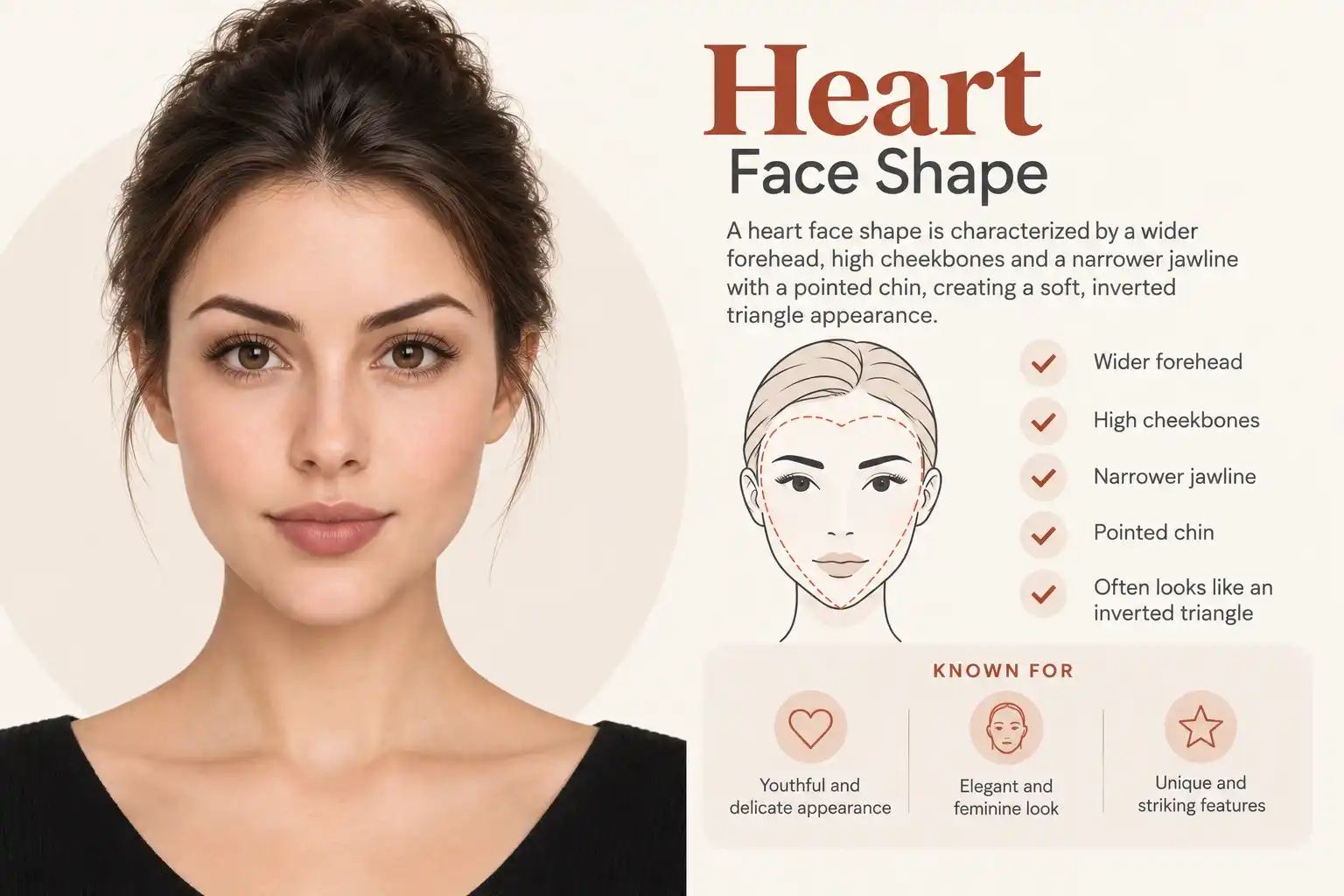
Heart-shaped faces are wider at the forehead and cheekbones and taper down to a narrow, often pointed chin. This creates an inverted triangle silhouette — broad at the top and narrow at the bottom. Many people with a heart face shape also have a widow's peak hairline, which accentuates the pointed upper portion. Styling for heart-shaped faces aims to balance the width of the upper face with the narrowness of the lower jaw by adding visual weight below.
The heart face shape is often associated with high cheekbones and a prominent upper face. The main styling challenge is the width difference between the forehead and the chin — creating visual balance means drawing attention downward and outward at jaw level. Chin-length hairstyles, bottom-heavy glasses frames, and makeup techniques that add definition to the lower face all help achieve this balance. Avoiding styles that add more volume or width to the already-prominent upper face is equally important.
What Is a Heart Face Shape?
A heart shaped face — also called a face heart shaped or heart shape face — has a wide forehead and prominent cheekbones that taper down to a narrow, often pointed chin. The overall silhouette resembles an inverted triangle or a heart. Many people with this face shape also have a widow's peak hairline, which further defines the wide-top, narrow-bottom outline. It is one of the most photogenic face shapes because the structure naturally directs attention toward the eyes and cheekbones.
Stylist's note: Heart faces are often described as the most photogenic shape because the wide cheekbones create natural triangular emphasis toward the eyes — a structure that photographs beautifully. The real-world styling challenge is that this same structure can feel visually unbalanced in person if the jaw appears too narrow. The solution is adding visual weight below the cheekbones — not to hide them, but to give the lower face enough presence to create balance.
Want the full styling playbook — outfit pairing, contouring steps, and more? See our complete Heart Styling Guide.
How to Identify a Heart Face Shape
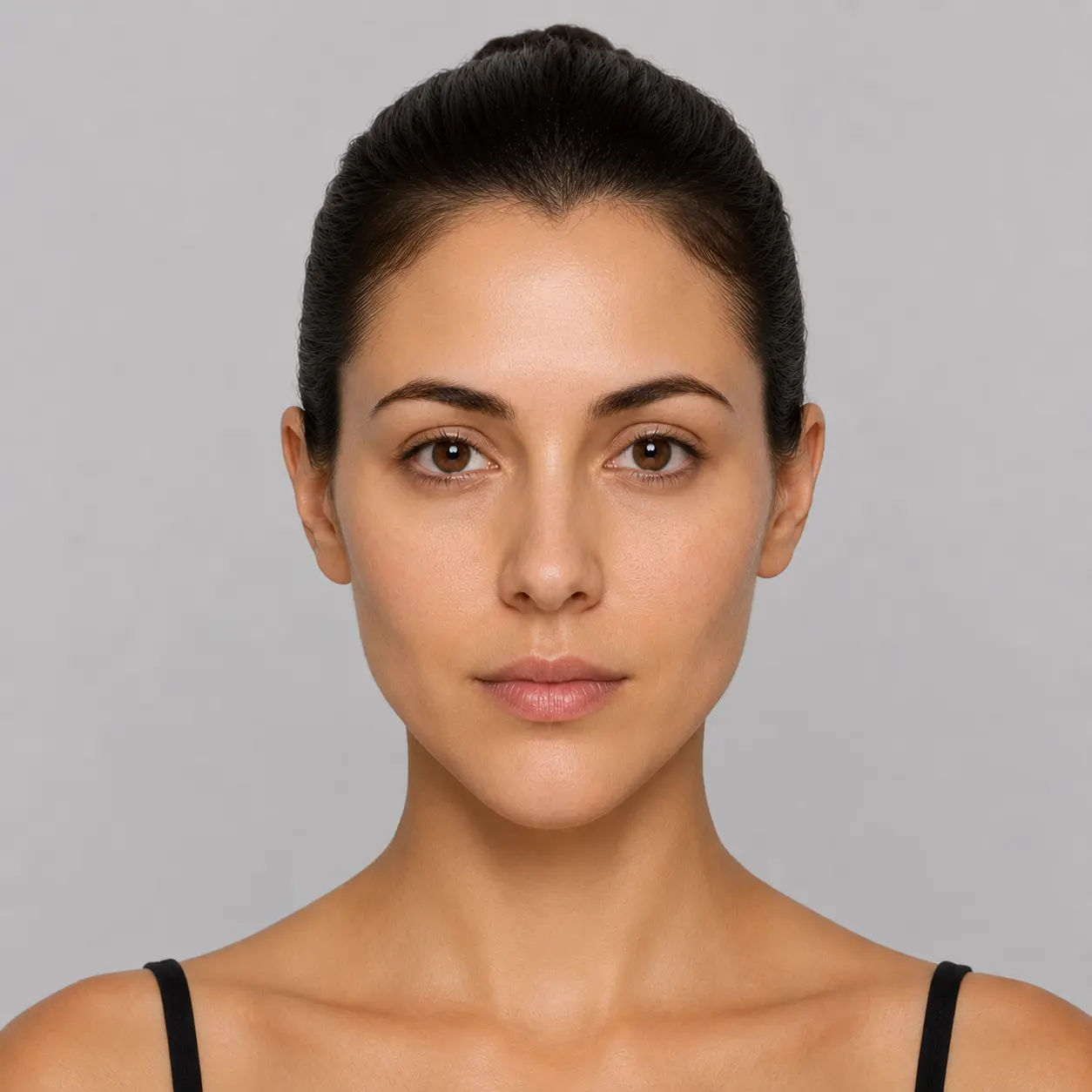
Pull your hair back and compare the width at your forehead, cheekbones, and jawline. For a heart face, the forehead will be the widest measurement, followed closely by the cheekbones. The jaw will be noticeably narrower, tapering to a pointed or softly pointed chin. Many heart-shaped faces also have a distinct widow's peak — a V-shaped point in the centre of the hairline — which further emphasises the wider upper face.
Key characteristics
- 1Forehead is the widest part of the face
- 2Cheekbones are prominent and sit just below the forehead width
- 3Jawline narrows significantly toward the chin
- 4Chin is pointed or softly pointed
- 5Often accompanied by a widow's peak hairline
Not sure which shape you have?
Best Hairstyles for Heart Face Shape
The right haircut works with your natural proportions. Here are the best cuts for heart faces — with separate recommendations for women and men:
Women's hairstyles
- ✓Chin-length bob with side part — adds visual width at the jaw level while the side part reduces the visual width of the forehead simultaneously; the most consistently recommended cut for heart faces
- ✓Lob with curls or waves at the ends — volume concentrated at the ends rather than the crown adds weight at exactly the right zone, below the already-wide cheekbones
- ✓Side-swept bangs that cover part of the forehead — directly reduces the visual width of the forehead, which is the heart face's widest and most prominent measurement
- ✓Long straight hair past the collarbone — the length draws the eye downward and the natural weight of longer hair adds visual balance to the narrow chin without requiring styling
- ✓Low bun or low ponytail — keeps all volume below the face, adding visual weight at the jaw level rather than amplifying the crown
Men's hairstyles
- ✓Low to mid fade with volume retained at the sides — unlike most other face shapes, heart-shaped faces benefit from some side width above jaw level to balance the narrow lower face
- ✓Side part with close sides (not a high skin fade) — the asymmetry reduces forehead width visually, and keeping some side volume above jaw level helps balance the narrow chin area
- ✓Medium-length curtain hair — kept relatively flat at the crown rather than pushed upward; avoid adding crown height to the already-wide upper face
- ✓Textured styles swept sideways at the fringe rather than upward — horizontal movement at the fringe level reduces forehead emphasis without adding crown height
- ✓Low-volume crew cut with a defined line up — keeps the top relatively flat; avoid quiffs or high-volume crowns that add further width and height to the already-prominent upper face
Best Glasses for Heart Face Shape
Choosing frames that complement — rather than compete with — your natural proportions makes a significant difference:
- ✓Bottom-heavy frames or those with embellishment on the lower rim balance forehead width
- ✓Aviator and oval frames suit heart faces well by adding width at mid-face
- ✓Rimless or light-coloured upper frames reduce emphasis on the forehead
- ✓Avoid cat-eye frames that draw attention to the upper face, further widening it
- ✓Avoid very top-heavy or decorative upper frames that accentuate the forehead
Makeup Tips for Heart Face Shape
Contouring and highlighting can enhance the strengths of a heart face and bring proportions into balance:
- ✓Contour the temples, blending inward and downward, with a light secondary pass along the hairline to visually narrow and shorten the forehead
- ✓Highlight the chin in a horizontal sweep across the chin bone, with a touch on each side of the jaw, to draw attention downward
- ✓Blend cheekbone contour upward and outward toward the ear in a moderate diagonal — not so steep it looks gaunt, not so horizontal it adds width
- ✓Apply blush on the apples and blend inward and downward rather than up toward the temples, which would widen an already-wide zone
- ✓A rounded, softly arched brow complements the shape — avoid both flat brows and extremely high arches
- ✓Bold lip colours or a slightly overdrawn Cupid's bow draw the eye to the lower face, improving balance
Styles to Avoid for Heart Face Shape
These choices tend to work against the natural proportions of a heart face:
- ✕Top-heavy hairstyles with volume at the crown that add more width to the already-wide forehead
- ✕Cat-eye frames that accentuate the width of the upper face
- ✕Very short styles that expose the narrow chin without balancing it
- ✕Centre parts with straight flat hair that emphasise the width contrast
Accessories & Necklines for Heart Face Shape
Beyond hairstyles and glasses, accessories and neckline shapes can reinforce or undermine your face shape balance:
- ✓Dangle and chandelier earrings draw the eye downward to the narrow chin, adding visual weight below the face
- ✓Statement necklaces that sit at or below the collarbone add width at the lower face level
- ✓Off-shoulder and wide boat necklines add visual width at the collarbone to balance the wide forehead
- ✓Avoid small stud earrings that leave the wide forehead as the dominant visual feature with nothing to counterbalance it
- ✓Wide-brimmed hats reduce the visual contrast between the wide upper face and narrow chin by adding horizontal emphasis at forehead level
Famous People with Heart Face Shapes
Seeing heart face shapes on well-known faces makes the proportions easier to recognise:
Notice how their styling choices often reflect the recommendations above — experienced stylists work with natural face proportions, not against them.
Heart vs Diamond — What's the Difference?
Heart and diamond faces both have narrower jaws than the middle of the face, but they differ in where the widest point is. A heart face is widest at the forehead, with cheekbones slightly narrower than the forehead and a pointed chin. A diamond face is widest at the cheekbones, with both the forehead and jawline significantly narrower than the cheekbones. The simple test: measure your forehead vs your cheekbones. If forehead is wider, it's heart. If cheekbones are clearly wider than your forehead, it's diamond.
Not sure which applies to you? Use our free AI face shape detector for an instant result — it analyses your exact measurements from a photo rather than relying on self-assessment. You can also read the Diamond face shape guide directly.
Is a Heart Face Shape Attractive?
Heart shaped faces are widely considered one of the most attractive face shapes. The wide forehead and prominent cheekbones create strong facial structure, while the narrow chin adds a naturally soft, delicate finish. These proportions photograph exceptionally well — the cheekbone width creates natural triangular emphasis toward the eyes, which is why many models and actors with heart faces appear striking on camera. The styling goal is not to change the shape but to balance the upper and lower face so the proportions feel harmonious in person.
Heart Face Shape — Frequently Asked Questions
What is a heart shaped face?
A heart shaped face — sometimes called a face heart shaped or heart shape face — is characterised by a forehead that is the widest part of the face, prominent cheekbones, and a jawline that tapers down to a narrow, often pointed chin. The silhouette resembles an inverted triangle or the top half of a heart. Many people with this shape also have a widow's peak hairline. Styling focuses on reducing the visual width of the forehead and adding balance at the narrow jaw and chin.
What is a heart shape face vs a heart shaped face — is there a difference?
No meaningful difference — "heart shape face," "heart shaped face," and "face heart shaped" all describe the same thing: a face wider at the forehead and cheekbones that tapers to a narrow, pointed chin. The variations are just different ways people phrase the same search. If your forehead is your widest measurement and your chin is your narrowest, you have a heart face regardless of which phrasing you use.
How to contour a heart shaped face?
To contour a heart shaped face, apply contour (cool-toned matte powder or cream) along the temples and the sides of the forehead to visually narrow the wide upper face. Blend downward toward the hairline rather than across. Then highlight the chin and jaw area to draw attention to the narrower lower face and make it appear broader. Apply blush below the cheekbones and sweep it toward the ears — this adds visual width at jaw level. A bold lip colour also draws the eye downward, improving the balance between the wide upper face and the narrow chin.
What glasses are best for a heart shaped face?
The best glasses for a heart shaped face are bottom-heavy frames that add visual weight at the lower half of the face. Aviator frames are the classic recommendation — the wider lower rim draws attention downward and balances the wide forehead. Oval and round frames also work well. Look for frames that are lighter or rimless at the top and more decorative at the bottom. Avoid cat-eye frames, which add width and emphasis to the already-prominent upper face, and avoid very top-heavy decorative frames for the same reason.
Why do many people with heart-shaped faces think they have an oval face?
The two shapes share some similarities: both often have prominent cheekbones, and both narrow toward the chin. The key difference is proportion — oval faces have balanced proportions with cheekbones as the widest point, while heart faces have a forehead that is clearly wider than the cheekbones, creating that wide-top, narrow-bottom shape. A widow's peak hairline is also very common in heart faces and rare in oval.
Do styling rules for heart-shaped faces apply the same to men and women?
The core principle is the same — reduce forehead width and add visual weight below — but the application differs. For women, chin-length styles and volume at the ends are the main tools. For men, low to mid fades and styles that avoid crown height achieve the same result. Men with heart-shaped faces should specifically avoid high quiffs and slicked-back styles that expose and emphasise the wide forehead.
Is a widow's peak more common in heart face shapes?
Yes. A widow's peak — a V-shaped point in the centre of the hairline — is significantly more common in heart-shaped faces than other shapes. The combination of a wider forehead and a narrow chin is what creates the heart face's characteristic silhouette. Not everyone with a heart face has a widow's peak, but most people with a prominent widow's peak have a heart-shaped face.
Should heart-faced people avoid side parts?
Side parts are recommended for heart faces, not avoided. A side part asymmetrically breaks up the width of the forehead, which is the heart face's widest and most prominent measurement. A centre part runs straight through this zone and emphasises the forehead-to-chin contrast. Side or off-centre parts are one of the most effective low-effort adjustments for heart faces.
What is the best beard style for a heart-shaped face?
Since a heart face narrows toward the chin, a beard is one of the most effective tools for adding width and weight to the lower face. A fuller beard, especially with volume along the jawline and at the chin, balances a wider forehead. Keep the moustache and cheek line neat so attention stays on the width being added at the jaw rather than the upper face. Very short stubble does little to correct the taper — a fuller beard has far more visual impact.
Further Reading
- →Best Hairstyles for Every Face Shape in 2026
- →Best Glasses for Your Face Shape: The Complete 2026 Guide
- →Celebrity Face Shapes: Which Stars Have Your Face Shape?
Find Out If You Have a
Heart Face Shape
Upload a photo to our free AI face shape detector and get an instant result — plus personalized hairstyle, glasses, and makeup recommendations.
Detect My Face Shape — FreeNo sign-up · 100% private · Works on all devices