Body Type Calculator: Measurement vs. Kibbe vs. Somatotype
This free body type calculator classifies your proportions from three measurements, then lets you dig into how the classification actually works — the measurement-based system explained here side by side with the 13-type Kibbe method. Works for men too. No account or photo required.
Works for women and men. Supports cm and inches.
Body Types Explained: Measurement, Kibbe & Somatotype
“Body type” and “body shape” are often used interchangeably in casual conversation, but they point to two different questions you might be trying to answer. This page focuses on the classification methodology itself — how the measurement-based system works, how it compares to the 13-type Kibbe system and the fitness-world somatotype framework, and which one actually answers the question you have. If you already know your type and want outfit-specific guidance — tops, bottoms, dresses, and swimwear picks by shape — that lives on our body shape calculator.
| System | What It Measures | Categories | Best Used For |
|---|---|---|---|
| Measurement-based | Bust/chest, waist, and hip ratios | 5 types (hourglass, pear, apple, rectangle, inverted triangle) | Fast, objective fit prediction and online shopping |
| Kibbe | Bone structure, flesh distribution, facial features | 13 types across 5 families | Deeper overall styling direction, not just fit |
| Somatotype | General build and physical tendencies | 3 types (ectomorph, mesomorph, endomorph) | General self-assessment, not fit or styling |
The Measurement-Based System
The calculator above uses bust, waist, and hip ratios — standardised by the fashion industry in the 20th century — to classify your visual silhouette into one of five categories: hourglass, pear, apple, rectangle, or inverted triangle. It answers a narrow, objective question: what is the proportional relationship between my measurements? In short, it measures body proportions alone — not bone structure, height, or facial features — using only the three ratios you enter.
The Kibbe System
The Kibbe system, developed by stylist David Kibbe in 1987, classifies bodies into 13 types across five families — Dramatic, Natural, Classic, Gamine, and Romantic — based on bone structure, flesh distribution, and facial features considered together as a whole. It answers a broader, more subjective question: what is the overall gestalt quality of my physical presence? Two people with identical bust-waist-hip ratios can land in different Kibbe families if their bone structure or facial features differ.
Explore all 13 types on our Kibbe body types guide or jump straight to the free Kibbe body type test.
Which System Should You Use?
Use the measurement-based calculator above when you want a fast, objective answer for online shopping and fit prediction — it takes under two minutes and needs only a tape measure. Use the Kibbe system when you want a deeper styling framework that accounts for your whole physical presence, not just three measurements. Many stylists recommend running both: the measurement-based result for practical fit decisions, and Kibbe for overall aesthetic direction. Neither system is more “correct” than the other — they measure different things.
Ectomorph, Mesomorph, Endomorph: Somatotype Body Types
A third framework you'll sometimes see alongside body type and body shape is the somatotype system, mainly used in fitness and sports-science contexts. It groups builds into three general categories: ectomorph (a naturally lean, narrow build), mesomorph (a naturally muscular, athletic build), and endomorph (a naturally rounder, higher-body-fat build). Most people are a blend of two, rather than a pure single type.
Unlike the measurement-based hourglass/pear/apple/rectangle/inverted-triangle categories above, somatotype isn't about proportional silhouette or clothing fit — it's a general self-assessment framework some people use to think about training and nutrition approaches. This calculator doesn't classify somatotype and makes no health, fitness, or medical claims about it; it's included here only because “body type” searches sometimes mean this system rather than the fashion one this page focuses on.
How the Body Type Calculator Works
From tape measure to personalised style guide in under two minutes.
Take Three Measurements
Bust (or chest), natural waist, and hips — the same three inputs every measurement-based system runs on. A soft tape, level and snug, in cm or inches.
See Your Type — and How It Was Decided
The calculator classifies you using bust-to-hip, waist-to-hip, and waist-to-bust ratios — the same measurement-based logic broken down in the methodology section below, so you can see how this system actually works, not just the resulting label.
Compare Against Kibbe & Somatotype
Once you have your measurement-based type, the page below walks through how that result relates to the 13-type Kibbe system and the fitness-world somatotype framework — so you know which one actually answers your question.
Ready to find your body type?
Under two minutes — just three measurements needed.
Not sure how to dress your type? Read our full guide →The 5 Female Body Types
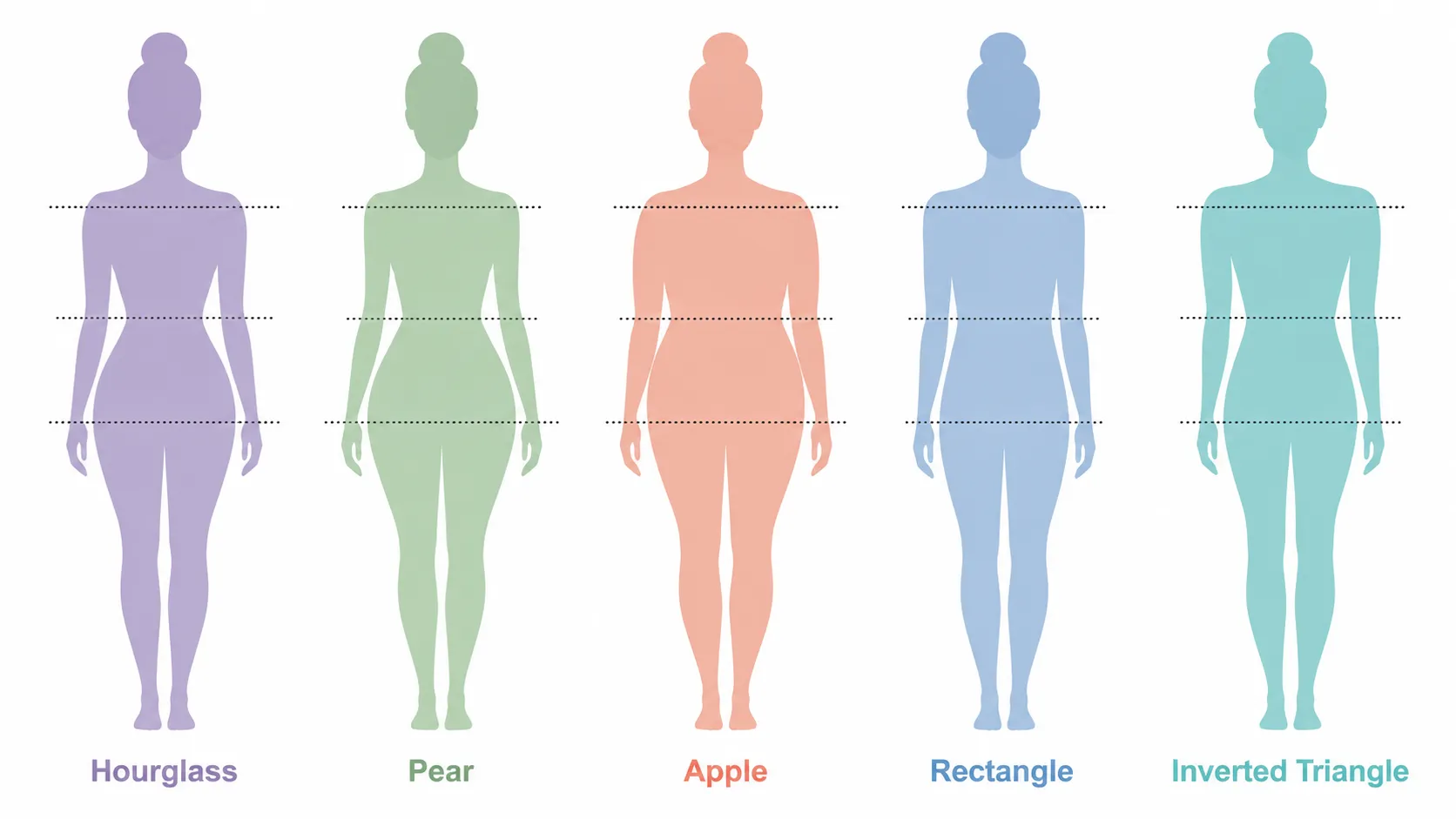
Each of these female body types has distinct proportional characteristics that determine which cuts, silhouettes, and styling approaches work best — whether you think of them as the different body types women fall into or the different body types female fashion guides describe, the five categories stay the same.
The body types female chart below lines up all five silhouettes side by side — useful as a quick female body types chart reference, or as a women body types chart you can screenshot for shopping trips.
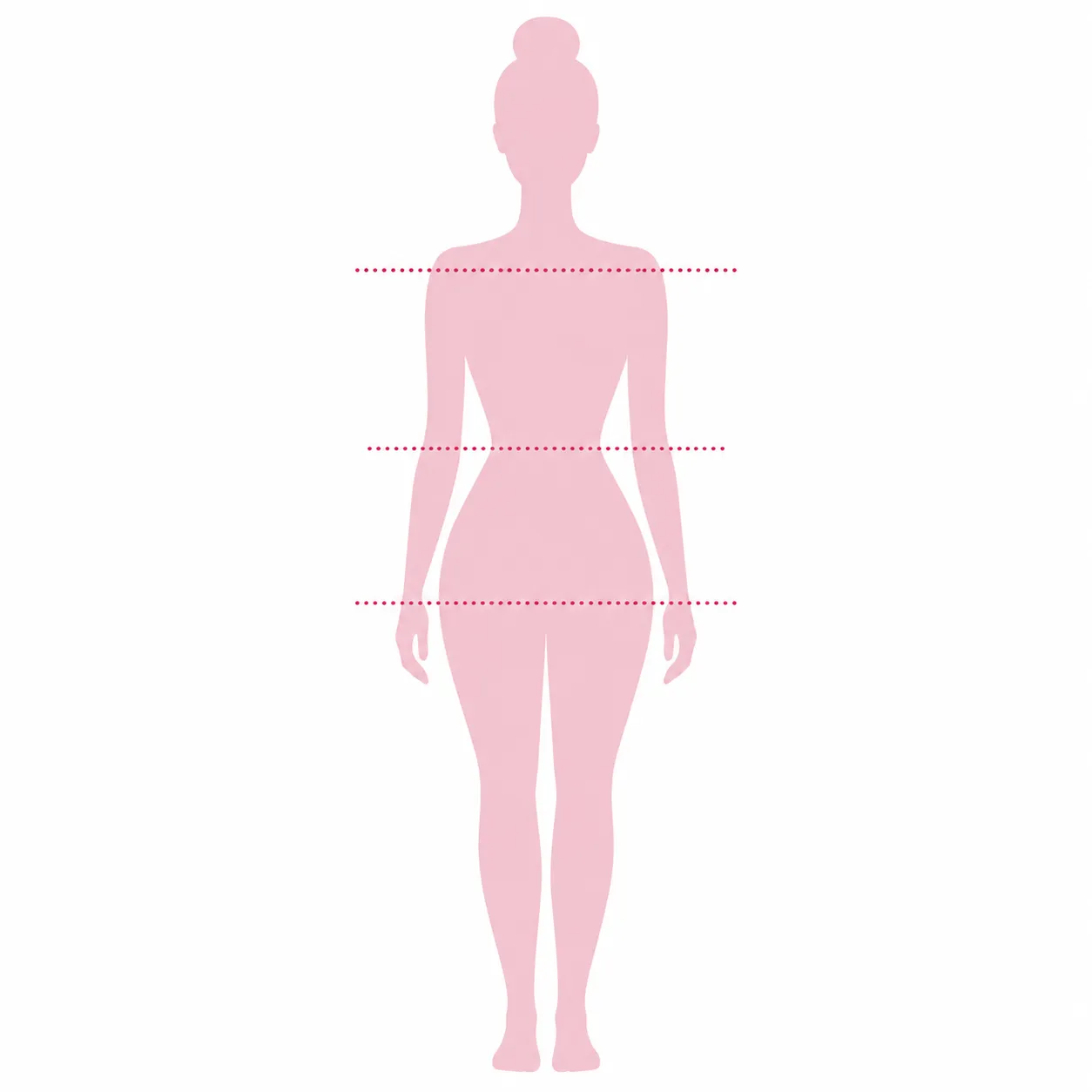
Hourglass
Bust and hips approximately equal with a significantly narrower waist. The most versatile type for fashion.
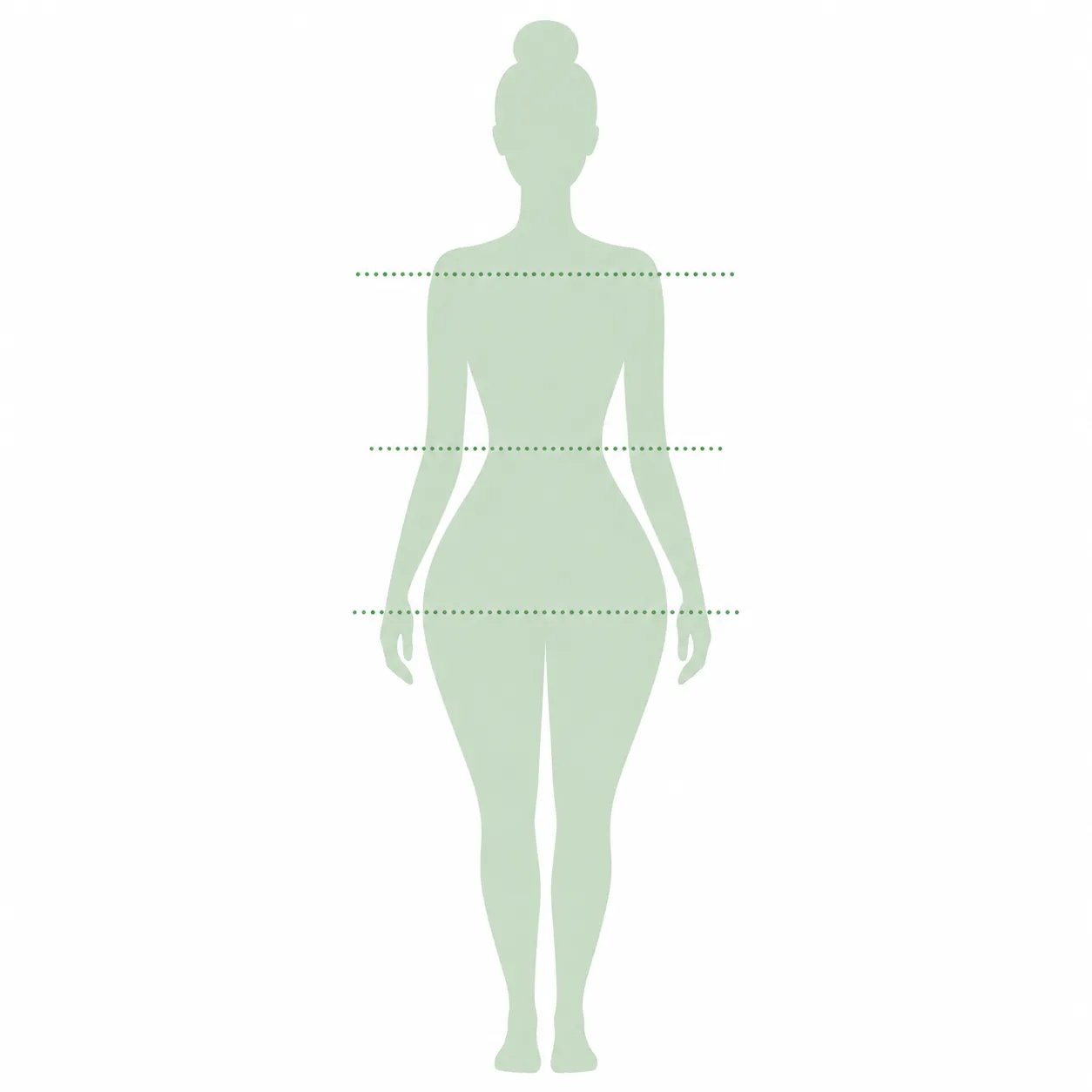
Pear
A pear body type has hips notably wider than shoulders and bust. Lower body is fuller with a defined waist.
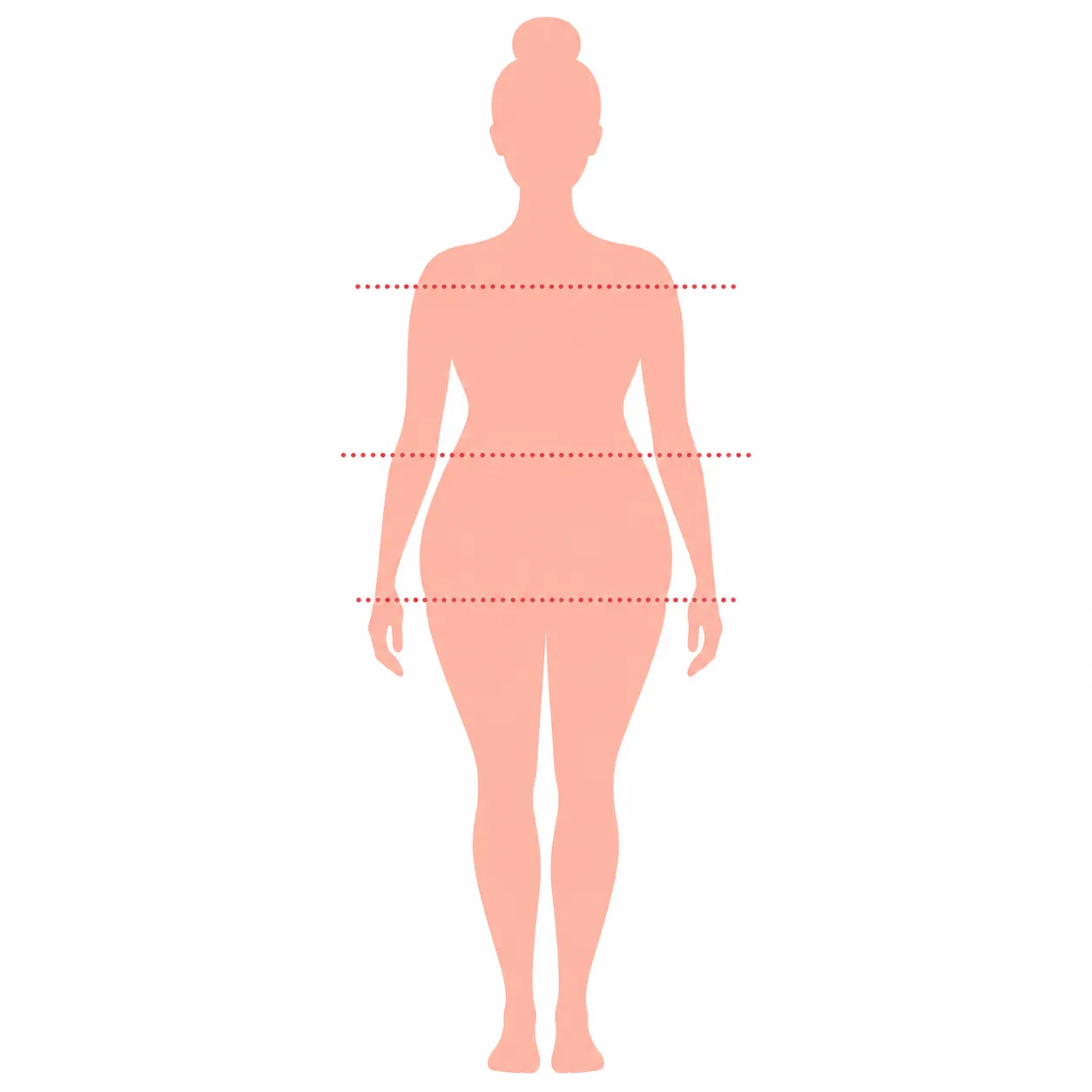
Apple
Fuller midsection wider than bust and hips. Weight is carried around the middle.
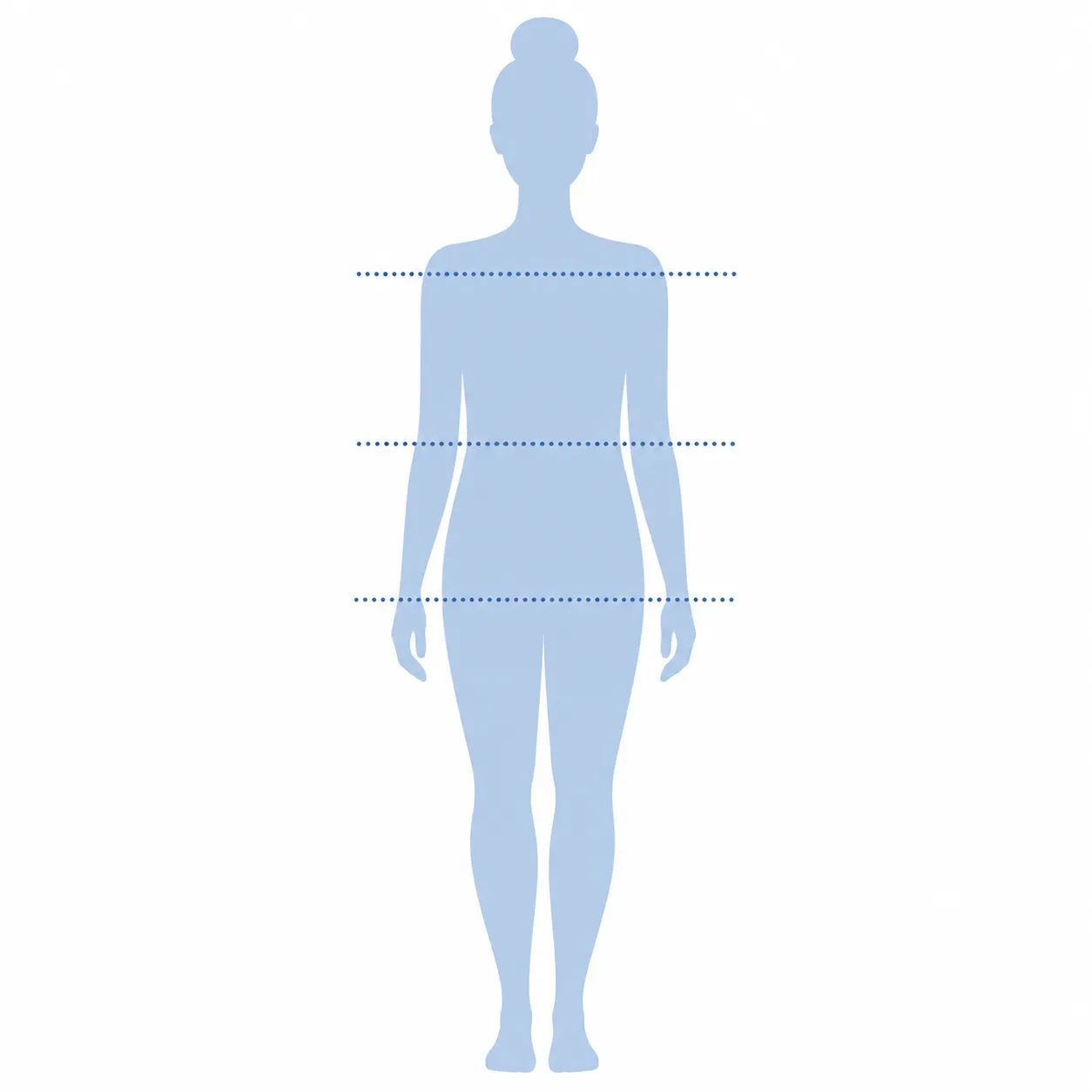
Rectangle
Bust, waist, and hips measure similarly. Straight, athletic silhouette with subtle curves.
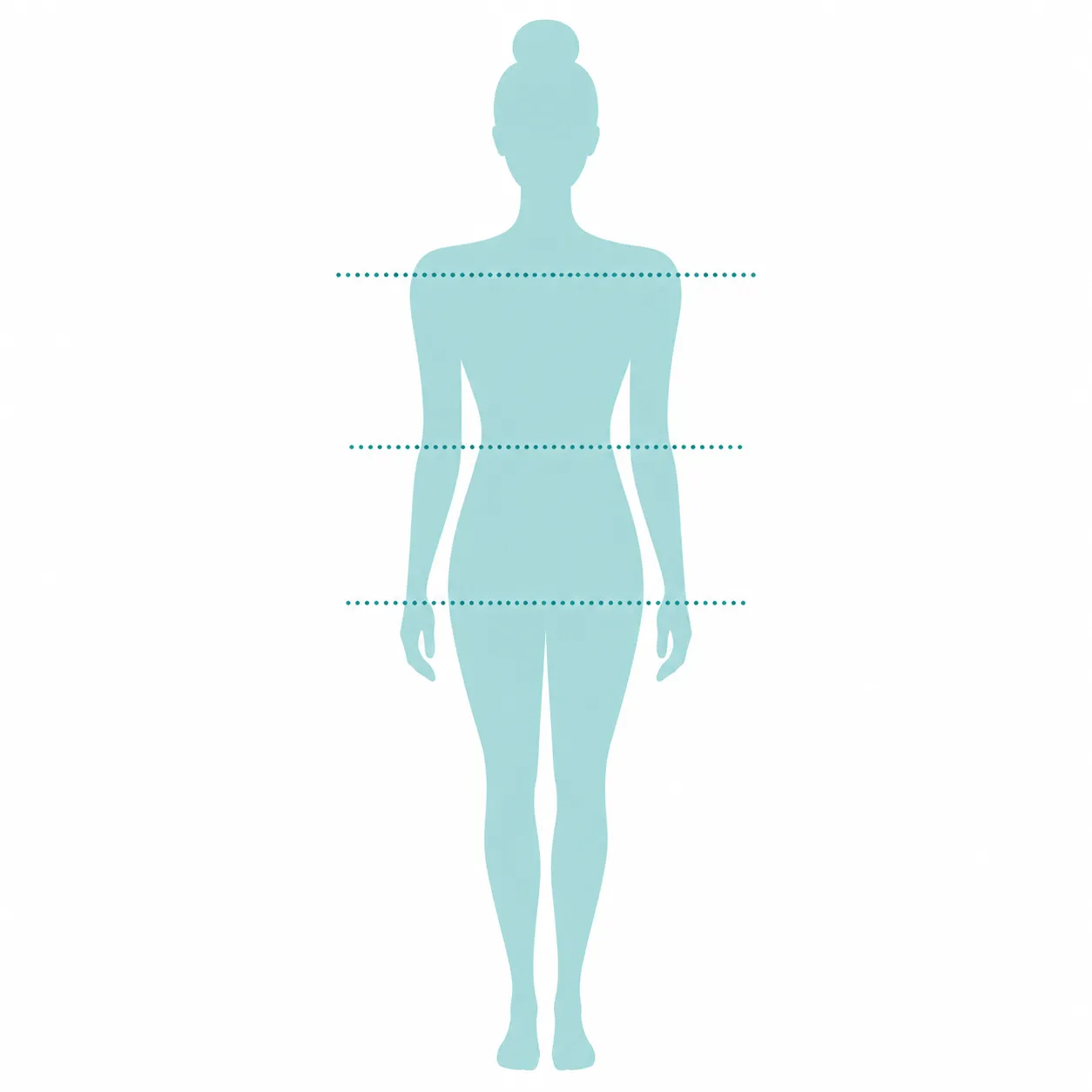
Inverted Triangle
Shoulders and bust noticeably broader than hips. Athletic, strong upper body.
Male Body Types
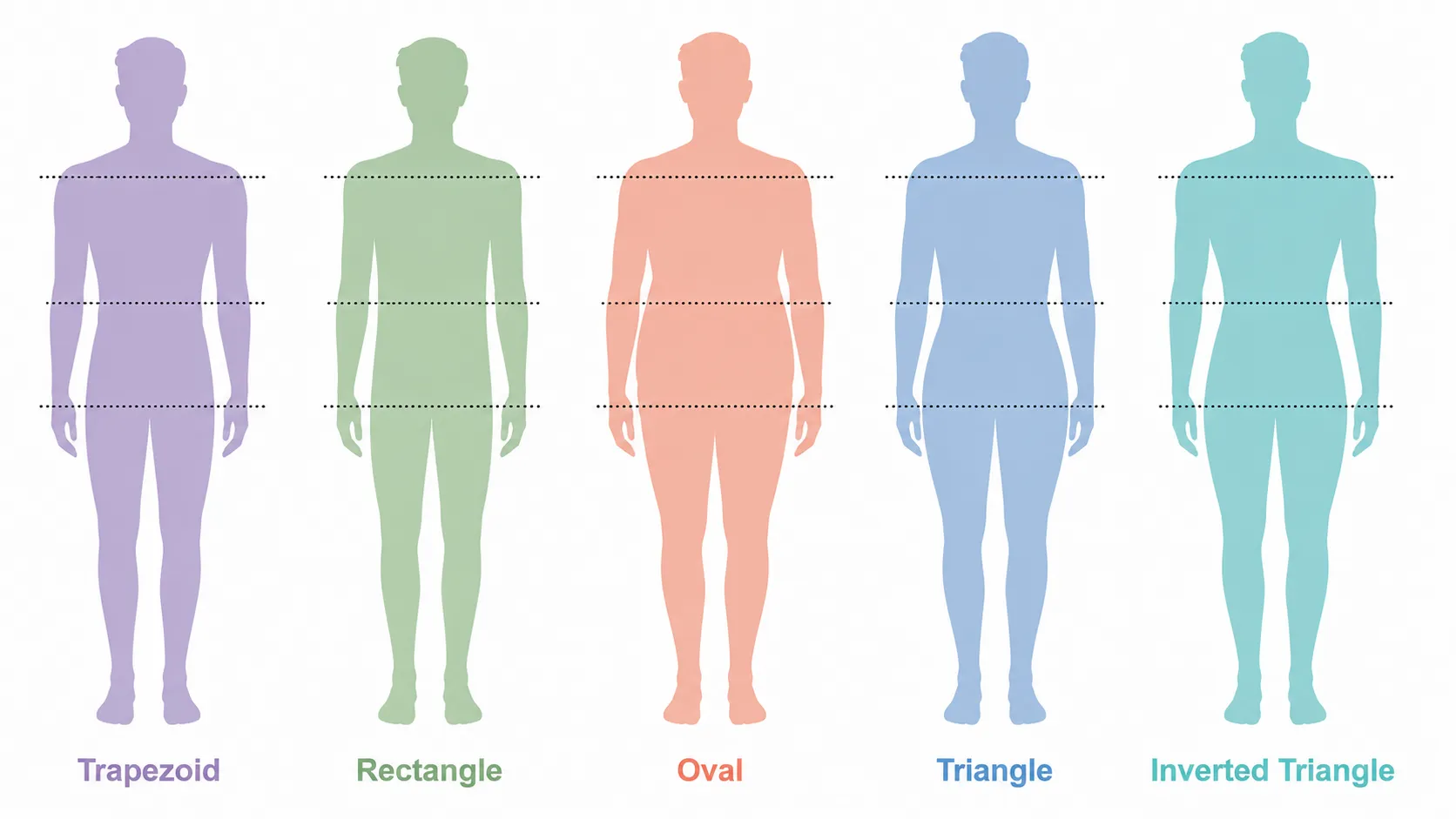
Trapezoid, Rectangle, Oval, Triangle, and Inverted Triangle. Switch to Male in the calculator above.
Male Body Types at a Glance
Kibbe Body Types
The Kibbe system — developed by stylist David Kibbe in 1987 — classifies bodies into 13 types across 5 families based on bone structure, flesh, and facial features. It complements (not replaces) the measurement-based approach above.
Dramatic
Long, angular bone structure with sharp, defined features. Typically tall with a lean frame. Bold, structured, and high-fashion looks work best.
Natural
Broad, athletic bone structure with blunt, slightly irregular features. Relaxed, effortless, and textured looks are most flattering.
Classic
Perfectly symmetrical and balanced proportions — neither too angular nor too soft. Tailored, polished, and timeless styles suit this type best.
Gamine
Petite, small-boned frame with high-contrast, sharp-yet-delicate features. Playful, mixed textures, and bold colour-blocking work best.
Romantic
Soft, rounded curves with lush, delicate features. Petite-to-medium frame. Feminine, draped, and body-conscious styles are most harmonious.
Note: The calculator above uses a measurement-based system (bust, waist, hips ratios). Kibbe typing is a separate framework based on physical structure and features rather than measurements alone.
All 13 Kibbe Types + Free TestHow to Figure Out Your Body Type
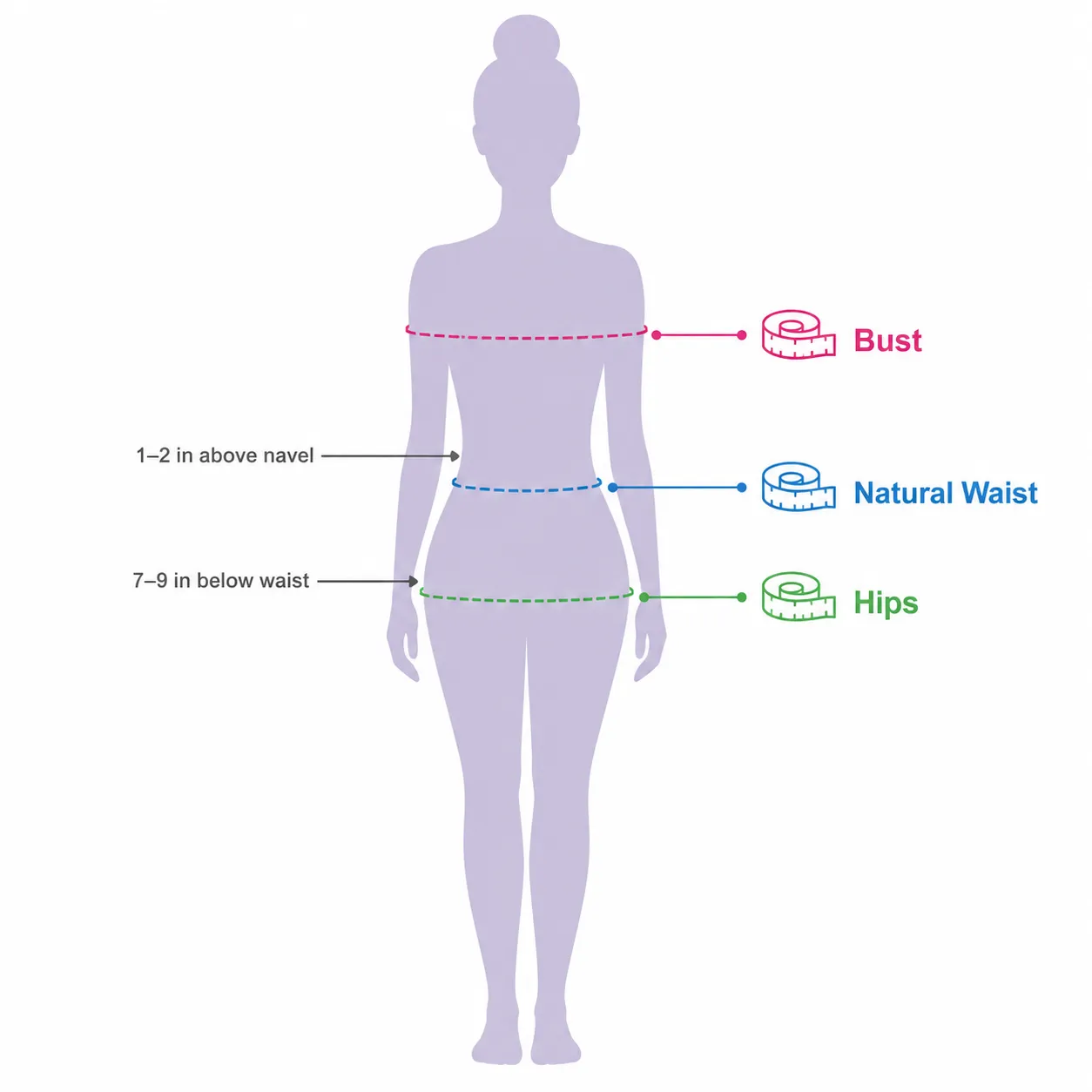
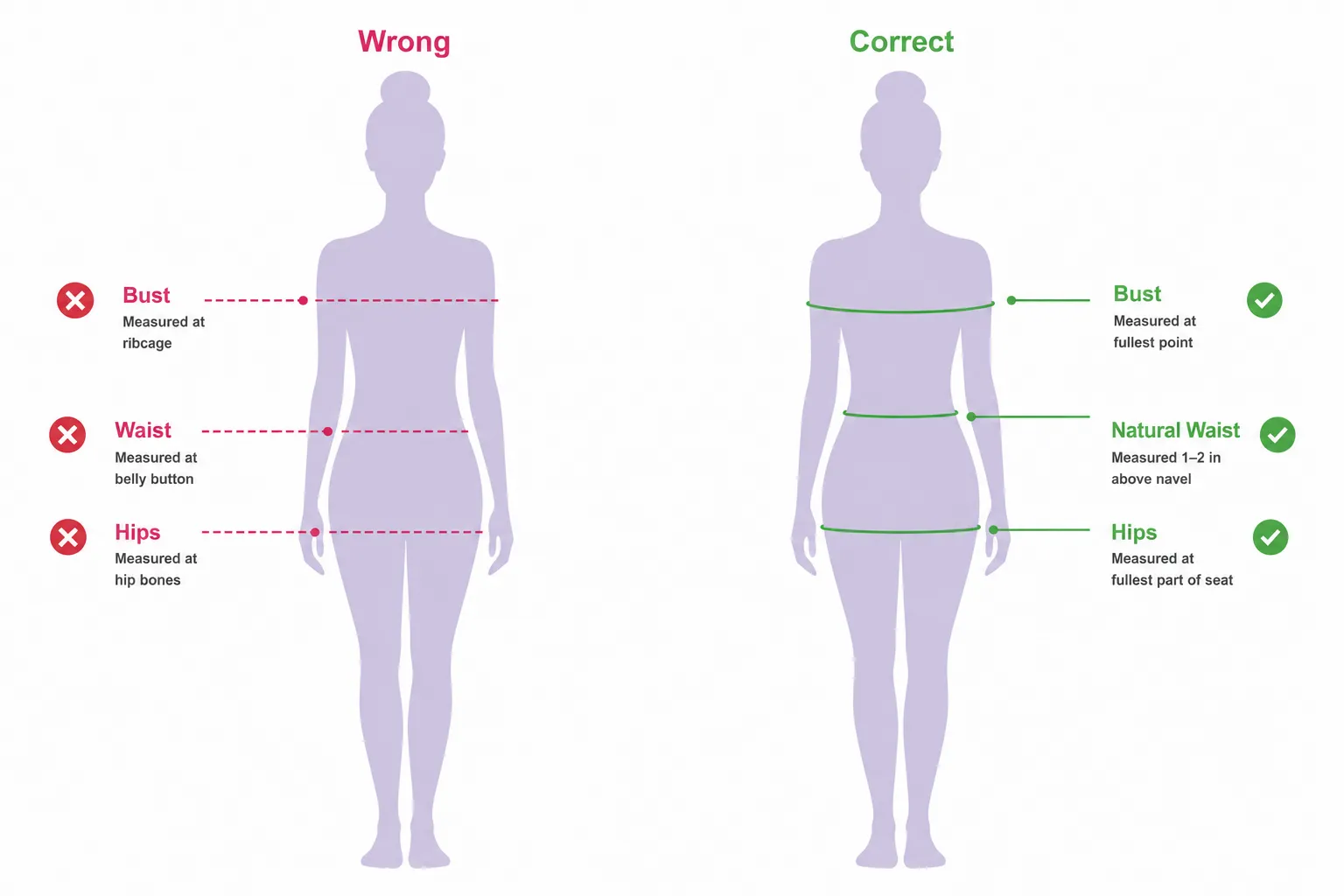
If you've been searching how to figure out my body type or how to know what body type you are, the short answer is: three measurements, one soft tape measure, about sixty seconds. Getting those measurements accurate is the single biggest factor in a correct result — here's exactly how to get each one right, step by step.
Bust / Chest
Across the fullest point of the chest, tape parallel to the floor. This is the number the calculator feeds into the bust-to-hip and waist-to-bust ratios — get it a centimetre off and you can land in a neighbouring category.
Common mistake: Angling the tape upward toward the collarbone (common when measuring yourself in a mirror) reads smaller than the true fullest point.
Natural Waist
The narrowest point of the torso, not the belly button — bend sideways and the crease that forms marks it. This is the single most sensitive input: both ratio thresholds the calculator checks are waist ratios.
Common mistake: Measuring at the belly button instead of the true narrowest point inflates the waist reading and is the most common reason a borderline result flips between hourglass, rectangle, and apple.
Hips
Fullest point of the hips and seat, roughly a hand-span below the waist, tape level all the way round. Paired with the bust reading, this is what separates pear from inverted triangle.
Common mistake: Stopping at the hip bones rather than the fullest point of the seat undershoots this measurement almost every time.
Once you have your bust, waist, and hip numbers, plug them into the calculator above for an instant result. Most people find that how to measure bust and waist is the quick part — bust waist hips together take under a minute once you know where to place the tape.
Related Tools
Face Shape Detector
Discover if you're oval, round, square, heart, or more
Body Shape Calculator
Full style guide: tops, bottoms, dresses & swimwear by shape
Kibbe Body Types Guide
All 13 Kibbe types explained in full depth
Kibbe Body Type Test
Free 6-question quiz for your Kibbe type
Eye Shape Detector
Almond, round, upturned, downturned, or monolid
Lip Shape Analyzer
Discover your lip shape & makeup tips
Face Analyzer
Run every face analysis in one place
Frequently Asked Questions
Everything you need to know about body types, the Kibbe system, how to measure, and which styles suit each type.
What are the female body types?
The five main female body types in the measurement-based system are Hourglass (balanced bust and hips, narrow waist), Pear (hips wider than bust), Apple (fuller waist and midsection), Rectangle (bust, waist, and hips similar widths), and Inverted Triangle (bust and shoulders wider than hips). For outfit-specific styling on each, see our Body Shape Calculator.
How do I use a body type calculator?
Enter your measurements above like any body shape calculator — but the result here feeds directly into the methodology comparison below it, so you see the actual bust-to-hip, waist-to-hip, and waist-to-bust ratios behind your classification, not just the label.
What is the difference between body type and body shape?
On this site, "body type" and "body shape" name two different pages, not two different systems — the underlying measurement-based classification is identical. This page focuses on classification methodology (measurement-based ratios vs. the Kibbe system); our Body Shape Calculator focuses on outfit-specific styling once you know your result. Outside this site, "body type" can also refer to the unrelated fitness-world somatotype system. In short, female body types and shapes describe the same five silhouettes — the difference is purely which page you're on.
What is the most common female body type?
Pear and rectangle are the most common globally, with hourglass the rarest at roughly 8–10% of women — see the "Female Body Types" section below for the full breakdown and how each compares under the Kibbe and somatotype frameworks too.
What is the Kibbe body type system?
The Kibbe system (1987) classifies bodies into 13 types across five families: Dramatic, Natural, Classic, Gamine, and Romantic. Unlike measurement-based calculators, Kibbe uses bone structure, flesh distribution, and facial features together. Many people use both systems for a fuller picture.
Which classification system should I use — measurements or Kibbe?
The measurement-based calculator above gives a fast, objective result useful for online shopping and fit prediction. Kibbe gives a deeper styling framework based on bone structure and facial features, not just three measurements. Many stylists recommend using both.
Do men use the same classification methodology as women?
Same measurement-based logic (bust/chest, waist, hip ratios), different category names: Trapezoid/V-shape (broad chest, defined waist), Rectangle, Oval (fuller midsection), Triangle, and Inverted Triangle. Switch to Male mode in the calculator above — the same three-ratio system described in the methodology section runs underneath both.
Can your body type change over time?
Yes — weight change, muscle gain, pregnancy, hormonal shifts, and ageing can all alter your measurements and proportions. A pear type may shift toward rectangle or apple after menopause. Re-measuring every 6–12 months keeps your classification accurate.
How accurate is a body type calculator?
Ratio-based calculators are the standard method used in fashion and styling. Accuracy depends on precise measurements. Some people naturally fall between two types — this is normal. Use the result as a starting point, not a rigid category.
What measurements does the calculator need?
Bust/chest, natural waist, and hips — see the "How to Figure Out Your Body Type" section below for exactly where to place the tape on each, plus the specific measurement errors that most often flip a borderline result into the wrong category.
What is a body type calculator for women?
A female body type calculator uses bust, waist, and hip measurements to identify which of five body type categories best matches your proportions. This calculator supports both female and male classification. Some search for this as a body type calculator female tool specifically, but the same calculator above works for both.
How do you figure out your body type?
Take three measurements — bust, natural waist, and hips — with a soft tape measure, then enter them into the calculator above along with your gender. Whether you think of it as learning how to figure out your body type or simply how to find your body type, the process is the same: the calculator compares your ratios against the category thresholds and returns a result in seconds. Prefer to understand the logic first? The methodology section above walks through how the measurement-based system reaches that result.
What is my body type?
Enter your bust, waist, and hip measurements into the calculator above, select Female or Male, and press Calculate — the result tells you whether you're hourglass, pear, apple, rectangle, or inverted triangle. If you're asking what body type am I without a tape measure handy, the quickest visual check is comparing your silhouette to the five shapes in the chart above: is your waist clearly narrower than both bust and hips, or are they all fairly similar?
What's my body type?
The calculator above answers this in under a minute — three measurements and your gender is all it needs. If you're comparing your own silhouette and wondering what body type is this in the mirror, look at where your waist sits relative to your bust and hips: a narrow, defined waist points toward hourglass; hips clearly wider than the bust points toward pear; and so on through the five categories above.
Body Type Calculator: Complete Guide
A body type calculator uses your bust, waist, and hip measurements to classify your proportions into one of five visual silhouette categories — hourglass, pear, apple, rectangle, or inverted triangle — and provides styling guidance based on that classification. It works the same way whether you're using it as a woman body types calculator or switching to Male mode, because the system works on proportional ratios rather than absolute measurements: your body type result is the same whether you are a size 6 or a size 20, since the calculator considers only the relationship between your three measurements, not their individual values.
Understanding your body type is a practical tool for predicting clothing fit, reducing returns when shopping online, and identifying the styling approaches most likely to work for your proportions. It is distinct from the fitness-world classification of body types — ectomorph, mesomorph, endomorph — which describes metabolic and musculoskeletal tendencies rather than visual silhouette.
Body Type in the Fitness World: A Different Meaning Entirely
Outside of fashion, “body type” more often refers to the somatotype system — ectomorph (lean, long), mesomorph (muscular, athletic), endomorph (larger, rounder) — which describes metabolic and musculoskeletal tendencies rather than visual proportions. This calculator uses the fashion/styling definition instead: bust, waist, and hip ratios that identify your visual silhouette category. See the classification-methodology breakdown above for how this compares to the Kibbe system.
Female Body Types: Which Is Most Common?
Research and population studies consistently find that rectangle and pear are the most common female body types globally, together accounting for the majority of women. The hourglass — frequently idealised in media and fashion — is actually the rarest type, estimated at around 8–10% of women. Apple and inverted triangle types make up the remainder, with distribution varying by age: body type tends to shift as hormonal changes occur, with many women moving from pear toward rectangle or apple proportions after menopause. Weight fluctuation, pregnancy, and muscle gain can all shift a body type classification over time. Across the full spread of women body types, no single category applies to more than roughly a third of the population, which is part of why body types for women vary so much by region, age group, and study methodology.
Male Body Types: Trapezoid, Rectangle, Oval, and More
Male body types follow a similar measurement-based classification to female types but with different category names and thresholds. The Trapezoid or V-shape — chest broader than hips with a defined waist — is considered the classic athletic build. Rectangle describes balanced chest, waist, and hips. Oval (waist wider than chest and hips) becomes more prevalent with age. Triangle (hips wider than chest) is less common in men. Inverted Triangle describes a very broad chest and shoulders narrowing sharply at the hips. Switch to Male mode in the calculator above to get your male body type classification.
How to Get the Most Accurate Body Type Result
The most common cause of an unexpected body type result is a measurement taken at the wrong anatomical point. The three key measurements and their common errors: Bust — measure at the fullest point of the chest (across the nipple line), not the ribcage or collarbone. Natural waist — measure at the narrowest point of the torso, typically 1–2 inches above the belly button, not at the belly button itself or the hip bones. Hips — measure at the fullest part of the seat, typically 7–9 inches below the natural waist, not at the hip bones. Take measurements in the morning before meals, in minimal clothing, with a soft tape measure held level and snug but not compressing the skin. Even a small error in your bust waist hip measurement — a centimetre or two — can shift body type measurements enough to land in a neighbouring category, so it's worth remeasuring once to confirm. This applies equally to body measurements for women and the male chest-waist-hip system; it's also why hourglass body measurements, where the waist ratio threshold is strict, are the ones most often mis-measured.
Many people fall naturally between two types, and some find their result changes seasonally. Both are completely normal. The classification is best used as a starting point for exploring which garment silhouettes are likely to fit well — not as a rigid category. A small slip in bust waist hip size — a centimetre or two — is usually what separates one body measurements body type result from its neighbour, so re-measure once before trusting a borderline result.
Disclaimer
Body type classifications are a simplified framework for styling guidance and are not a medical measurement or a judgement of any kind. Many people fall between two type categories — this is completely normal. Results depend on accurate measurements; variations in posture, clothing, or tape placement will affect the output. This tool is for entertainment and educational purposes only.