How to Dress for
Your Body Type
The Proportion Logic Behind Every Styling Rule — Not Another Picks List
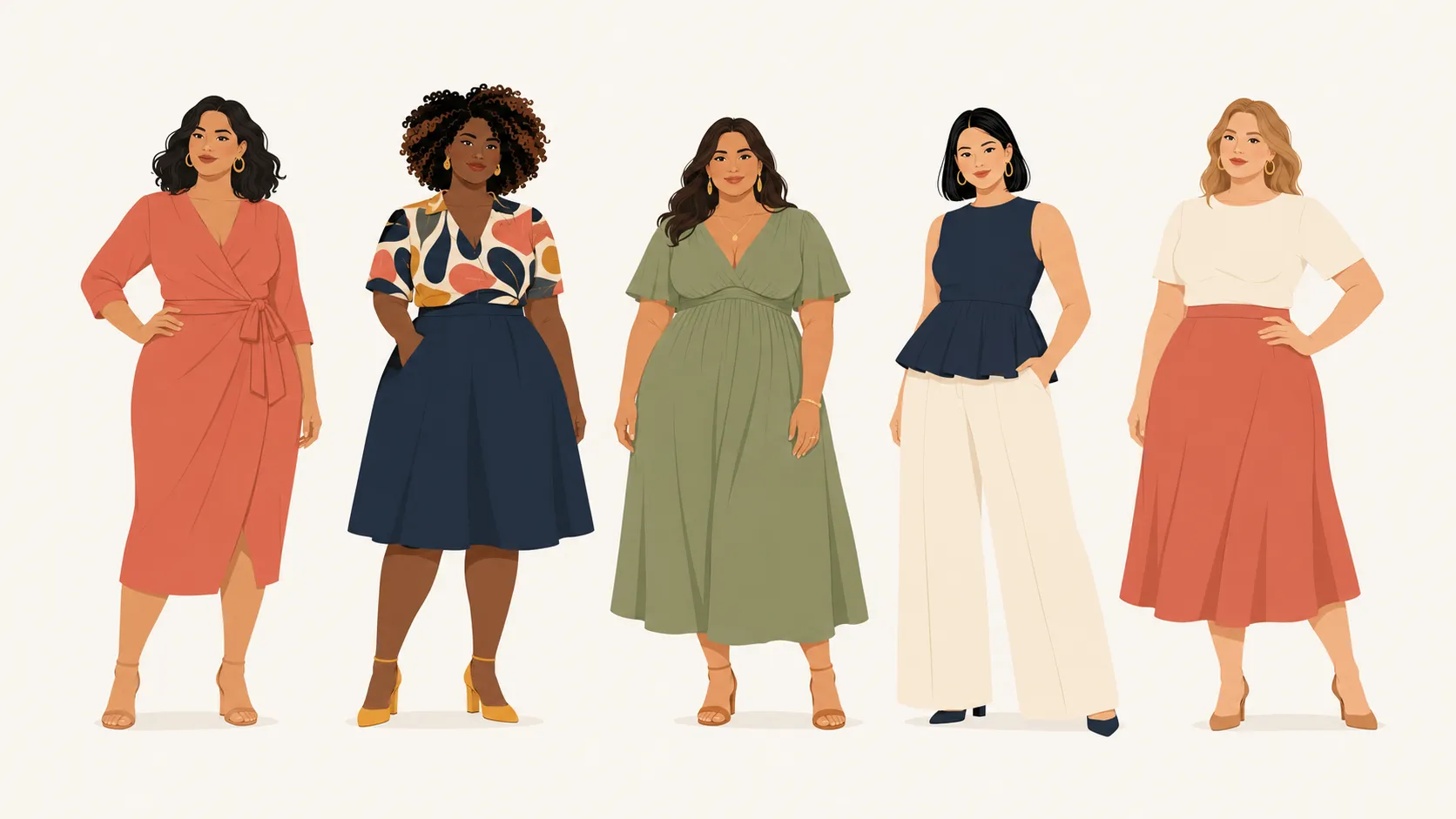
Dressing for your body type isn't about hiding anything or fixing a flaw — it's about proportion. Every body has a visual rhythm: places where lines converge, widen, or repeat. Understanding your own proportions means you can choose cuts, necklines, and silhouettes that work with your natural shape instead of against it, at any size, in any decade.
This guide walks through the reasoning behind body-type dressing: the single principle that explains why certain cuts work, how to identify your own type in under two minutes, the styling logic for each of the five main body types, the mistakes that undo good styling advice, and — just as importantly — when to ignore all of it. If you don't know your body type yet, find yours with our free calculator before you read on.
The One Principle Behind All Body-Type Dressing
Every body-type recommendation you'll ever read — belt this, avoid that, choose an A-line here — traces back to one underlying idea: visual balance. The eye reads a silhouette the same way it reads any shape, through line, volume, and contrast. Clothing can widen a narrow area, narrow a wide one, or draw attention toward — or away from — a particular horizontal band of the body. Nothing about this is about hiding a “flaw”; it's about creating a silhouette that reads as proportionate and intentional, whichever proportions you start with.
Three tools do almost all of the work. Line is the strongest: a vertical seam, a deep V, a long unbroken column of colour elongates and narrows; a horizontal seam, a wide neckline, or a contrasting hem widens and shortens. Volume is the second: adding fabric, ruffles, structure, or a bold pattern to an area increases its visual weight; removing it — a fitted cut, a plain dark fabric — decreases it. Waist emphasis is the third, and it recurs across almost every body type's styling advice for a simple reason: the waist is the narrowest point on most bodies, and marking it — with a belt, a wrap, a seam, or a fitted panel — gives the eye a clear reference point from which to read the rest of the silhouette as balanced, regardless of where the bust and hips actually measure.
Once you understand that every “rule” is just an application of line, volume, and waist emphasis, you stop needing to memorise outfit lists. You can look at any garment and predict, roughly, what it will do to your silhouette — which is a far more durable skill than a list of five approved dresses.
“Every styling rule is just an application of line, volume, and waist emphasis. Learn the three tools, and you stop needing the list.”
How to Know Which Body Type You Are
Body-type classification is a measurement exercise, not a judgment. It compares three numbers — your bust (or chest), your natural waist, and your hips — as ratios to each other, not as absolute sizes. A size 6 and a size 20 can land in exactly the same category, because what matters is the relationship between the three measurements, not their individual values.
At a high level: if your bust and hips are close in width and your waist is significantly narrower than both, you're likely an hourglass. If your hips are clearly wider than your bust, you're leaning pear. If your waist is the fullest of the three measurements, that's the apple pattern. If all three sit close together, that reads as rectangle. And if your bust and shoulders are the widest, that's inverted triangle.
The fastest and most accurate way to get your actual result is our free body type calculator — enter your three measurements and it computes the ratios and gives you a category in under two minutes, no photo or sign-up required. It's also completely normal to land between two types; treat the result as a starting filter, not a verdict. Once you know your type, the full breakdown of specific tops, bottoms, dresses, and swimwear for each shape lives on our body shape calculator — this guide focuses on the reasoning behind the picks.
A related but separate framework worth knowing about is the Kibbe system, which classifies bodies by bone structure and overall physical presence rather than measurement ratios alone. It answers a different question than this guide — not covered here in depth. Curious which Kibbe type you might be? The free test takes about a minute.
Dressing Principles by Body Type
The five body types below aren't grades or categories to “achieve” — they're simply different starting proportions, each with its own logic for where line, volume, and emphasis do the most work. For each type: the proportional signature, the single styling goal, why a couple of example garments achieve it, and the one mistake that undoes it.
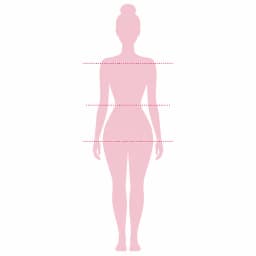
Hourglass
Bust and hips fall within a few percent of each other, with a waist meaningfully narrower than both.
The goal: Keep the waist visible. Because the proportion already reads as balanced, almost any silhouette works — the only thing that undoes it is a cut that hides where the narrowing happens. A wrap dress works because the tie sits directly at the natural waist and the diagonal fabric lines echo the curve itself. A fitted knit or a belted coat works for the same reason: the eye locates the waist instantly, so the rest of the silhouette reads as proportionate by comparison.
Common mistake: Reaching for boxy, unstructured shapes — a straight shift dress or an oversized blazer with no definition — which erases the one feature the shape is built around.
See the full hourglass outfit picks →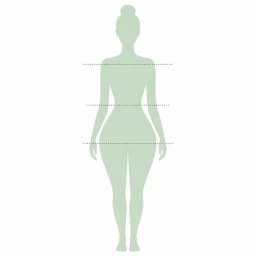
Pear
Hips sit noticeably wider than the bust and shoulders, usually with a well-defined waist.
The goal: Broaden or add interest above the waist. A boat neckline works because a wide, horizontal line visually extends the shoulder; a structured jacket with a defined shoulder does the same through volume rather than line. A bold or patterned top achieves it through contrast — pattern and colour draw the eye first, and placing that above the waist splits attention evenly between top and bottom instead of settling on the hips by default.
Common mistake: Doubling down on the lower half — a fitted top paired with an equally fitted, clingy skirt exaggerates the width difference the styling is meant to balance.
See the full pear outfit picks →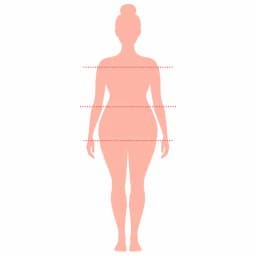
Apple
The waist is the fullest of the three measurements, often the widest point on the body, with slimmer legs.
The goal: Build a vertical, unbroken line through the torso. A V-neck or scoop neckline works because it draws a downward line that lengthens the torso instead of interrupting it at the waist. An empire-waist dress achieves the same goal by moving the seam up to just below the bust, so fabric skims rather than clings across the fuller midsection. A monochromatic outfit reinforces it: one unbroken colour reads as a single column, not two halves.
Common mistake: Belting tightly at the natural waist — the single most common piece of generic styling advice — which draws a hard horizontal line exactly where the eye is being asked not to linger.
See the full apple outfit picks →
Rectangle
Bust, waist, and hips measure within a close range of each other, with minimal natural waist definition.
The goal: Create the impression of curves through volume, not fit alone. A peplum top works because the flared panel below the waist adds volume exactly where a natural waist-to-hip curve would otherwise sit; a wide-leg trouser paired with a fitted top achieves the same by contrasting a narrow upper half against a fuller lower one. Colour-blocking and layering do it structurally, breaking the torso into visually distinct zones.
Common mistake: Choosing uniformly fitted, single-panel pieces — a plain bodycon dress with no structural interest reads as one straight column rather than a shaped silhouette.
See the full rectangle outfit picks →
Inverted Triangle
Shoulders and bust are noticeably broader than the hips, creating a strong, athletic upper body.
The goal: Add visual volume below the waist. This is the mirror image of the pear's goal. An A-line skirt works because it flares outward from the waist, widening the lower silhouette exactly where the pear shape achieves narrowing; wide-leg or flared trousers do the same through fabric volume. A simple V-neck or U-neck top completes the balance by avoiding any further width at the shoulder.
Common mistake: Structured-shoulder blazers and boat necks — exactly the tools a pear shape needs — which, on this shape, add width precisely where it already has the most.
See the full inverted triangle outfit picks →Not Sure Which Signature Matches You?
The descriptions above are directional. For a precise, ratio-based answer, use the free body type calculator — it takes your bust, waist, and hip measurements and returns your closest match in under two minutes.
Common Body-Type Dressing Mistakes
Beyond the shape-specific mistakes above, a handful of cross-cutting habits undo good body-type styling regardless of which category you fall into. We see these come up across every shape, so they're worth calling out separately.
- Dressing for a type you’re not. Body type shifts with weight change, pregnancy, muscle gain, and age — a set of styling rules memorised ten years ago may no longer match your current proportions. Re-check your measurements periodically rather than styling from an old assumption.
- Ignoring fit and tailoring. A perfectly chosen silhouette in the wrong size does more damage than an imperfect silhouette that’s been tailored to fit. A small alteration at the waist or hem consistently outperforms an off-the-rack garment in the “ideal” cut but the wrong size.
- Treating the rules as rigid rather than directional. Body-type guidance is a set of tendencies, not laws — many outfits work well across several body types, and personal proportions exist on a spectrum rather than in five discrete boxes.
- Forgetting that proportions change over time. The styling goal that worked at 25 may need revisiting at 45, not because the principles changed, but because the underlying measurements did. Treat body-type dressing as something to revisit periodically, the same way you’d update any other part of your wardrobe.
When the “Rules” Don't Apply
Every principle in this guide is a tool for predicting what a garment will visually do — not a verdict on what you're allowed to wear. Classification is a useful starting filter when you're shopping online and can't try something on, or when you want to understand why an outfit isn't working. It is not a rule that overrides comfort, occasion, budget, or — most importantly — what you actually like wearing.
Plenty of people dress successfully across body-type categories every day: an apple shape in a belted dress, a rectangle in a bodycon silhouette, a pear in a pencil skirt. The mistakes listed in this guide are tendencies that work against the stated goal on average, not guarantees of a bad outcome for any individual body. Personal style, the way you feel in a garment, and simple preference are allowed to override any classification, always.
If a “rule” from this guide doesn't match how you actually want to dress, ignore it. The proportional logic is here to expand your options by explaining why things work — not to shrink them by telling you what's off-limits.
Frequently Asked Questions
How do I dress for my body type if I’m between two types?
Is dressing for your body type outdated?
What if I don’t like the styles recommended for my body type?
Can I build a capsule wardrobe around my body type?
Do body-type dressing principles apply to men?
How do I figure out my body type without a tape measure?
Get Your Exact Body Type — Then Your Full Style Guide
The principles above explain the reasoning; the calculators turn that reasoning into a precise, personal result. Start with the free body type calculator to get your exact classification from three measurements, then head to the body shape calculator for the full tops, bottoms, dresses, swimwear, and outerwear breakdown for your specific shape.
A Note on Method
Further Reading
Face Shape Detector Editorial
Style & Proportion Editorial Team
Founder of faceshapedetector.app · 4+ years in facial proportion research · 200,000+ monthly readers
This guide was researched and written by the Face Shape Detector editorial team using the same bust-waist-hip ratio methodology that powers our body type and body shape calculators. Every styling call is checked against a single reasoning framework — line, volume, and waist emphasis — rather than pulled from generic listicle copy. We don't claim professional styling credentials; our expertise is in translating measurement-based proportion systems into clear, testable guidance.