Nose Shape Detector — What Is My Nose Shape?
Not sure what nose shape you have? Take our free AI nose shape test — upload a photo, answer one quick question about your bridge, and get your nose type from all 12 major kinds of noses in seconds.
AI nose shape detector: Greek, Roman, aquiline, hooked, Nubian, snub, celestial, button, bulbous, fleshy, hawk, flat/wide.
How Nose Shape Detection Works
From photo to nose type in under a minute — here's what happens, including why we ask one honest question.
Upload or Take a Photo
Upload a front-facing photo from your device or use your camera directly in the browser. Even lighting and a neutral expression give the most accurate width and tip measurements.
AI Maps Your Nose Landmarks
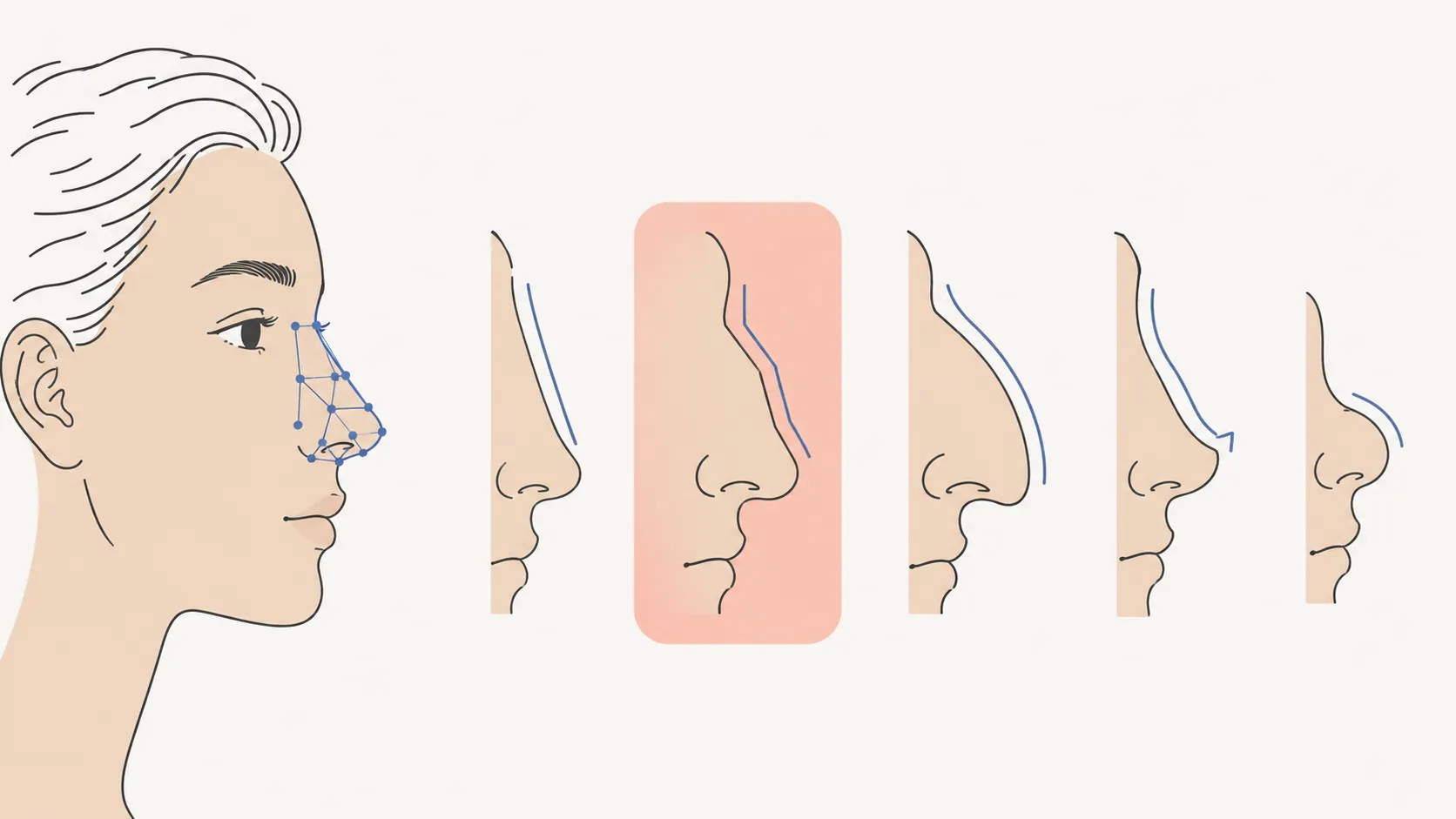
Our AI — powered by Google's MediaPipe — maps 478 facial landmarks and isolates the nose-region points: bridge, tip, alar (nostril wing) base, and nostril openings, then computes your width, length, flare, and tip-fullness ratios normalized against your face width.
Answer One Bridge Question
A frontal photo alone can't reveal whether your bridge is straight, humped, curved, or scooped — so we ask you directly, with 4 illustrated options. Combined with your frontal measurements, this determines your exact nose type.
Ready to find your nose shape?
Under a minute — your photo never leaves your device.
The 12 Nose Types Our Detector Identifies
Each nose type combines frontal proportions with your bridge profile answer. Tap any type for the full guide.
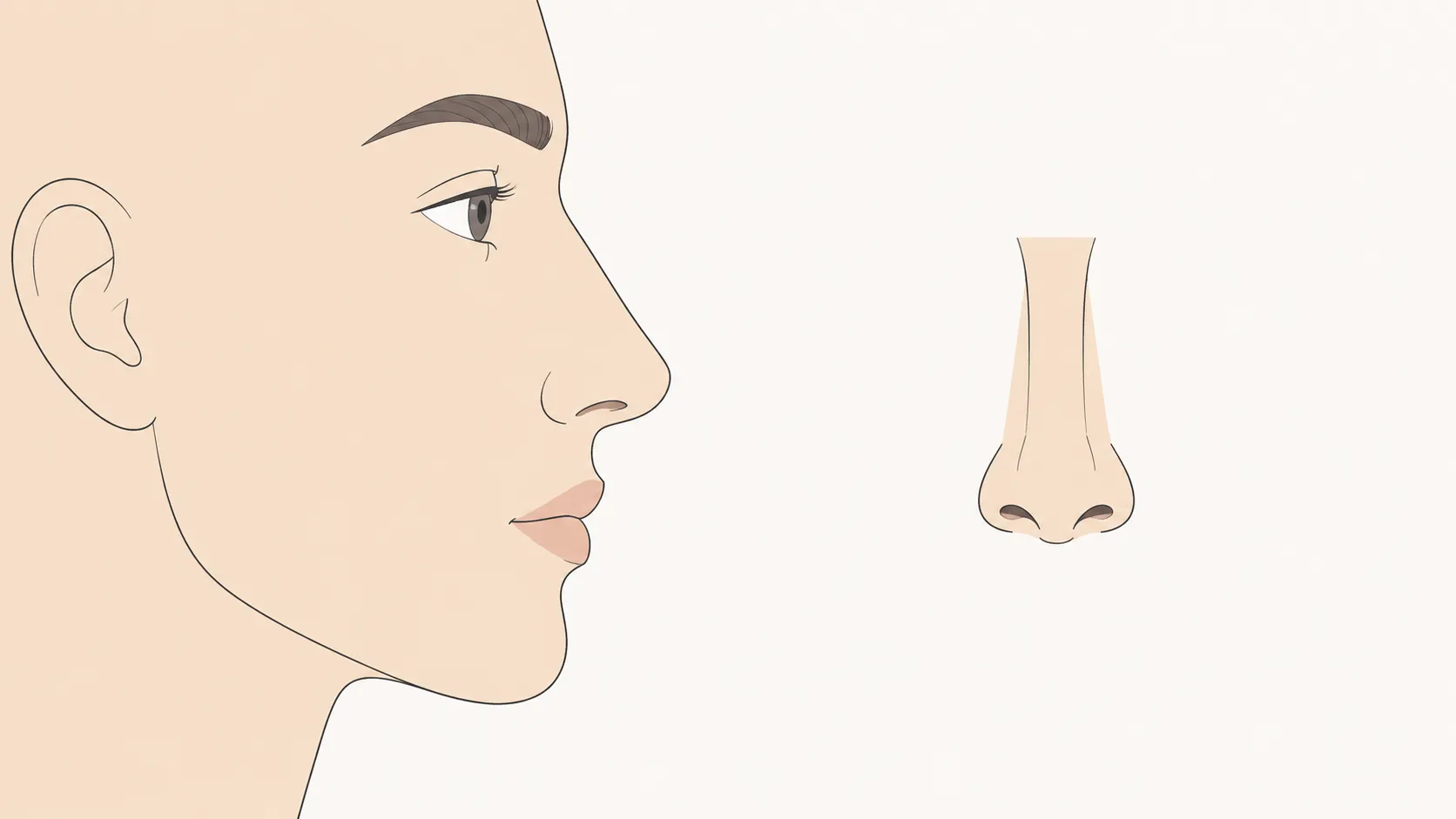
Greek Nose
A straight bridge that runs in an unbroken line from the brow to the tip, narrow width, and a refined, non-protruding tip.
Read the guide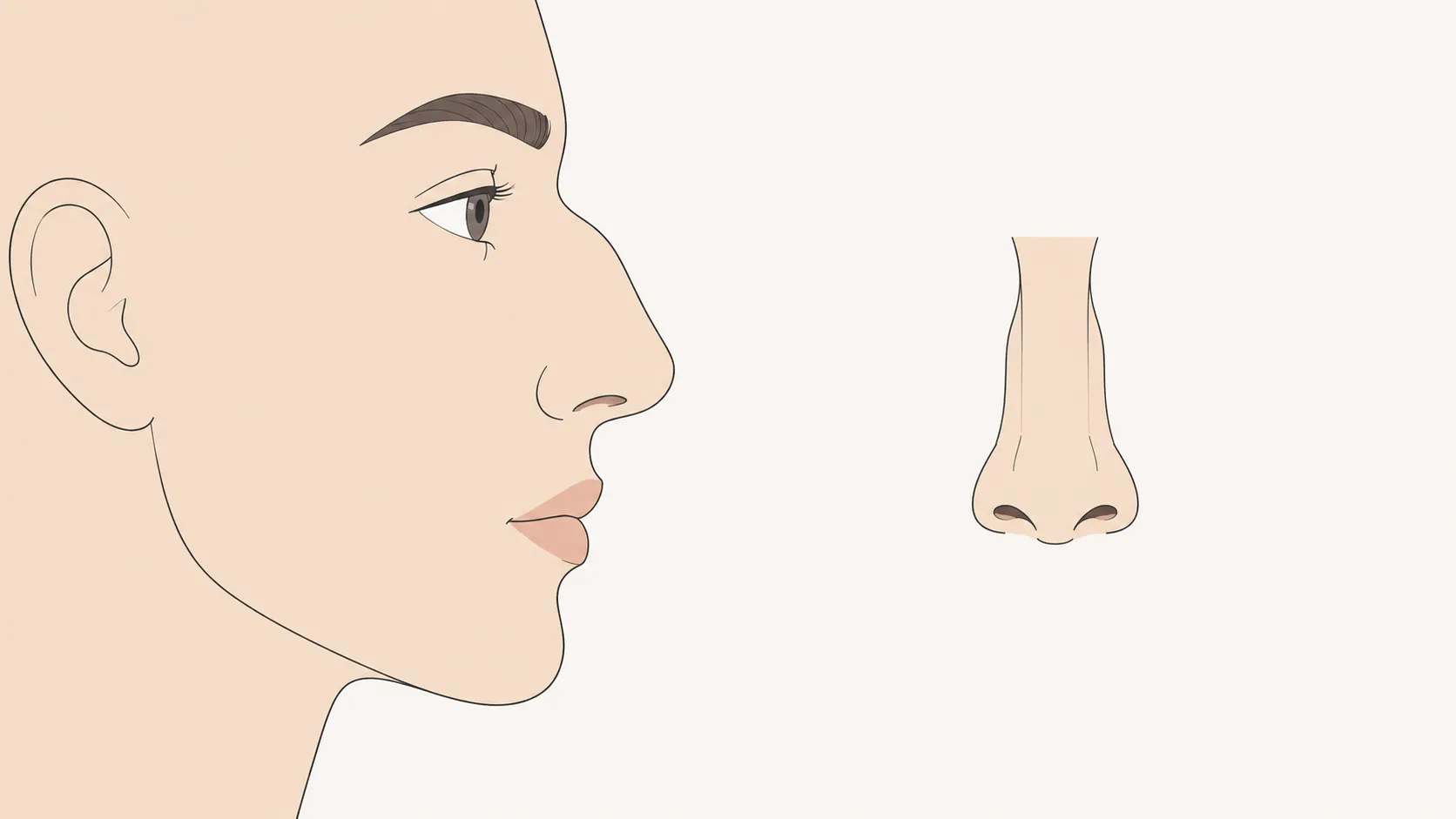
Roman Nose
A visible convex hump partway down the bridge, giving the profile a prominent, aquiline-adjacent silhouette without the pronounced downward curve of a hooked or aquiline nose.
Read the guide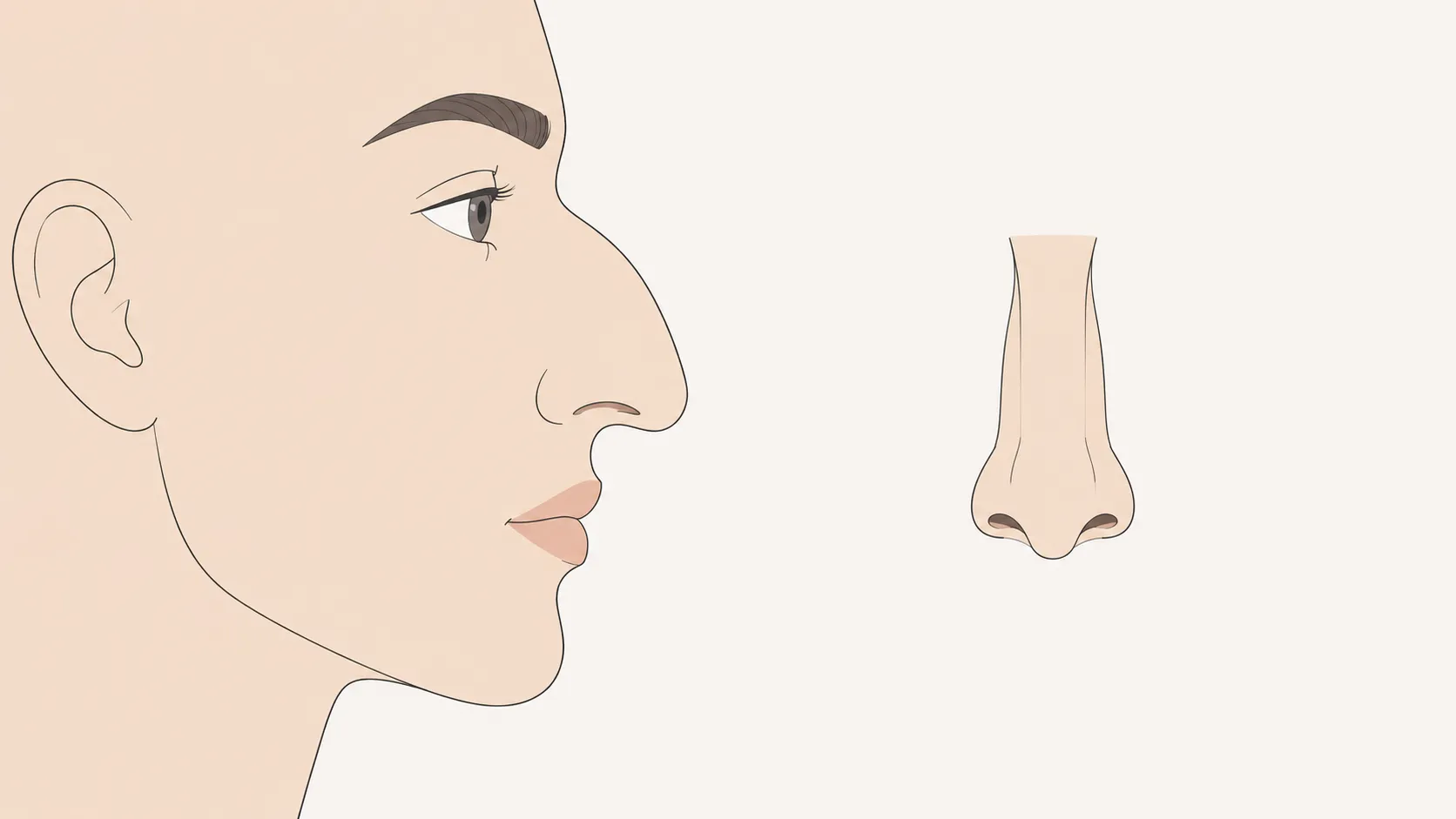
Aquiline Nose
A bridge with a pronounced downward curve through the lower third, giving an eagle-beak silhouette — a curved variant that sits between a Roman nose and a fully hooked nose.
Read the guide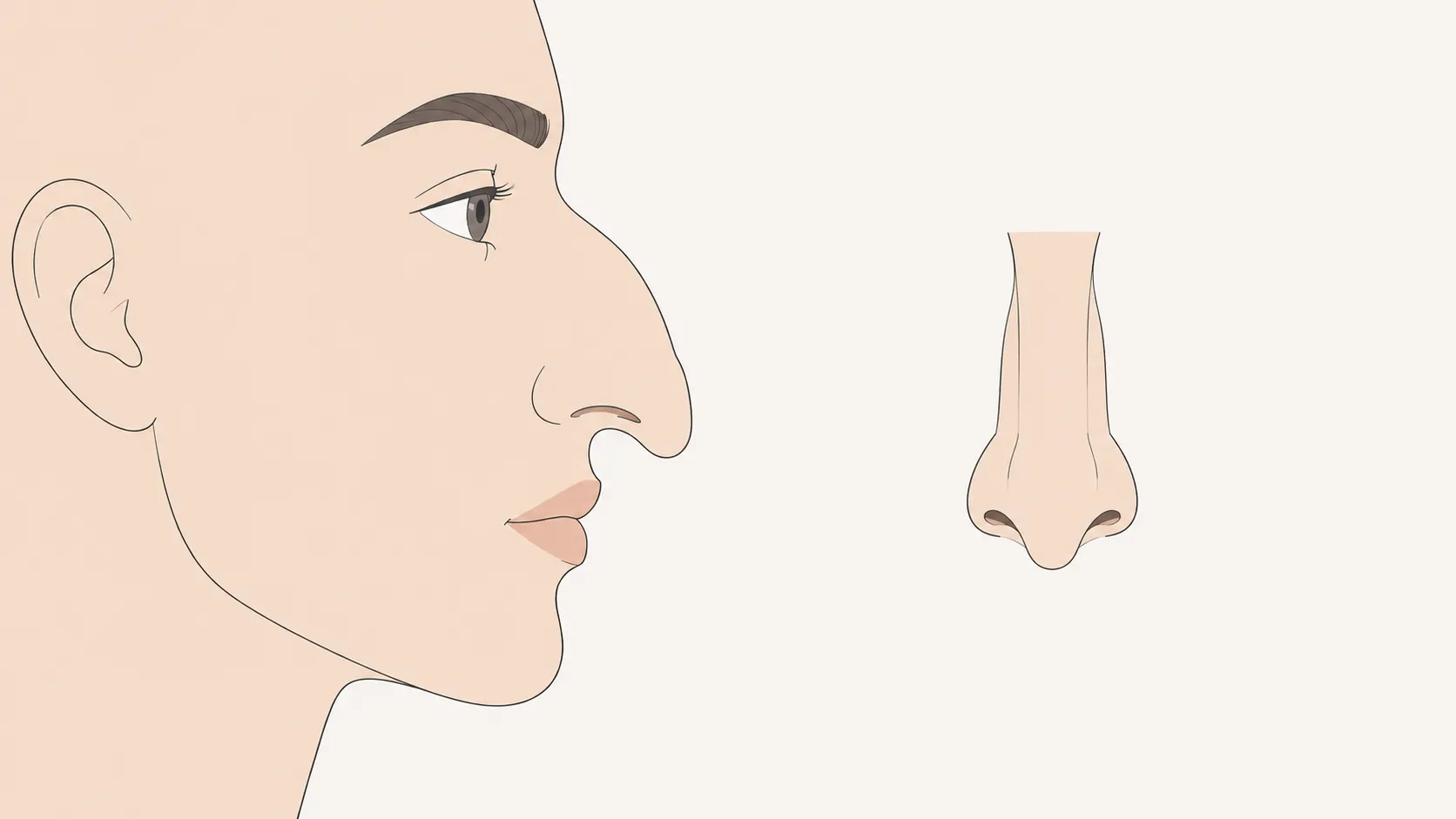
Hooked Nose
A downward-curving bridge where the tip droops enough to curl past the nostril line, partially concealing the nostrils when viewed from directly in front.
Read the guide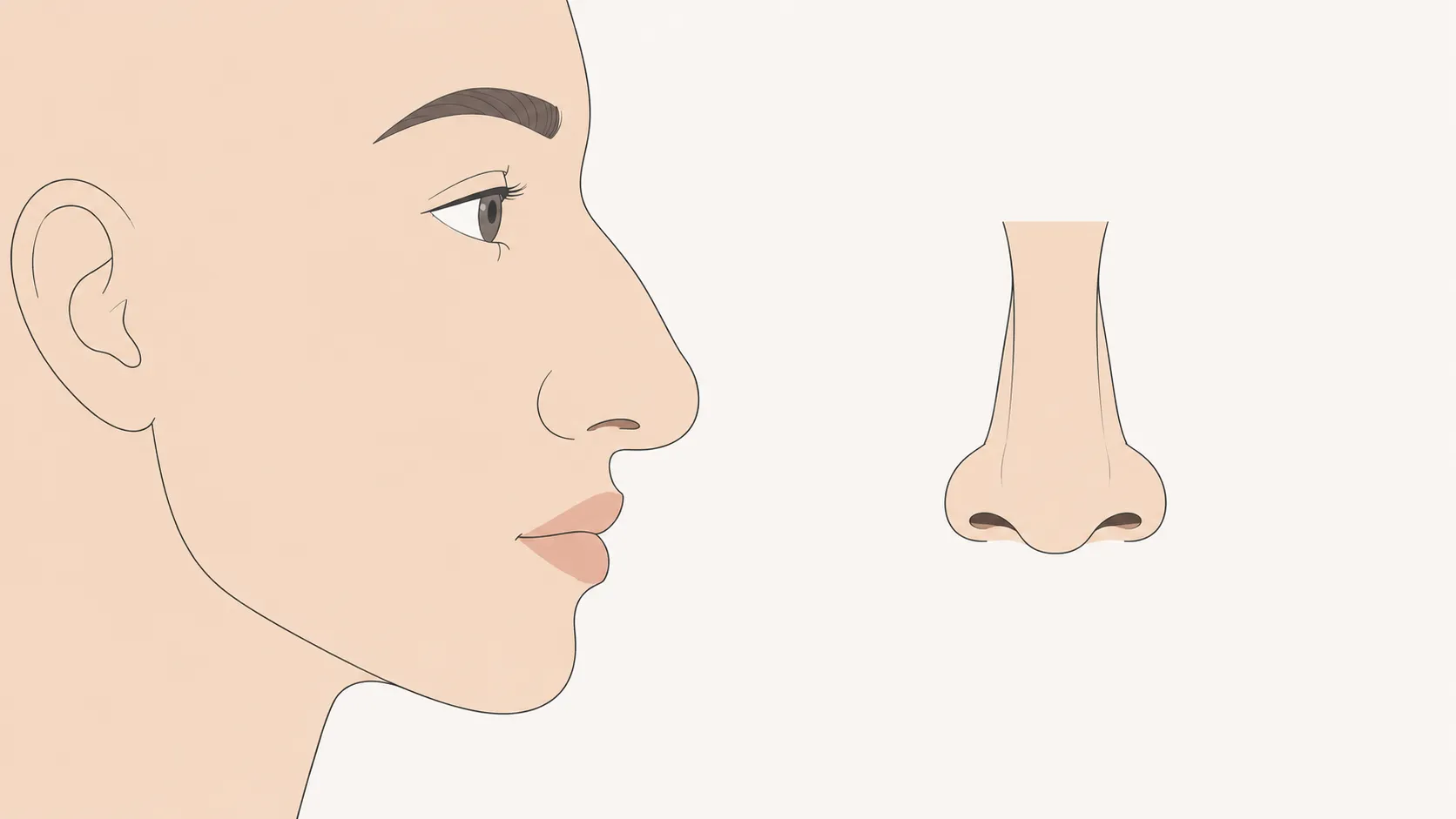
Nubian Nose
A longer nose with a wider alar (nostril wing) base and noticeable flare, and typically a straight-to-gently-curved bridge.
Read the guide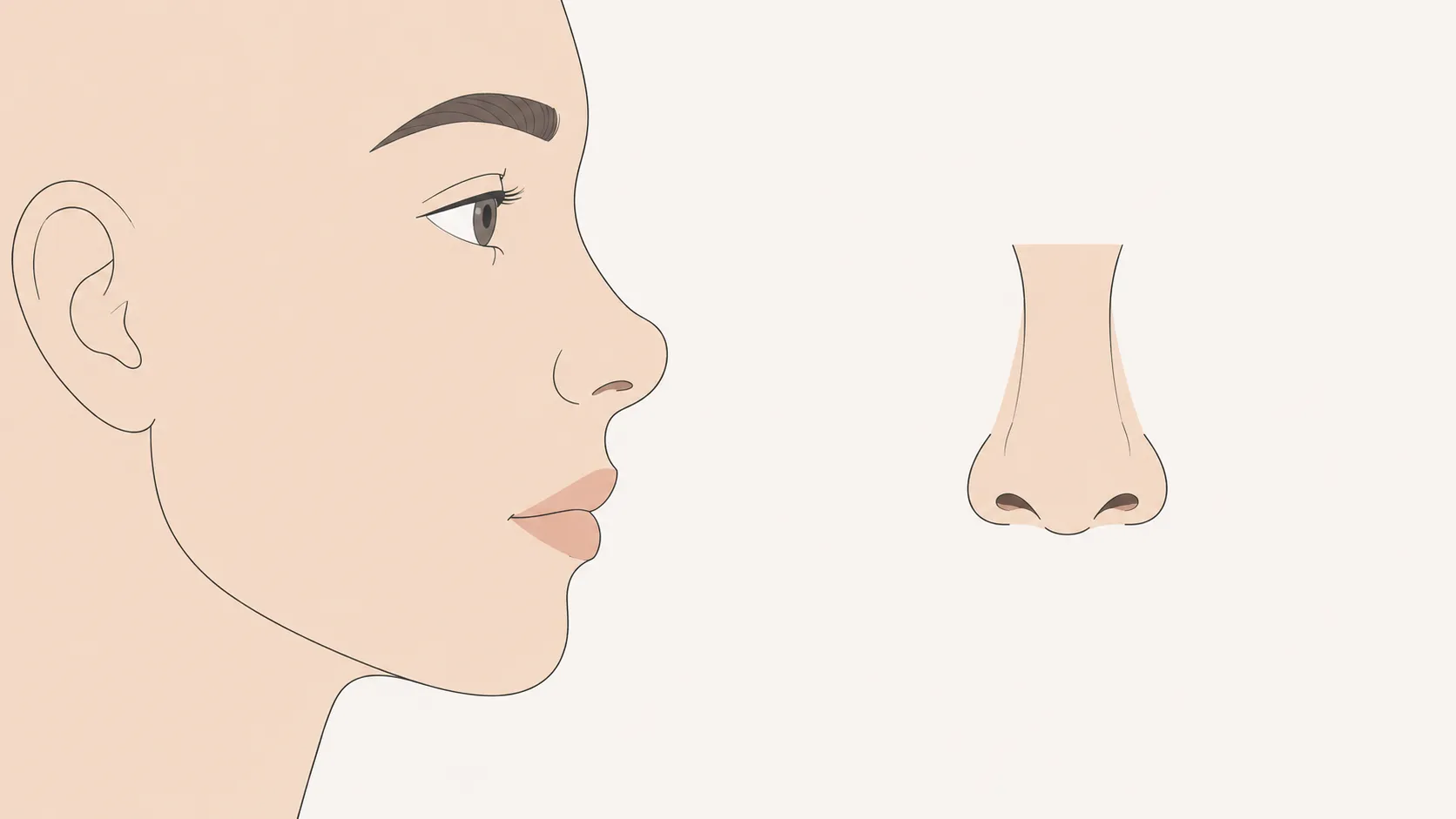
Snub Nose
A short nose with a small overall profile and a naturally upturned tip that lifts slightly away from the face.
Read the guide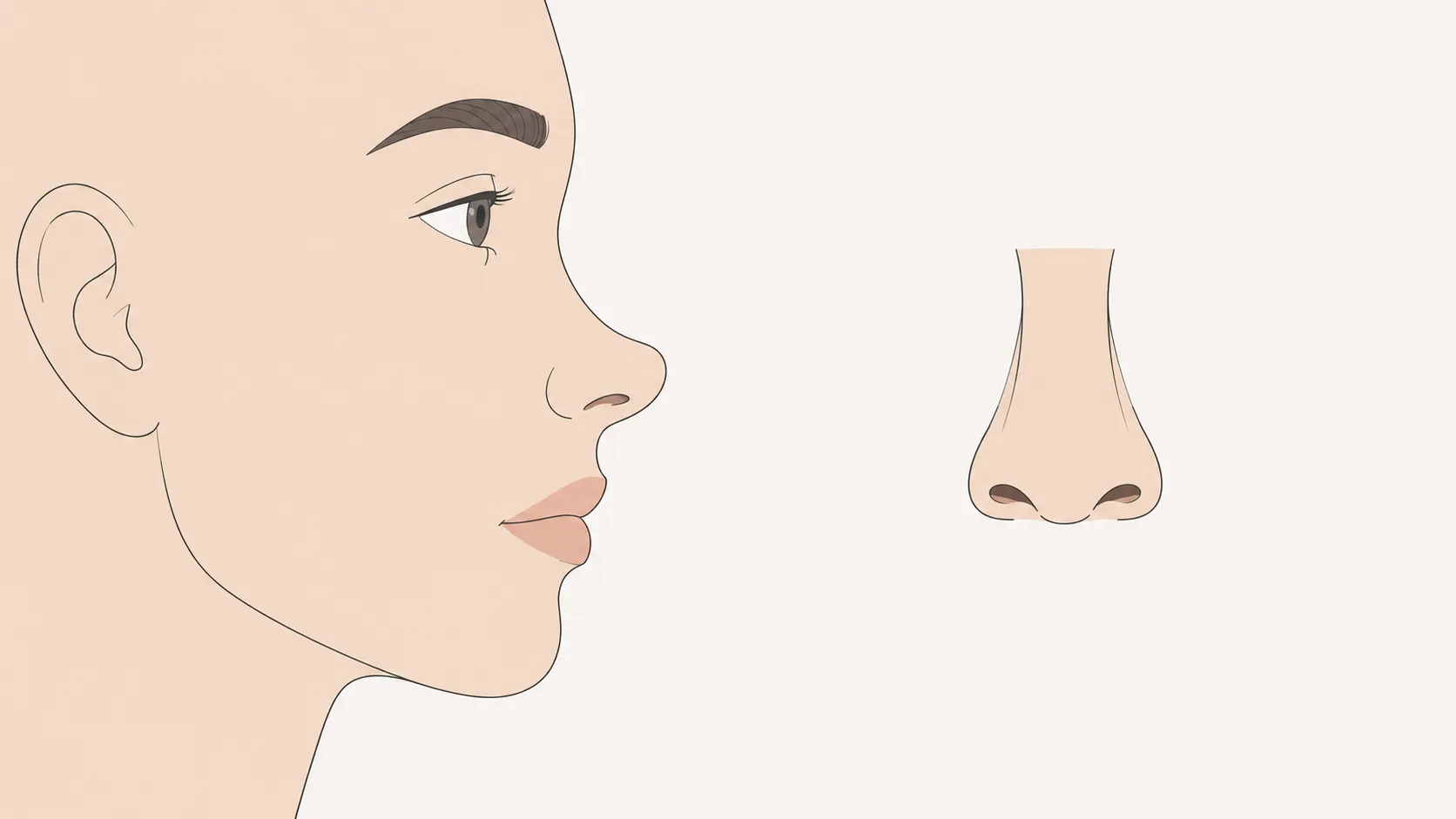
Celestial (Upturned) Nose
A concave, scooped bridge shape paired with a distinctly upturned tip — the most pronounced upward lift among the upturned nose types.
Read the guide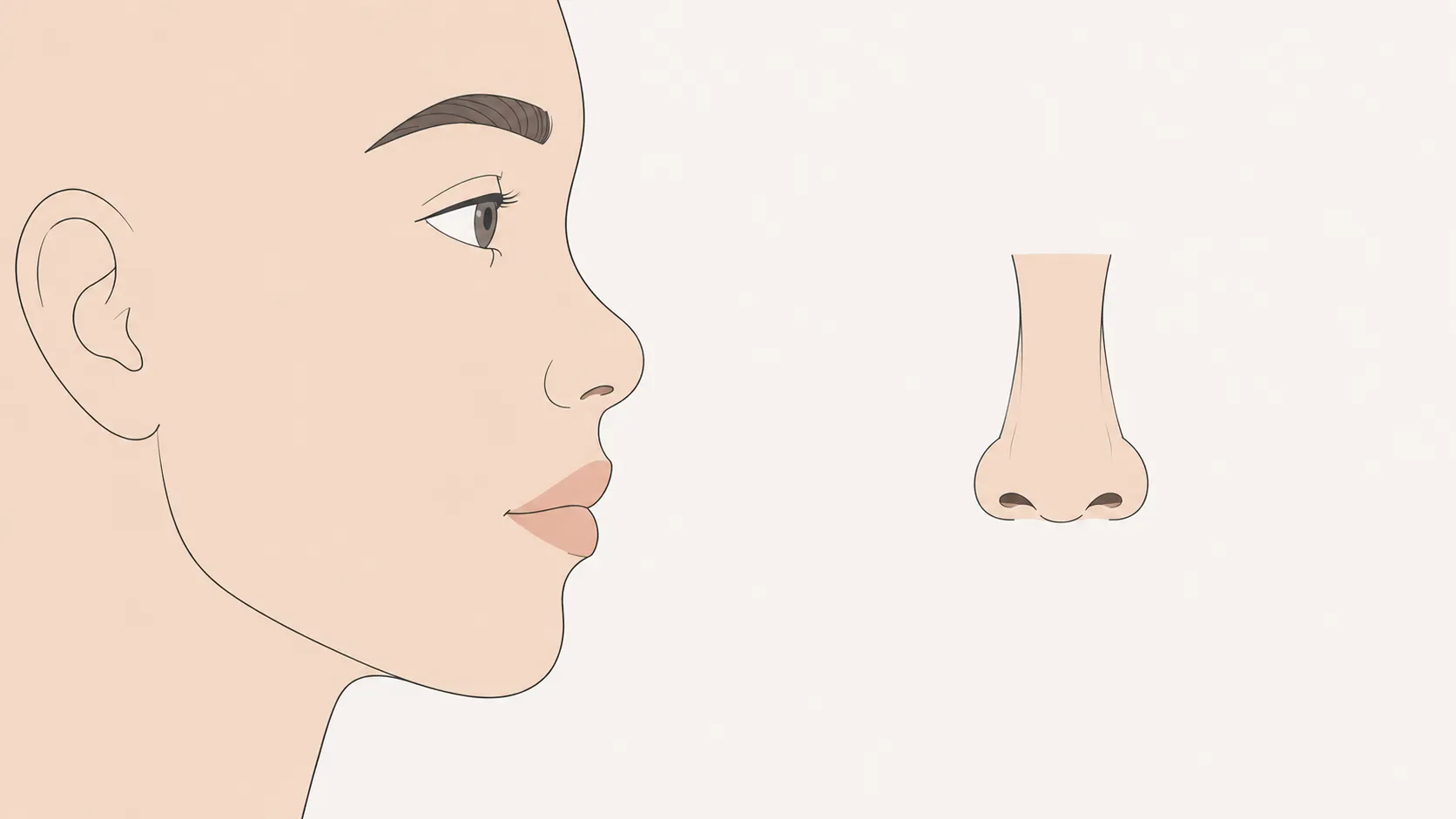
Button Nose
A short, small, straight-bridged nose with a gently rounded tip — compact overall without the pronounced upward lift of a snub or celestial nose.
Read the guide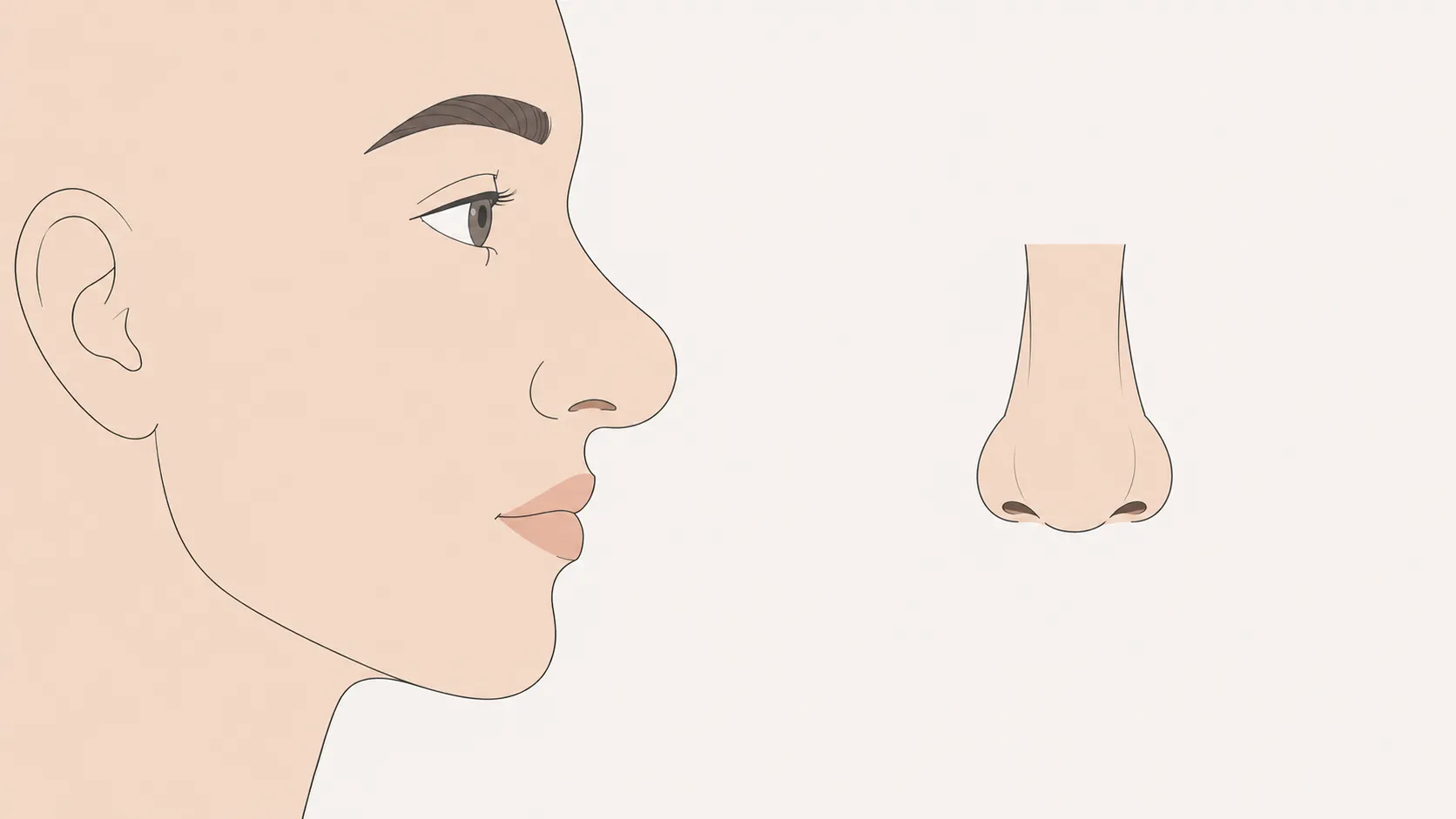
Bulbous Nose
A tip that is noticeably rounder and larger than the rest of the nose, regardless of overall nose length or bridge shape.
Read the guide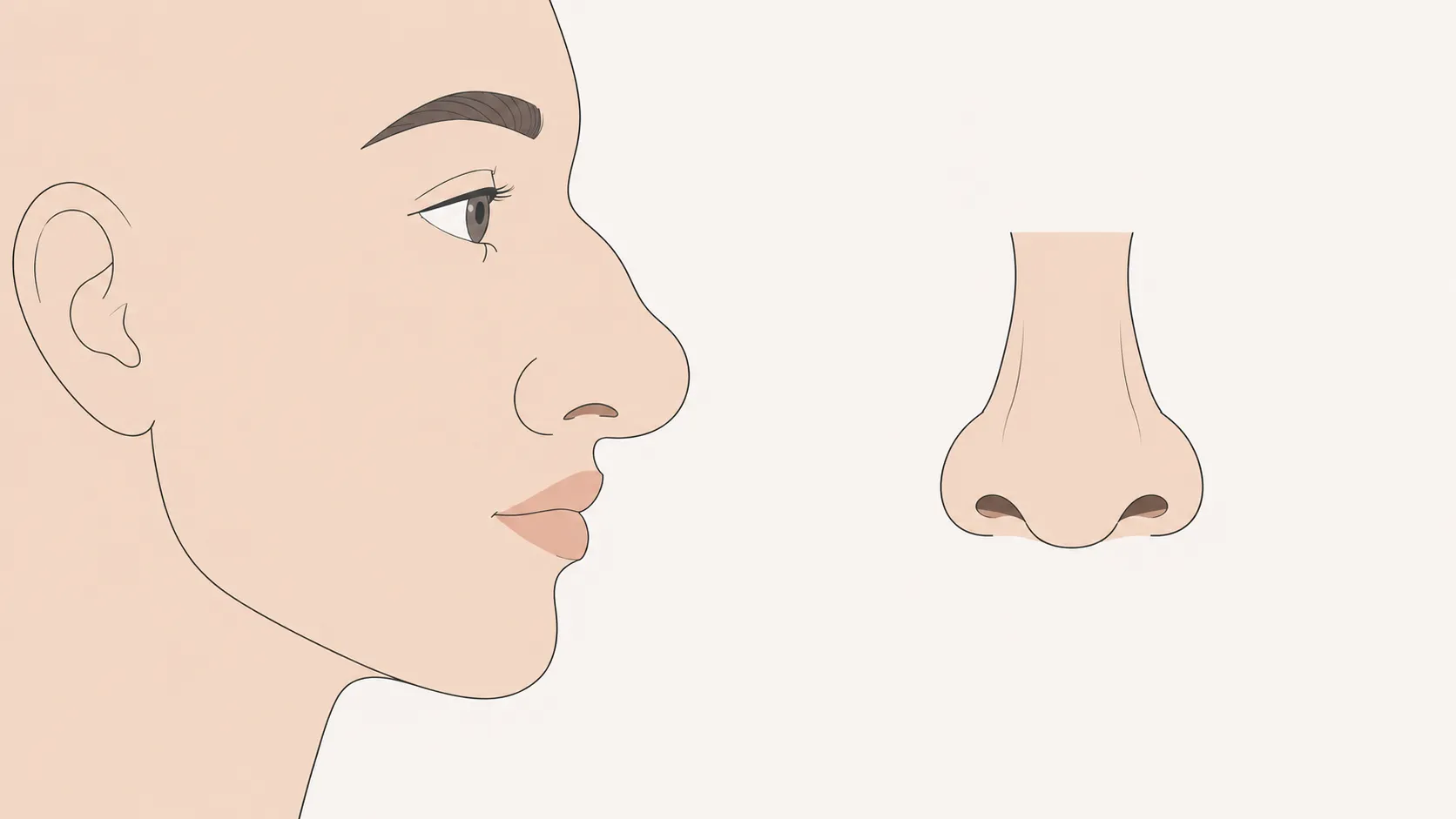
Fleshy Nose
A wide, prominent nose with soft, rounded contours throughout — combining a wider bridge, flared alar base, and a fuller tip rather than sharp, angular lines.
Read the guide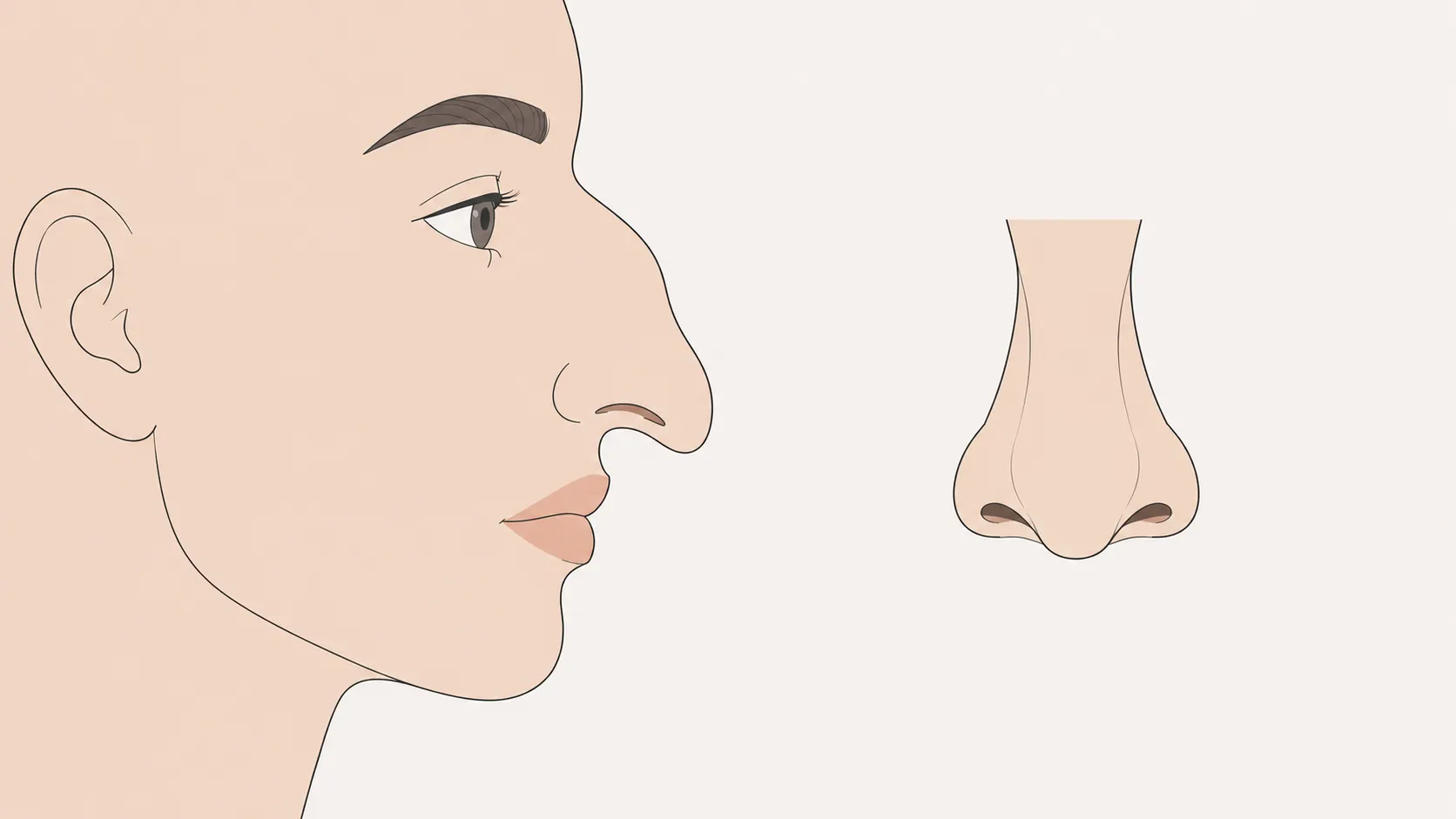
Hawk Nose
The most pronounced of the curved-bridge nose types — a dramatic hump combined with a strong downward curve, wider and more prominent than a Roman or aquiline nose.
Read the guide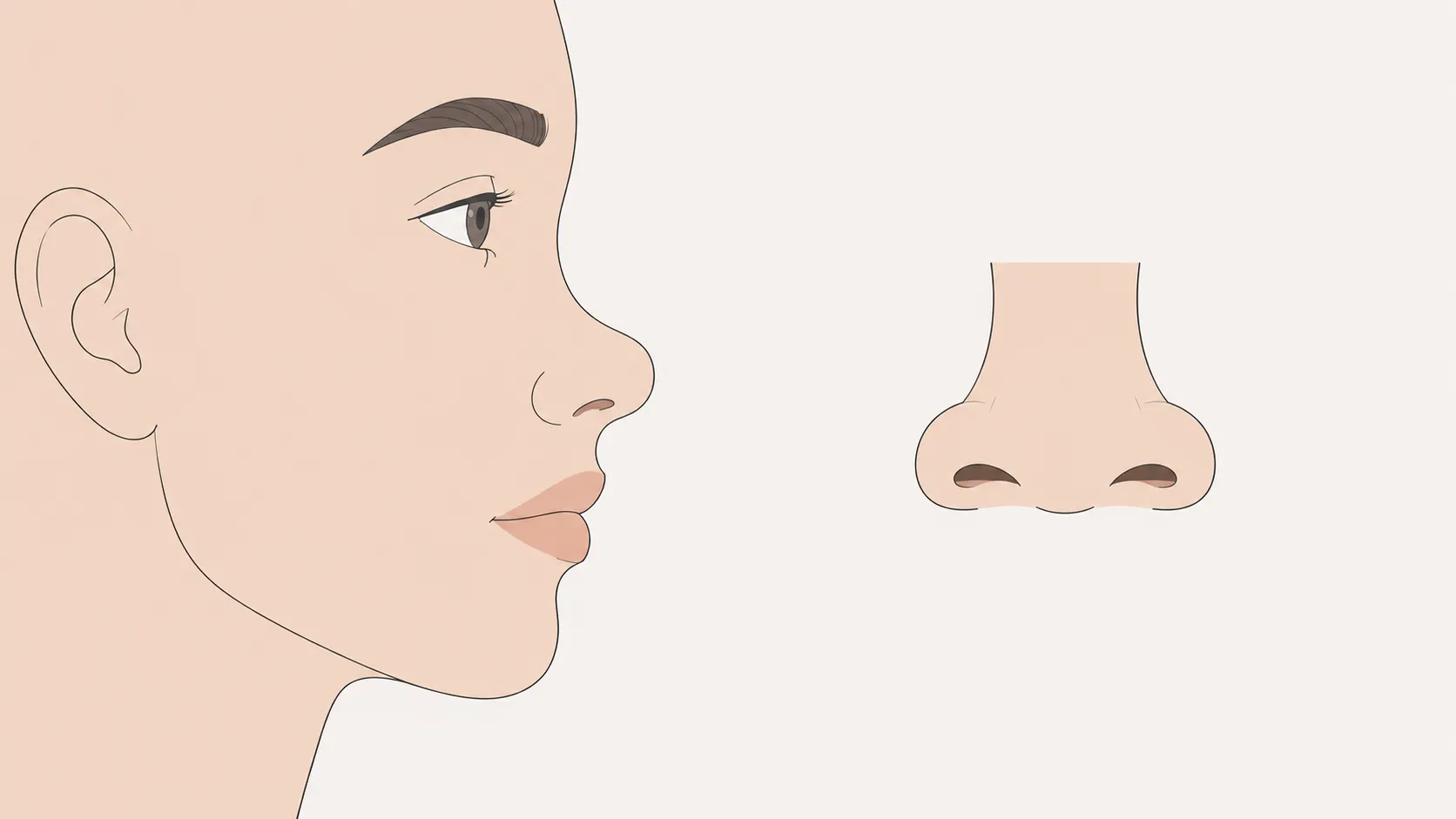
Flat / Wide Nose
A bridge with minimal projection (low, flat profile) combined with generous overall width, without the added length that defines a Nubian nose.
Read the guideNose Types at a Glance
A quick reference across all 12 nose types our detector classifies into.
| Nose Type | Defining Trait |
|---|---|
| Greek Nose | A straight, unbroken line from brow to tip |
| Roman Nose | A prominent bridge with a defined hump |
| Aquiline Nose | A pronounced downward curve, eagle-like in profile |
| Hooked Nose | A tip that curls downward, past the nostrils |
| Nubian Nose | Long and wide, with a broader alar base |
| Snub Nose | Short, small, with a naturally upturned tip |
| Celestial (Upturned) Nose | A scooped bridge with a lifted, upturned tip |
| Button Nose | Small, short, and gently rounded at the tip |
| Bulbous Nose | A rounded, enlarged tip |
| Fleshy Nose | Wide and prominent, with soft overall contours |
| Hawk Nose | A dramatic hump paired with a strong downward curve |
| Flat / Wide Nose | A low, flat bridge with generous width |
Related Tools
Face Shape Detector
Discover if you're oval, round, square, heart, or more
Eye Shape Detector
Find your eye shape & liner tips
Lip Shape Analyzer
Identify your lip shape and get personalised lipstick tips
Golden Ratio Face Calculator
Measure your golden ratio face and face phi proportions
Face Symmetry Test
Measure your facial symmetry score from a photo
Roman vs Aquiline Nose
Side-by-side comparison of the two most-confused nose types
Face Analyzer
Run every face analysis in one place
Frequently Asked Questions
Everything you need to know about how to find your nose shape and what the 12 types mean.
How do I tell what my nose shape is?
The easiest way is our AI nose shape detector — upload a front-facing photo, answer one quick question about your bridge profile (straight, humped, curved, or scooped), and get your result instantly. Manually, look at your nose from the front for width and tip shape, then from the side in a second mirror or photo for bridge shape.
What are the different types of noses?
There are 12 commonly referenced nose types: Greek (straight bridge), Roman (bridge hump), aquiline (downward curve), hooked (pronounced tip droop), Nubian (long, wide alar base), snub (short, upturned), celestial (scooped bridge, upturned tip), button (small, rounded), bulbous (enlarged rounded tip), fleshy (wide, soft contours), hawk (dramatic hump plus curve), and flat/wide (low bridge, generous width).
Why does the detector ask about my nose bridge instead of just using the photo?
Bridge profile — whether it's straight, has a hump, curves downward, or curves upward — can only be reliably judged from a side view. A single frontal photo cannot show this reliably, so rather than guess, we ask you one direct question about your profile and combine your answer with the frontal measurements for an accurate result.
What is the difference between a Roman and an aquiline nose?
Both have a convex bridge, but a Roman nose's tip stays level or projects forward, while an aquiline nose's bridge continues curving down toward the tip, creating a more pronounced eagle-beak silhouette. See our full Roman vs aquiline nose comparison for a side-by-side breakdown.
How accurate is the AI nose shape detector?
The AI uses Google MediaPipe to map 478 facial landmarks and computes nose width, length, alar flare, and tip fullness ratios, normalized against your face width so photo distance doesn't affect the result. Combined with your self-reported bridge profile, this gives a considerably more consistent result than visual self-assessment alone. For best results use a clear, front-facing photo with even lighting.
Is the detector free? Is my photo stored?
Yes, completely free — no sign-up, no account. And no, your photo is never uploaded or stored. All landmark detection happens locally in your browser using the same MediaPipe technology trusted by developers worldwide.
What is the most common nose shape?
Straight (Greek) bridges and fleshy/wide profiles are broadly common worldwide, though prevalence varies significantly by population and region. Nose shape is one of the most genetically and ethnically varied facial features, which is why anthropometric classifications describe 12 or more distinct reference types rather than a single 'average' shape.
Can nose shape change over time or with surgery?
The underlying bone and cartilage structure is largely set after adolescence and changes only gradually with age as skin and soft tissue shift — tips can appear to soften or droop slightly over decades. Rhinoplasty (nose reshaping surgery) is the main way nose shape is deliberately and significantly changed; our detector reflects your current, natural shape from your photo.
Can men and women both use the nose shape detector?
Yes. Nose shape classification is based on geometric measurements — width, length, tip fullness, alar flare, and bridge profile — that apply equally regardless of gender.
Why do I need a front-facing photo instead of a profile photo?
The AI's landmark detection needs a full frontal face to accurately locate face-width, eye, and nose-width reference points used for the width and flare measurements. We separately ask about your bridge profile as a direct question, since that's the one dimension a frontal photo can't reliably capture.
How the AI Nose Shape Detector Works
Nose shape classification is grounded in geometric anthropometry — the measurement of facial proportions rather than subjective visual impression. The core frontal measurements are the alar (nostril wing) base width, the nasion-to-tip length, the alar flare ratio relative to inner-eye distance, and tip fullness. All four are normalized against your face width, so it doesn't matter how close or far away the camera was.
Our detector uses Google's MediaPipe Face Mesh, which maps 478 three-dimensional facial landmarks in real time directly within your browser. For nose analysis, the system isolates the bridge midline, tip, alar base, and nostril landmark clusters and applies the measurement formulas above.
One measurement a frontal photo genuinely cannot provide reliably is bridge profile — whether the bridge is straight, has a hump, curves downward, or curves upward (scooped). Rather than guess at this from a frontal image, the detector asks you directly with four illustrated options, then combines your answer with the frontal measurements to reach a final classification across all 12 nose types. This is a deliberate design choice: we would rather ask an honest question than fake profile detection from an image that structurally can't support it.
All analysis on this page is performed locally in your browser. No photo is ever transmitted to any server. The tool is free, requires no sign-up, and gives you a starting point for exploring the 12 major nose types — read the full guide for your result to see its distinguishing features against the type it's most often confused with.
Disclaimer: Nose shape detection is based on geometric landmark measurements and a self-reported bridge profile, and is provided for informational purposes only. Results are estimates and may vary based on photo quality, lighting, and individual facial anatomy. This tool is not a medical diagnostic device and is not intended to inform decisions about cosmetic surgery.