Written by Naeem Ullah·Facial Feature Analyst, faceshapedetector.app·Reviewed July 2026
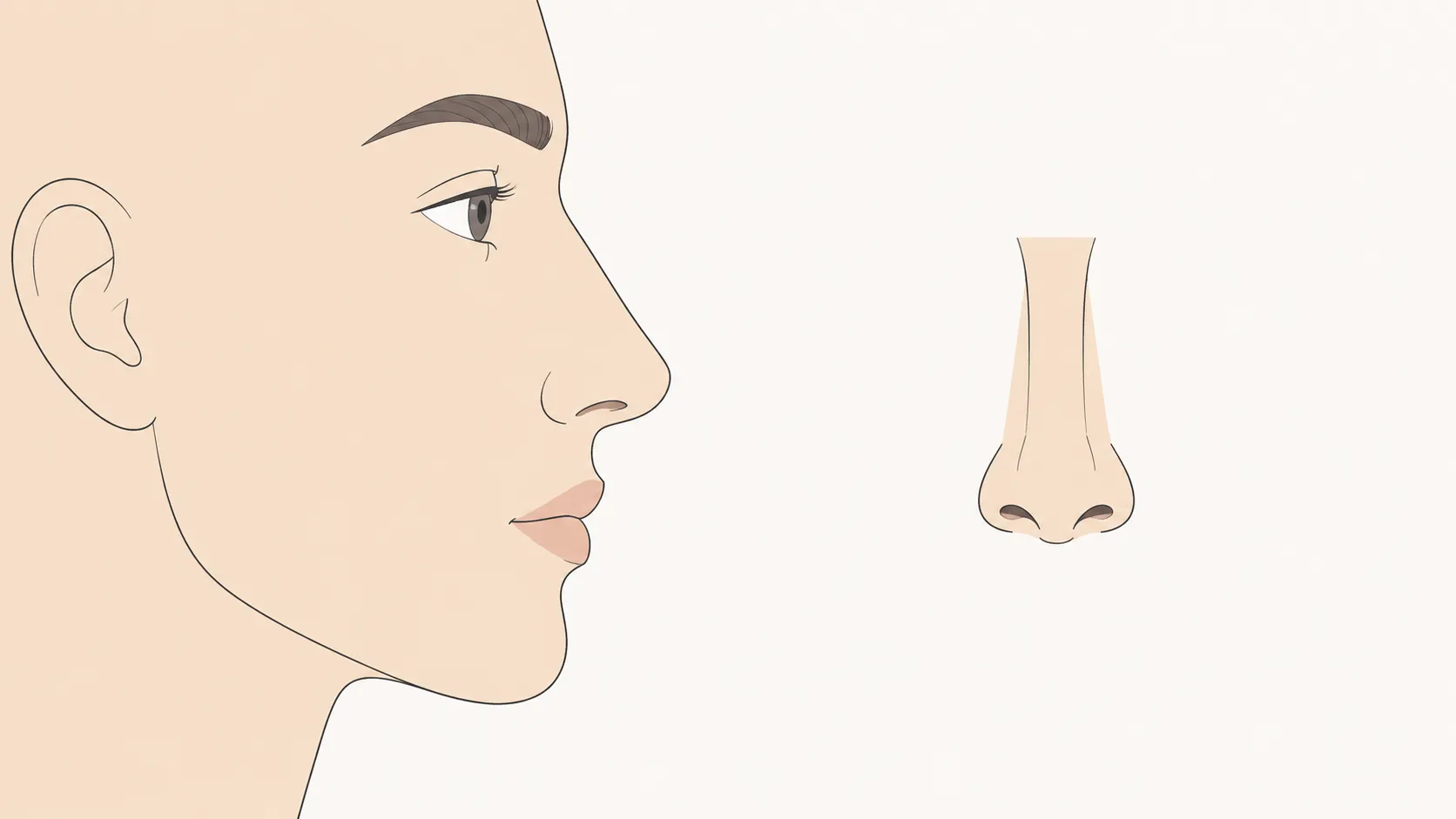
The Greek nose — sometimes called a "straight nose" — is defined by a bridge with no visible curve, hump, or dip when viewed from the side. The line from the brow to the tip is essentially straight, the width stays narrow relative to the face, and the tip is refined rather than rounded or drooping. It is the profile most closely associated with classical sculpture, where the forehead and nose were often carved to form one continuous vertical plane.
What Is a Greek Nose?
A straight bridge that runs in an unbroken line from the brow to the tip, narrow width, and a refined, non-protruding tip.
Key Characteristics of a Greek Nose
- 1Straight bridge with no hump or curve from brow to tip
- 2Narrow to average width relative to the face
- 3Refined, non-bulbous tip
- 4Minimal nostril flare
- 5Often reads as forming one line with the forehead
Not sure which nose type you have?
Greek Nose vs Button Nose — What's the Difference?
Both are straight and refined, but a Greek nose is closer to average length while a button nose is distinctly shorter and smaller overall — a Greek nose looks proportional, a button nose looks compact.
Not sure which applies to you? Use our free AI nose shape detector for an instant result. You can also read the Button Nose guide directly.
Where the Greek Nose Comes From
The profile is named for its prevalence in ancient Greek sculpture and coinage, where artists idealized a continuous brow-to-tip line as a proportional standard. It remains a common reference point in classical anthropometry and facial-proportion studies.
Greek Nose — Frequently Asked Questions
What makes a nose shape "Greek"?
A straight bridge with no hump, curve, or dip from the brow down to the tip, combined with narrow-to-average width and a refined tip that does not droop or round outward.
Is a Greek nose the same as a straight nose?
"Greek nose" and "straight nose" are generally used interchangeably. Some classifications reserve "Greek" for a straight bridge that also appears to continue the forehead line without a defined brow break.
How common is the Greek nose shape?
Straight bridges are common globally and are frequently used as the reference baseline against which humps, curves, and flares are described in anthropometric nose classifications.
Related Nose Types
- →Button Nose — Small, short, and gently rounded at the tip
- →Roman Nose — A prominent bridge with a defined hump
- →Flat / Wide Nose — A low, flat bridge with generous width
Find Out If You Have a
Greek Nose
Upload a photo to our free AI nose shape detector, answer one quick question about your bridge, and get an instant result across all 12 nose types.
Detect My Nose Shape — FreeNo sign-up · 100% private · Works on all devices