Written by Naeem Ullah·Facial Feature Analyst, faceshapedetector.app·Reviewed July 2026
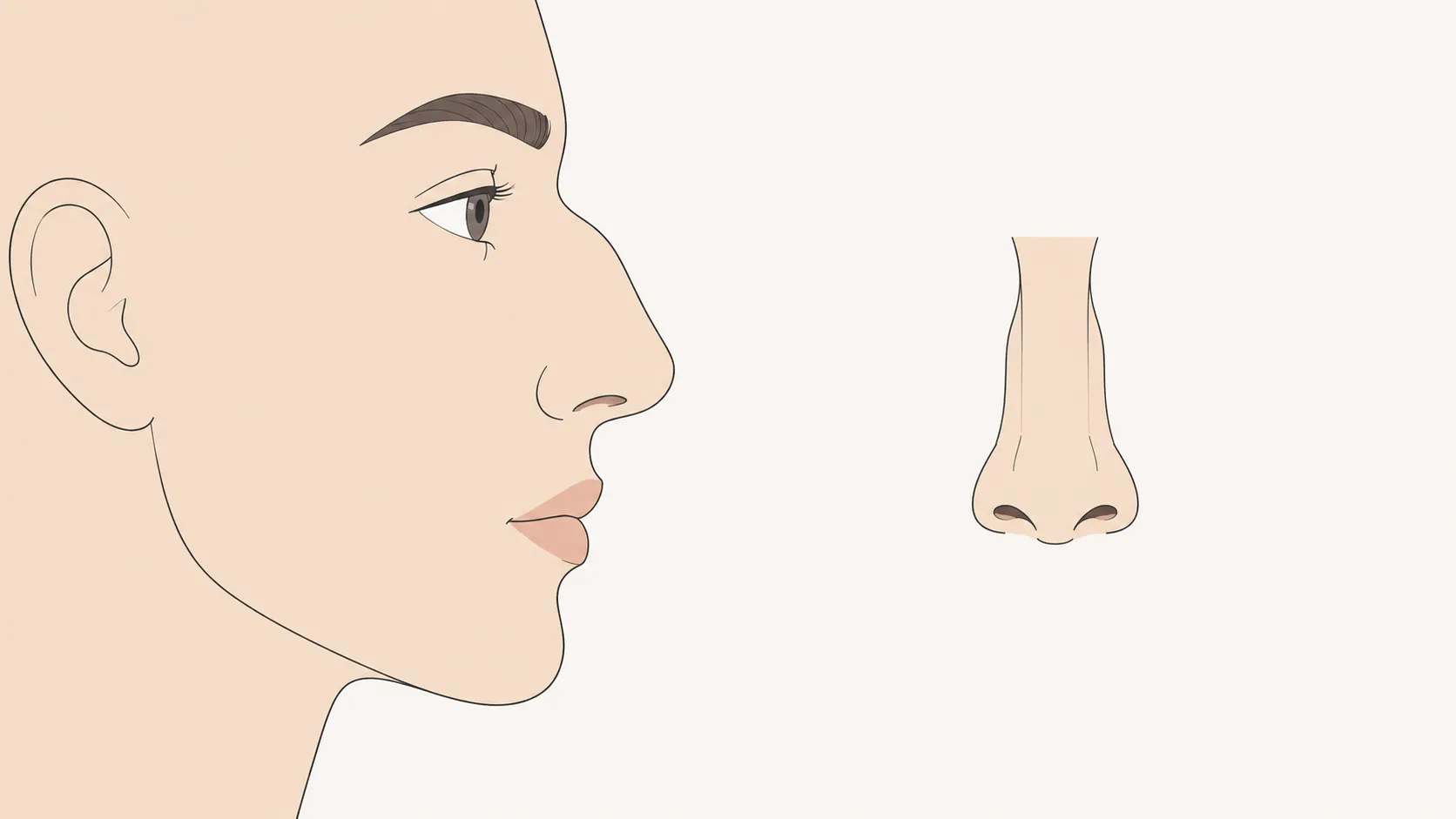
The Roman nose, sometimes called an aquiline-adjacent or "hawk-like" profile, is defined by a distinct convex bump or hump along the bridge — most often in the upper-to-middle third — that catches the light differently than the flat plane of a straight nose. The tip typically sits level or projects forward rather than curving sharply downward, which is the key difference from an aquiline or hooked nose. It is generally read as a strong, prominent profile.
What Is a Roman Nose?
A visible convex hump partway down the bridge, giving the profile a prominent, aquiline-adjacent silhouette without the pronounced downward curve of a hooked or aquiline nose.
Key Characteristics of a Roman Nose
- 1Visible convex hump or bump along the bridge
- 2Prominent, often longer profile
- 3Tip sits level or projects forward, without a strong downward curl
- 4Average-to-wide width depending on individual proportions
- 5Strong side-profile silhouette
Not sure which nose type you have?
Roman Nose vs Aquiline Nose — What's the Difference?
A Roman nose has a hump but the tip stays level or forward-facing; an aquiline nose adds a pronounced downward curve through the lower bridge and tip, giving it more of a hooked silhouette overall.
Not sure which applies to you? Use our free AI nose shape detector for an instant result. You can also read the Aquiline Nose guide directly. Or see the full Roman vs aquiline nose comparison for a side-by-side breakdown.
Where the Roman Nose Comes From
The name comes from Roman portrait busts and coinage, where a prominent bridge with a defined hump was a recurring feature in period sculpture and is still used as the reference type in facial-profile anthropometry.
Roman Nose — Frequently Asked Questions
What is a Roman nose?
A nose with a visible convex hump along the bridge, typically in the upper-to-middle third, with a tip that stays level or projects forward rather than curving down.
Is a Roman nose the same as an aquiline nose?
They are related but not identical. Both feature a bridge hump, but an aquiline nose has a more pronounced downward curve through the tip, while a Roman nose's tip stays level or forward-facing.
Can a Roman nose change over time?
The bony and cartilage structure that creates the hump is largely set by early adulthood, though minor changes in perceived prominence can occur with skin and soft-tissue changes as we age.
Related Nose Types
- →Aquiline Nose — A pronounced downward curve, eagle-like in profile
- →Hawk Nose — A dramatic hump paired with a strong downward curve
- →Greek Nose — A straight, unbroken line from brow to tip
Find Out If You Have a
Roman Nose
Upload a photo to our free AI nose shape detector, answer one quick question about your bridge, and get an instant result across all 12 nose types.
Detect My Nose Shape — FreeNo sign-up · 100% private · Works on all devices