Written by Naeem Ullah·Facial Feature Analyst, faceshapedetector.app·Reviewed July 2026
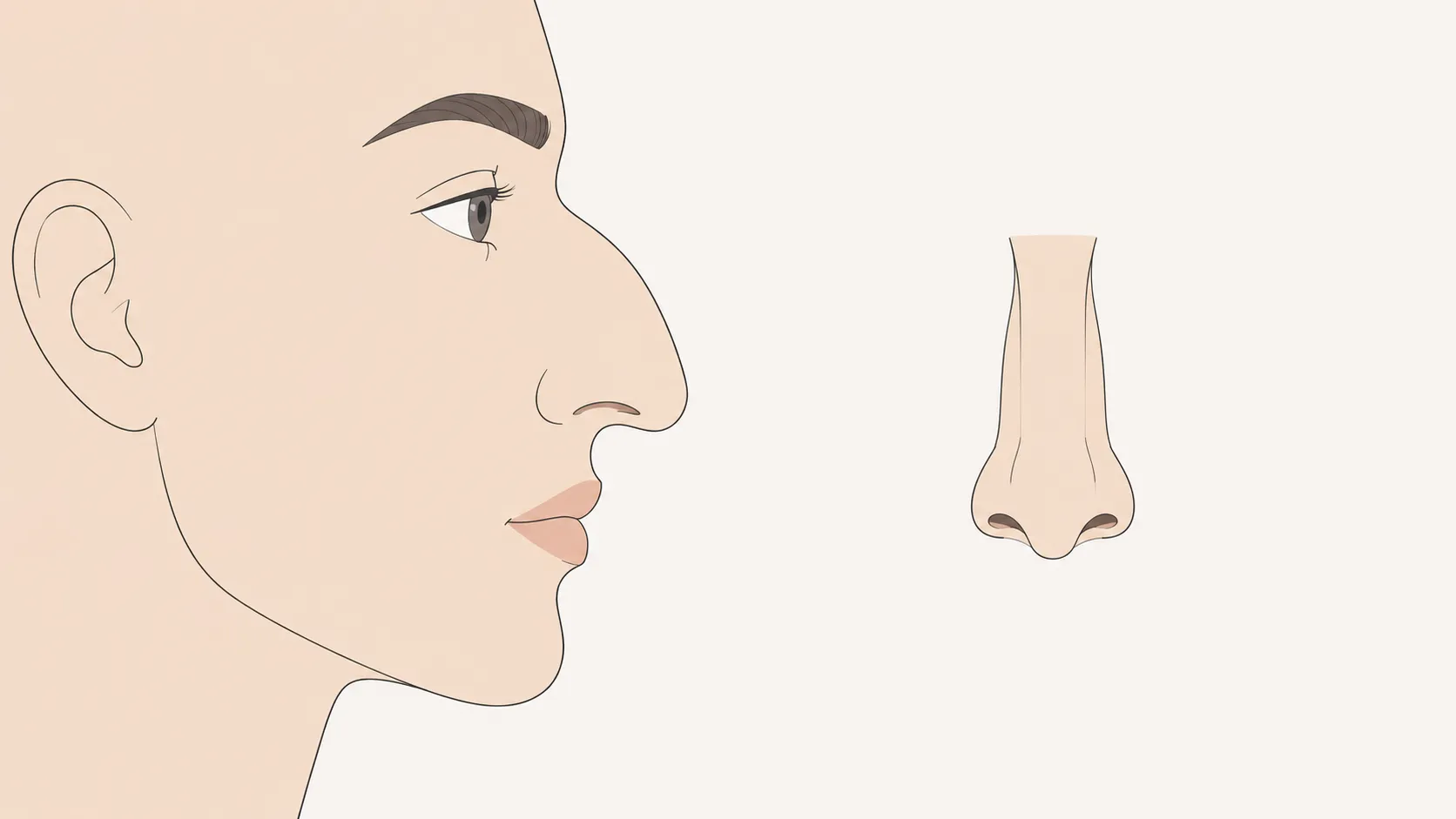
Aquiline comes from the Latin aquilinus, "eagle-like," describing a bridge that curves downward through the lower third toward the tip, producing a beak-like silhouette when viewed from the side. It shares the convex bridge of a Roman nose but continues that curve further down toward — though not fully into — the tip. The distinction from a hooked nose is one of degree: an aquiline tip curves but does not droop enough to visibly cover or hide the nostrils from the front.
What Is an Aquiline Nose?
A bridge with a pronounced downward curve through the lower third, giving an eagle-beak silhouette — a curved variant that sits between a Roman nose and a fully hooked nose.
Key Characteristics of an Aquiline Nose
- 1Pronounced downward curve through the lower bridge
- 2Eagle-beak profile silhouette
- 3Tip curves but does not droop enough to conceal the nostrils
- 4Often paired with a defined, prominent bridge
- 5Reads as strong and angular from the side
Not sure which nose type you have?
Aquiline Nose vs Hooked Nose — What's the Difference?
Both curve downward, but a hooked nose's tip droops further, often curling enough to partially hide the nostrils from a frontal view — an aquiline nose's curve is present but less extreme.
Not sure which applies to you? Use our free AI nose shape detector for an instant result. You can also read the Hooked Nose guide directly. Or see the full Roman vs aquiline nose comparison for a side-by-side breakdown.
Where the Aquiline Nose Comes From
The term has been used since antiquity to describe profiles resembling a bird of prey's beak, and it remains the standard anthropometric term for this specific curved-bridge silhouette across historical portraiture and sculpture references.
Aquiline Nose — Frequently Asked Questions
What does "aquiline" mean for a nose shape?
Aquiline means "eagle-like" in Latin, describing a bridge that curves downward through the lower third toward the tip, similar to a bird of prey's beak.
Is aquiline the same as Roman or hooked?
It sits between the two. A Roman nose has a hump but a level tip; a hooked nose has a more extreme downward curl that can hide the nostrils. Aquiline has the curve of both but at a moderate degree.
Is an aquiline nose common?
Curved-bridge profiles occur across many populations and have long been noted in anthropometric and art-historical references as a distinct, recognizable nose category.
Related Nose Types
- →Roman Nose — A prominent bridge with a defined hump
- →Hooked Nose — A tip that curls downward, past the nostrils
- →Hawk Nose — A dramatic hump paired with a strong downward curve
Find Out If You Have an
Aquiline Nose
Upload a photo to our free AI nose shape detector, answer one quick question about your bridge, and get an instant result across all 12 nose types.
Detect My Nose Shape — FreeNo sign-up · 100% private · Works on all devices