Written by Naeem Ullah·Facial Feature Analyst, faceshapedetector.app·Reviewed July 2026
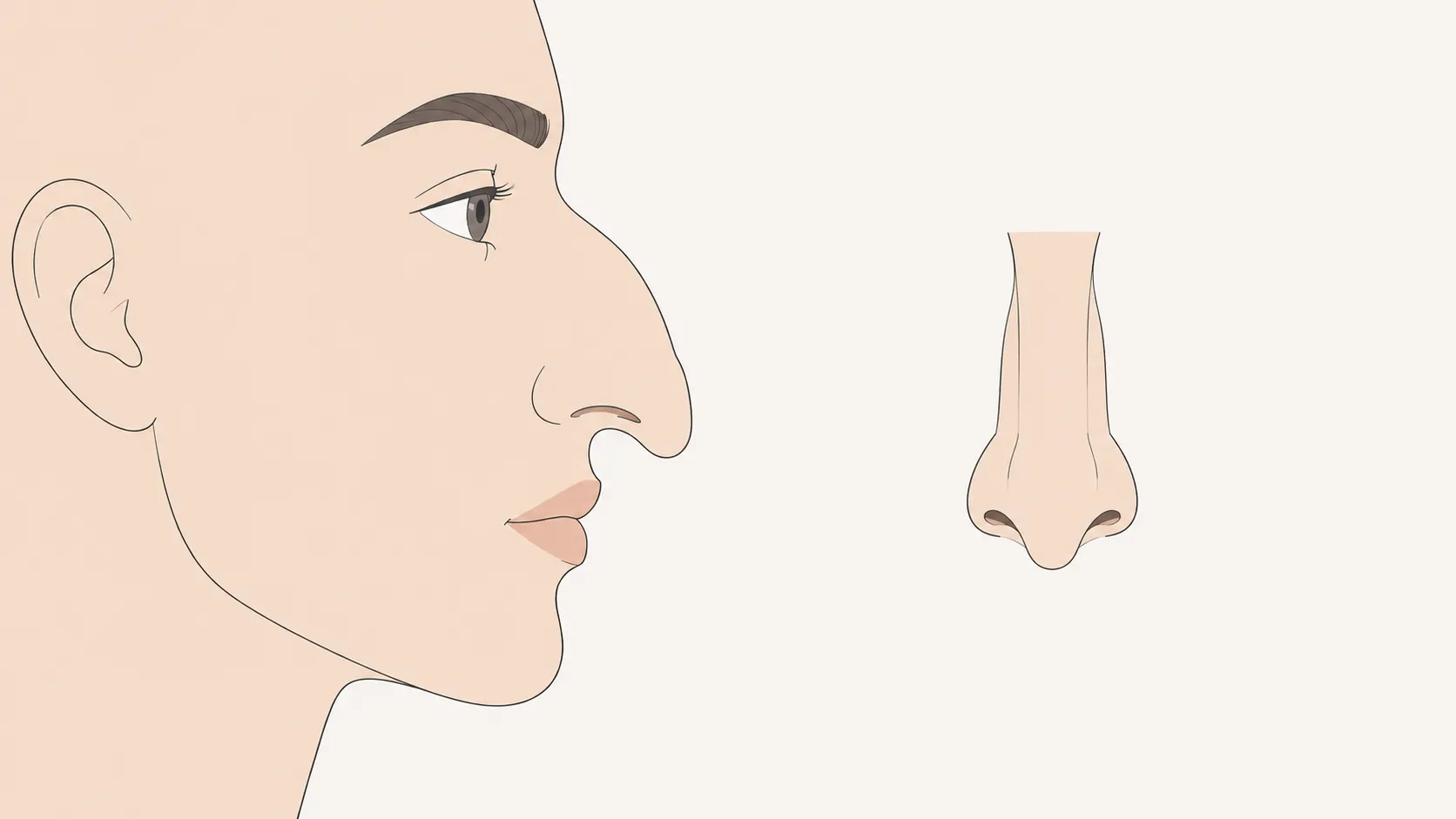
A hooked nose takes the downward curve seen in an aquiline profile a step further: the tip itself droops or curls downward past the plane of the nostrils, so that from a frontal view the nostril openings are partially hidden beneath the curled tip. This tip droop — not just bridge curvature — is the defining feature. The bridge above it is often, but not always, accompanied by a hump.
What Is a Hooked Nose?
A downward-curving bridge where the tip droops enough to curl past the nostril line, partially concealing the nostrils when viewed from directly in front.
Key Characteristics of a Hooked Nose
- 1Bridge curves downward through the lower third
- 2Tip droops or curls past the nostril line
- 3Nostrils are partially concealed from a direct frontal view
- 4Often paired with a defined bridge hump
- 5Strongest curve of the downward-curving nose types
Not sure which nose type you have?
Hooked Nose vs Aquiline Nose — What's the Difference?
The dividing line is tip droop: an aquiline nose curves but the nostrils stay visible from the front, while a hooked nose's tip curls down enough to partially hide them.
Not sure which applies to you? Use our free AI nose shape detector for an instant result. You can also read the Aquiline Nose guide directly.
Where the Hooked Nose Comes From
Pronounced tip droop has been documented across historical portraiture and anthropometric literature as a distinct variant of the curved-bridge nose family, separate from the more moderate aquiline curve.
Hooked Nose — Frequently Asked Questions
What causes a hooked nose shape?
Like most nose shapes, it comes from the underlying bone and cartilage structure — specifically how the lower lateral cartilages and septum are angled, which is primarily genetic.
Is a hooked nose the same as an aquiline nose?
They're closely related curved-bridge shapes. The distinguishing factor is degree: a hooked nose's tip droops enough to partially hide the nostrils from the front, while an aquiline nose's does not.
Can a hooked nose be softened without surgery?
Contouring makeup that lightens the tip and darkens the sides of the bridge can visually soften the curve in photos, though it does not change the underlying structure.
Related Nose Types
- →Aquiline Nose — A pronounced downward curve, eagle-like in profile
- →Hawk Nose — A dramatic hump paired with a strong downward curve
- →Roman Nose — A prominent bridge with a defined hump
Find Out If You Have a
Hooked Nose
Upload a photo to our free AI nose shape detector, answer one quick question about your bridge, and get an instant result across all 12 nose types.
Detect My Nose Shape — FreeNo sign-up · 100% private · Works on all devices