Skin Tone Analyzer
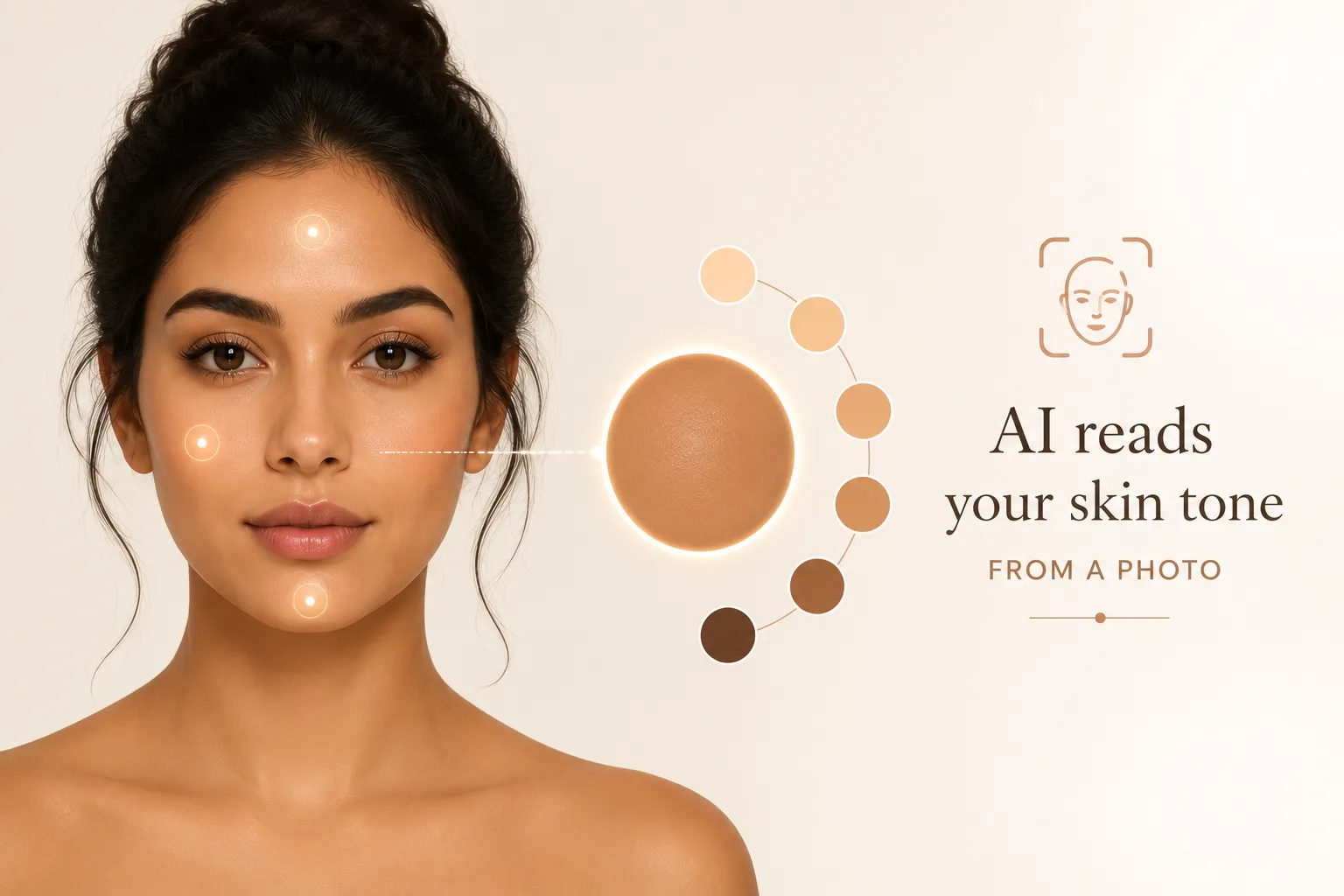
Upload a photo to instantly detect your exact skin tone and undertone — warm, cool, neutral, or olive — plus a full color, jewelry, and hair-color guide personalized to your result. Think of it as an AI skin tone detector: analyze skin tone online, free, with no signup or app download required.
Skin Tone Finder Using Your Camera or a Photo
The tool above works as a skin color detector and skin tone identifier in two ways: open your device camera directly for a live reading, or upload an existing photo. Either way, it's a skin tone scanner online — nothing to install, and your photo is never uploaded to a server.
For the most accurate skin tone test photo, whichever method you use:
- Use natural daylight, not artificial or colored lighting
- Skip filters and any auto-enhance/beauty mode on your camera app
- Go bare-faced — foundation or tinted moisturizer will skew the reading
- Shoot against a neutral (white or gray) background, not a strongly colored wall
- Let your camera's auto white balance settle for a second before capturing
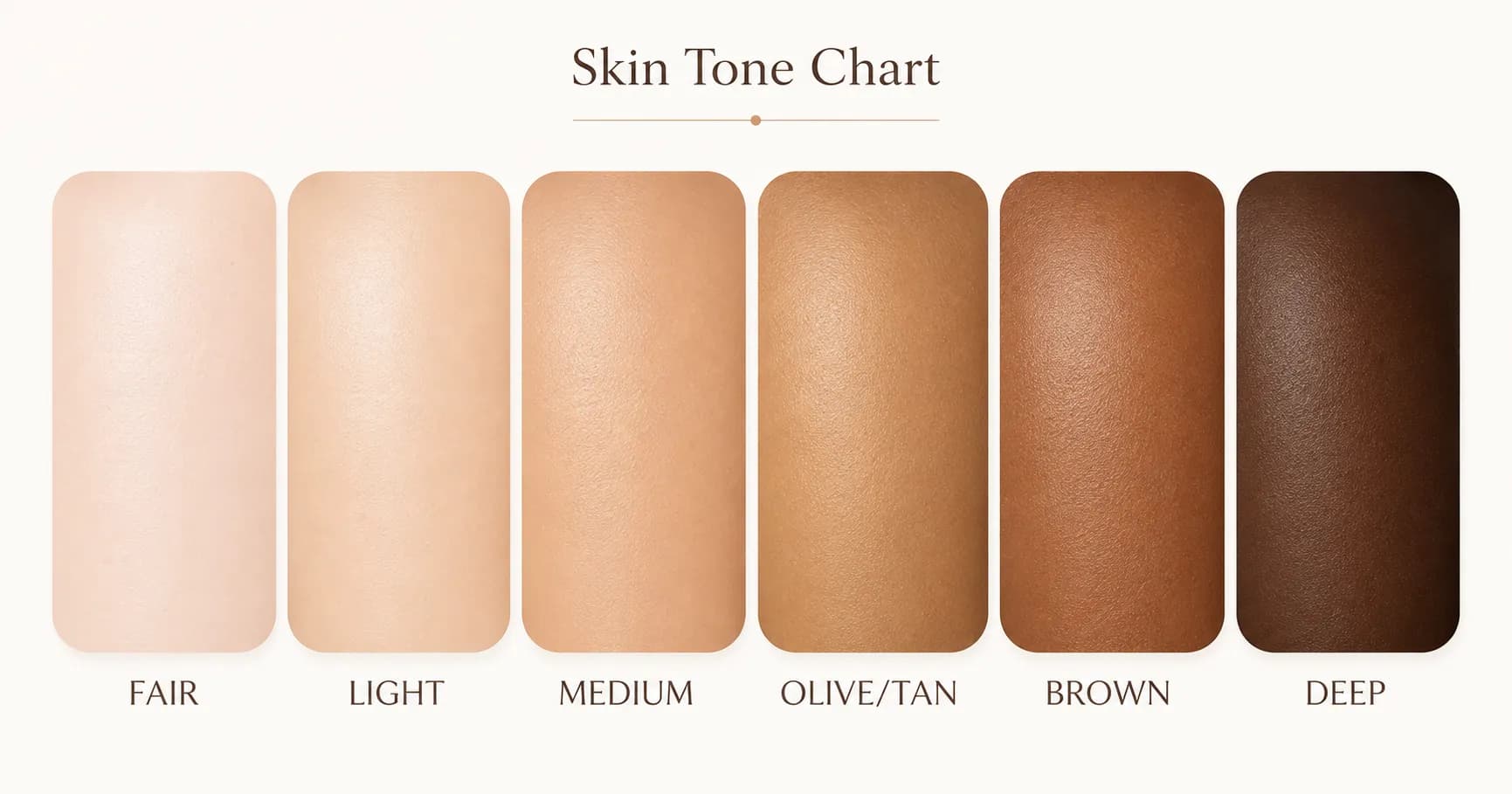
Skin Tone Chart: All Skin Tones Explained
This analyzer classifies every result into one of six tone bands, from the lightest to the deepest, based on the L* (lightness) value of your sampled skin color.
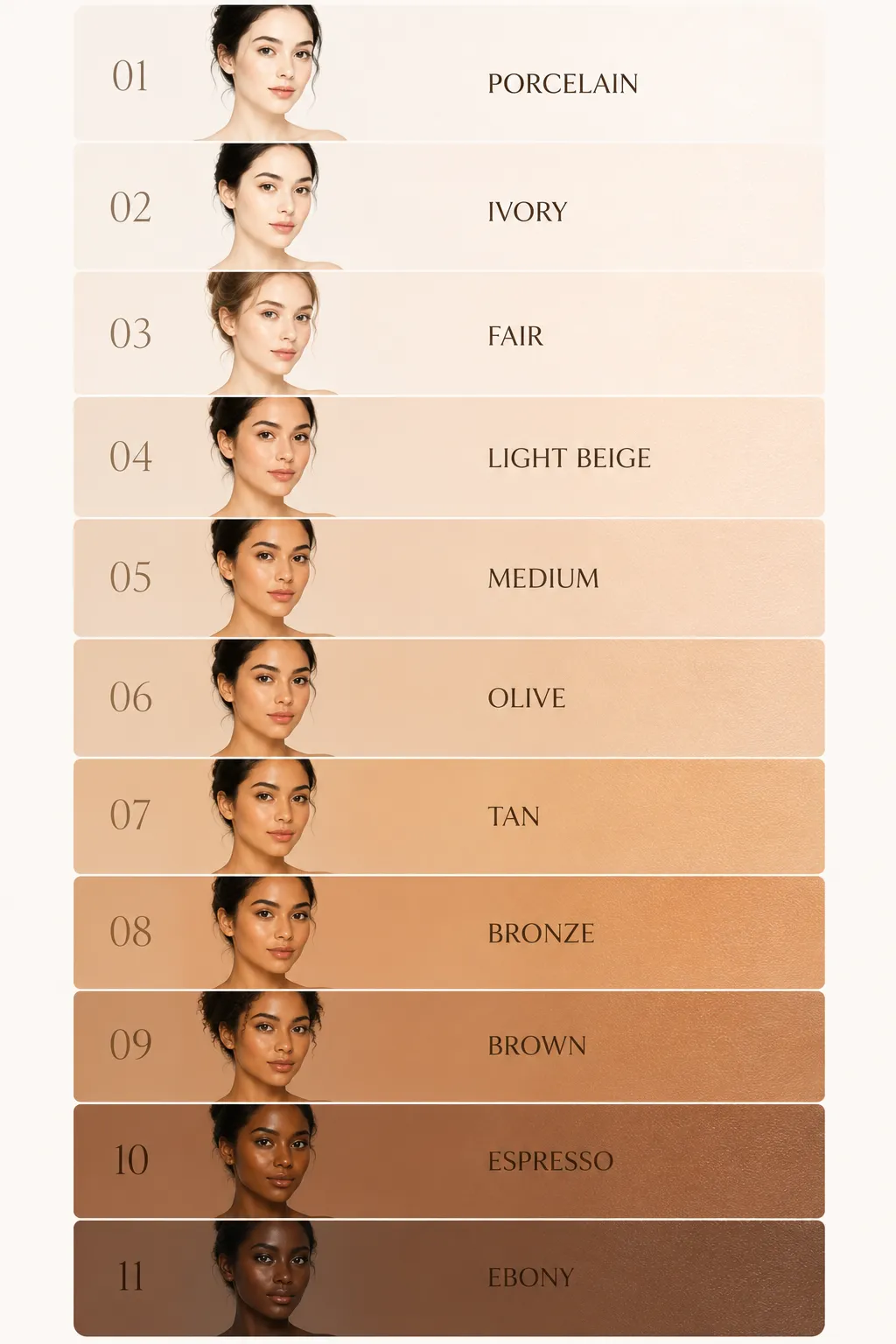
Skin Tone Names and Colors
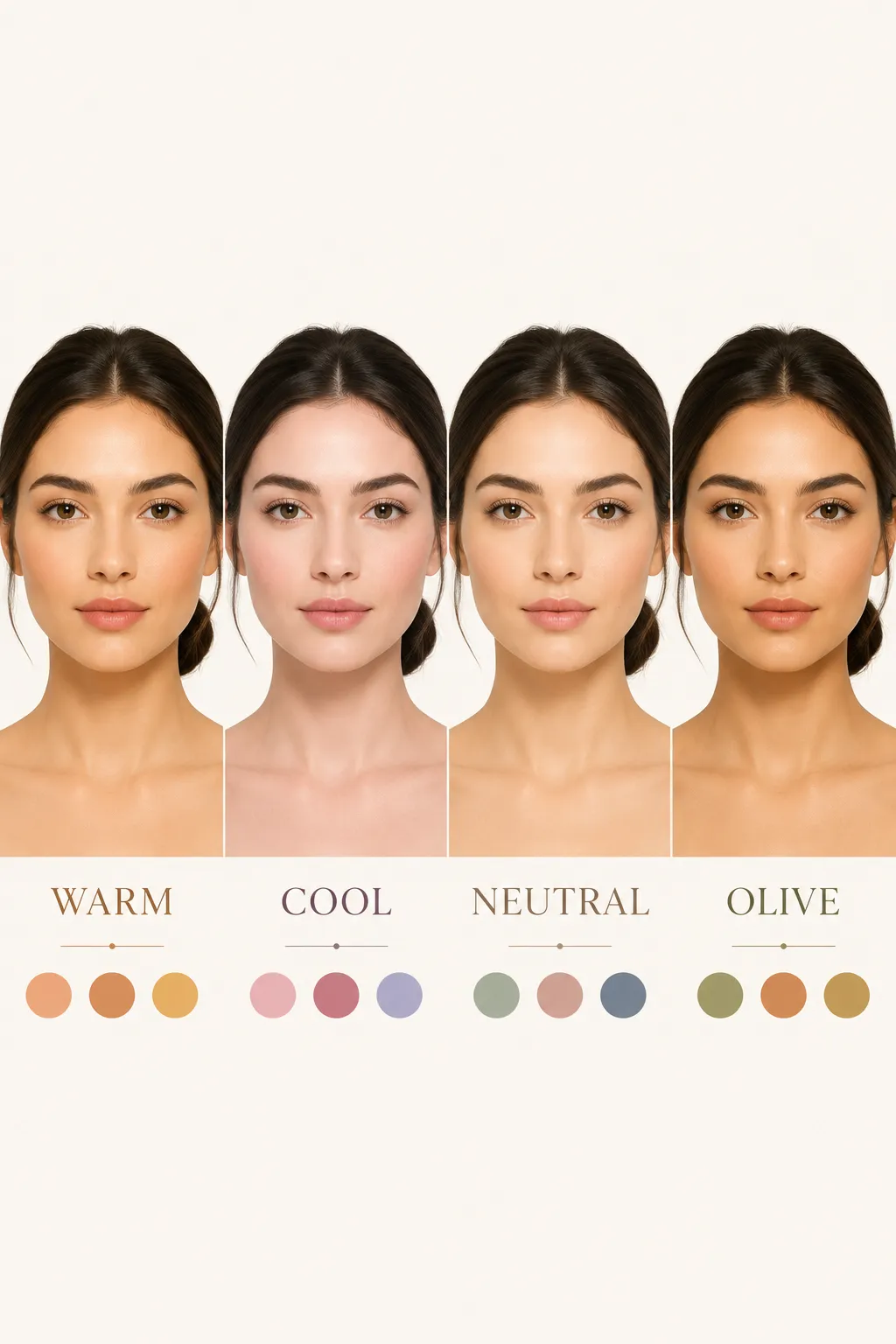
Beyond the 6 broad tone bands, skin tones are commonly described with more specific consumer-facing names. Here is how they map to colors and common undertones.
| Swatch | Name | Description | Common Undertones |
|---|---|---|---|
| Porcelain | The lightest skin tone, with a delicate, almost translucent quality. | Cool, neutral | |
| Ivory | A very light tone with a soft, creamy quality and subtle warmth. | Warm, neutral | |
| Fair | Light skin that tans minimally and burns easily in strong sun. | Warm, cool, neutral | |
| Light Beige | A light-medium tone with a soft beige base. | Warm, neutral | |
| Medium / Beige | A balanced mid-depth tone, one of the most common shades worldwide. | Warm, neutral, olive | |
| Olive | A medium tone with a distinct green-gold cast rather than pink or golden. | Olive | |
| Tan | A medium-deep tone that develops readily with sun exposure. | Warm, olive | |
| Bronze | A warm, sun-kissed medium-deep tone with golden richness. | Warm | |
| Brown | A rich, deep tone with warm or neutral golden-brown undertones. | Warm, neutral | |
| Espresso | A deep brown tone with a warm, coffee-like richness. | Warm, neutral | |
| Ebony | The deepest skin tone, often with a beautiful cool or neutral sheen. | Cool, neutral |
Skin Tone Analyzer or Skin Tone Detector? Same Tool, Two Names
People search for this kind of tool in different ways — skin tone analyzer, skin tone detector, and AI skin tone detector all describe the same job: scanning a photo and identifying your tone and undertone automatically. This page does all three. It works as an online skin tone detector you can use straight from your browser, and as a skin tone color detector that maps your result to a named shade and hex value on the chart below — no app download, account, or payment required.
Under the hood it's powered by on-device AI (MediaPipe face landmarks plus L*a*b* color-space classification), which is why it can double as an AI skin tone detector: it locates your face, samples multiple skin points, and classifies both depth and undertone in real time, entirely in your browser.
What Is Olive Skin Tone?
Olive skin tone is a distinct undertone category defined by a subtle green-gold cast rather than the clearly golden-yellow quality of a warm undertone or the pink-blue quality of a cool undertone. It typically appears at medium to medium-deep depth and reads as slightly muted or grayish compared to a purely warm complexion, which is why it doesn't fit cleanly into a simple warm-versus-cool framework — it genuinely sits in its own category.
The green cast comes from a relatively low red (a*) component alongside a moderate yellow (b*) component in the skin's underlying color — in plain terms, less pink than warm skin, with a slightly desaturated, earthy quality layered over the yellow base. This is exactly what the analyzer above checks for as a special case, rather than forcing every yellow-leaning result into the "warm" bucket.
How to tell if you have olive skin: a few reliable signs: your veins tend to look distinctly greenish rather than clearly blue or purple; both gold and silver jewelry tend to look good on you, sometimes gold slightly more so, without the strong preference typical of warm or cool undertones; you tan easily and evenly and rarely burn, even with moderate sun exposure; and in certain lighting your skin can look almost gray-green rather than pink or peachy.
Common misconceptions: olive skin is not the same as tan skin — you can have a fair-to-medium olive complexion with no sun exposure at all, since olive describes undertone, not depth. It's also not exclusive to any one ethnicity or region; olive undertones appear across a wide range of populations and skin depths.
Best colors for olive skin: deep green, teal, burgundy, warm white, bronze, and aubergine tend to be especially flattering, while pale pastels, yellow-beige, and ashy gray tend to wash olive skin out. See the personalized recommendations above for your full color, jewelry, and hair guide.
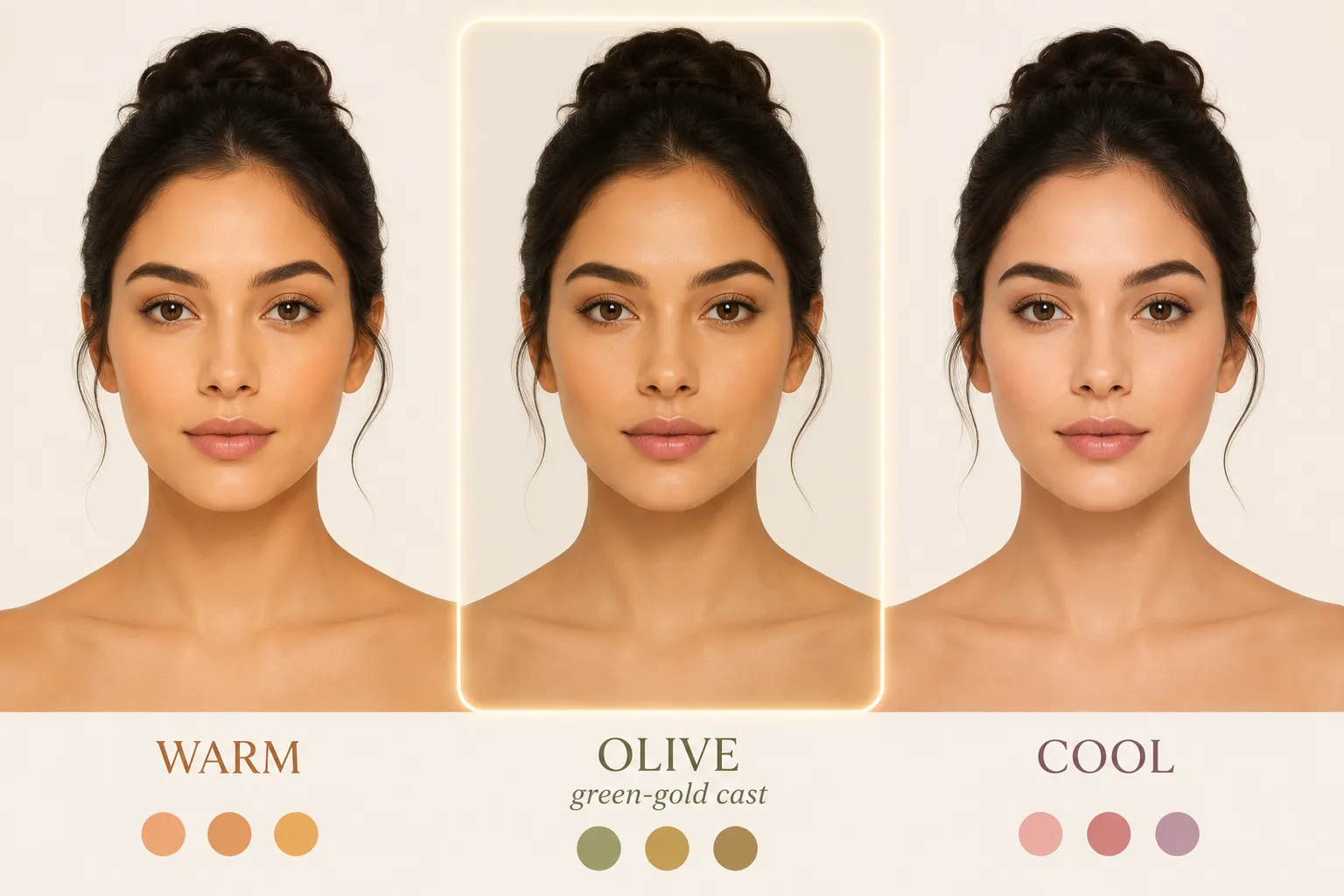
Undertone Finder: Warm, Cool, Neutral or Olive?
As an undertone finder, the tool works differently from the tone bands above. It samples color at multiple points on your face and analyzes them in L*a*b* color space — separating the red-green (a*) and yellow-blue (b*) components from the overall lightness (L*, the tone band). A positive a*/b* balance leaning yellow-red reads as warm; a balance leaning blue-pink reads as cool; a balanced mix reads as neutral; and a muted, green-gold signature reads as olive.
Skin tone is the visible depth of your complexion — how light or dark it looks, which can shift with tanning, seasons, or sun exposure. Undertone is the warm, cool, neutral, or olive cast beneath the surface, and it stays constant regardless of tan — this is the key difference the undertone finder above is built to isolate. Undertone is what actually determines which colors, jewelry, and foundation shades flatter you — two people can share the same skin tone but have completely different undertones, and vice versa. Want a deeper analysis, including your best clothing colors by season? Try the full color analysis tool. For your skin's condition — type, redness, shine, and dark circles — rather than its color, see our AI skin analysis tool.
How to Find My Skin Tone
The fastest way: 3 steps with a photo
(1) Scroll up and open the analyzer, then choose camera or upload; (2) take or select a clear, front-facing photo in natural daylight with no makeup or filters; (3) read your tone band and undertone result instantly. No account or download needed.
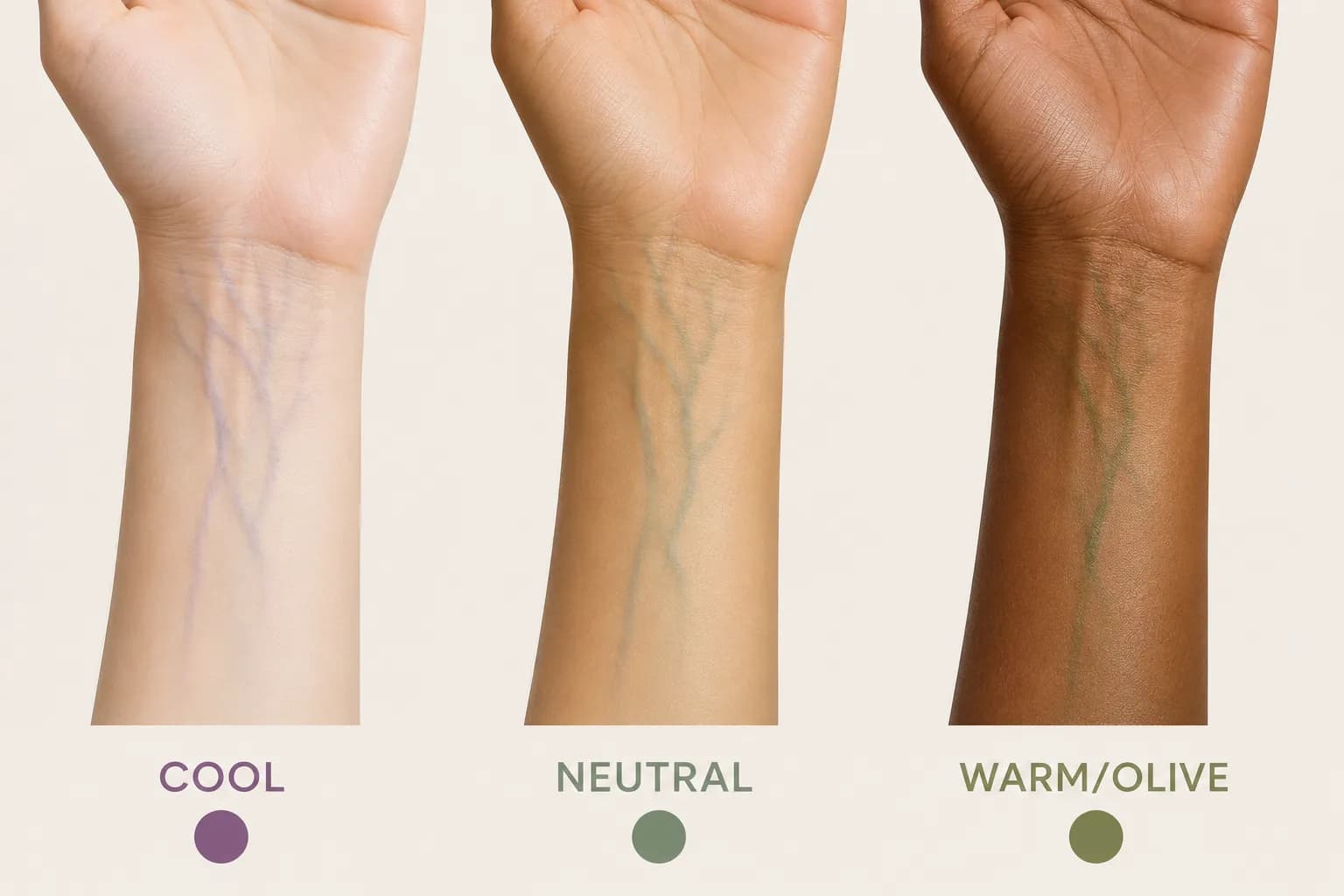
The Vein Test
Look at the veins on the inside of your wrist in natural light. Blue or purple veins usually indicate a cool undertone. Green veins usually indicate a warm or olive undertone. If you genuinely can't tell — a mix of both — you likely have a neutral undertone.
The Jewelry Test
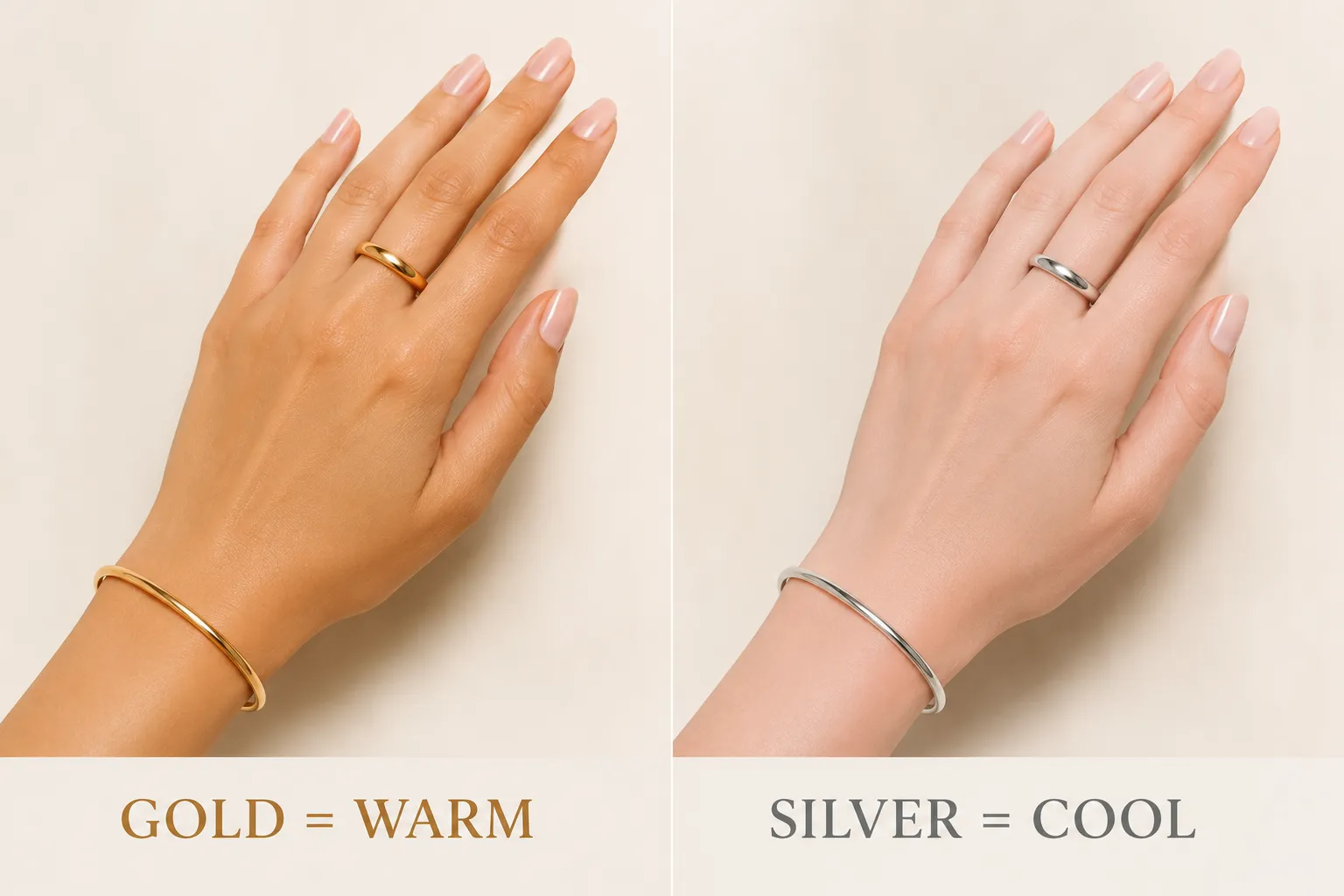
Hold a gold item and a silver item up to your skin, one at a time. If gold makes your skin look more radiant, you likely lean warm. If silver looks better, you likely lean cool. If both look equally good, you likely have a neutral or olive undertone.
The White Paper Test
Hold a plain sheet of white paper right up against your face in natural light. If your skin looks yellow or golden by comparison, you likely lean warm. If it looks pink or rosy, you likely lean cool. If it looks a mix of both, or slightly gray-green, you likely have a neutral or olive undertone.
Sun Reaction
Think about how your skin typically responds to sun exposure. Burns easily and rarely tans is common with cool or fair-warm undertones. Tans easily and rarely burns is common with warm or olive undertones. This isn't definitive on its own, but combined with the other tests above it adds useful confirmation.
Related Tools
Find your full seasonal color palette from your undertone, eyes, and hair.
Identify your face shape and get hairstyle, glasses, and makeup recommendations.
Find your eye shape and get eyeliner and glasses frame recommendations.
Run every face analysis in one place — face shape, symmetry, age, and more.
Contouring, blush, and lip placement guidance for your specific face shape.
Frequently Asked Questions
What skin tone am I?
Your skin tone is the overall depth (how light or dark) of your complexion, while your undertone is the underlying warm, cool, neutral, or olive cast beneath it. Upload a photo to the analyzer above and it will sample your cheeks, forehead, and chin to classify both instantly — or use the vein test, jewelry test, and white paper test described below if you would rather not use a photo.
What is the rarest skin tone?
There is no single "rarest" skin tone globally — skin tone distribution varies enormously by region and population. On a global scale, the most extreme ends of the depth spectrum (the very lightest "Fair" and very deepest "Deep" bands) are statistically less common than the mid-range tones, which make up the majority of the world's population.
Can skin tone change?
Yes — skin tone can shift with sun exposure (tanning), seasons, hormonal changes, and age. Your underlying undertone (warm, cool, neutral, or olive), however, is much more stable and genetically determined, so it typically stays consistent even as your depth of color changes.
Is olive a warm or cool undertone?
Olive is best treated as its own category rather than strictly warm or cool. It has a distinct green-gold cast — a muted, grayish-yellow quality that doesn't fit cleanly into either the golden-yellow warm category or the pink-blue cool category. That's why this tool flags olive as a separate result rather than forcing it into warm or cool.
How accurate is a skin tone analyzer?
An AI skin tone analyzer is a helpful, fast estimate — accuracy depends heavily on lighting. Even, natural, diffused light gives the most reliable reading; harsh shadows, colored ambient light, or strong flash can skew results. This tool flags uneven lighting when it detects it and suggests retaking the photo for a more reliable result.
Does the photo get uploaded anywhere?
No. This tool runs entirely in your browser using on-device AI (MediaPipe Face Landmarker). Your photo is never uploaded, transmitted, or stored anywhere — all analysis happens locally on your device.
What's the difference between skin tone and undertone?
Skin tone refers to the visible depth of your complexion — how light or dark it appears, which can change with tanning or season. Undertone is the underlying warm, cool, neutral, or olive cast beneath the surface, which stays constant regardless of tan or season and is what determines which colors, jewelry, and makeup shades flatter you most.
Why does my skin tone look different in different photos?
Camera white balance, ambient lighting color, and exposure all affect how skin renders in a photo — the same person can look noticeably warmer or cooler under fluorescent light versus daylight. For the most accurate reading, use a photo taken in even, natural daylight without a strong colored light source nearby.
Is there a free skin tone quiz or do I need to upload a photo?
You can analyze skin tone online free with a photo for the fastest, most objective result — just upload one above and the analyzer does the rest. If you would rather not upload a photo, the vein test, jewelry test, and white paper test below act as a manual "what is my skin tone" quiz you can run in seconds.
What colors look good on me based on my skin tone?
The best colors for your skin tone depend mainly on your undertone: warm undertones tend to suit gold, olive, coral, and warm reds; cool undertones tend to suit silver, jewel tones, and true blues and pinks; neutral and olive undertones have the most flexibility. Upload a photo above for a personalized breakdown, or try the full color analysis tool for your complete seasonal palette.
Can I find my skin tone with my phone camera?
Yes — tap "Use Camera" above the analyzer to open your device camera directly, no separate app needed. For the most accurate reading, use natural daylight, skip filters or beauty modes, and go bare-faced. The analyzer processes the frame entirely on your device; nothing is uploaded.
Disclaimer
Results from this tool are for styling inspiration and entertainment only. Accuracy depends heavily on photo lighting — even, natural light gives the most reliable result. This is not a medical, dermatological, or professional color analysis.