Written by Naeem Ullah·Facial Feature Analyst, faceshapedetector.app·Reviewed September 2026
Hooded eyes are defined by one anatomical feature: excess skin from the brow bone folds downward over the orbital rim and covers part of the upper eyelid when the eye is open. This fold — sometimes called the orbital hood or brow fat pad — sits between the brow and the lash line, reducing the visible portion of lid space where eyeshadow would normally sit and liner would normally show. Crucially, hooded eyes do have a crease — a supratarsal fold between the mobile and fixed lid — it is simply hidden from view when the eye is open. Close the eye and the crease reappears; open it and it disappears. That single distinction is what separates hooded eyes from monolid eyes, which have no crease at all, and it is also why most mainstream makeup tutorials, written for an open, almond-shaped lid, frequently produce unexpected or unflattering results when applied to hooded eyes without modification.
What Are a Hooded Eyes?
Excess skin from the brow bone folds down over the orbital rim and covers part — or all — of the mobile eyelid when the eye is open, reducing visible lid space even though a crease exists underneath.
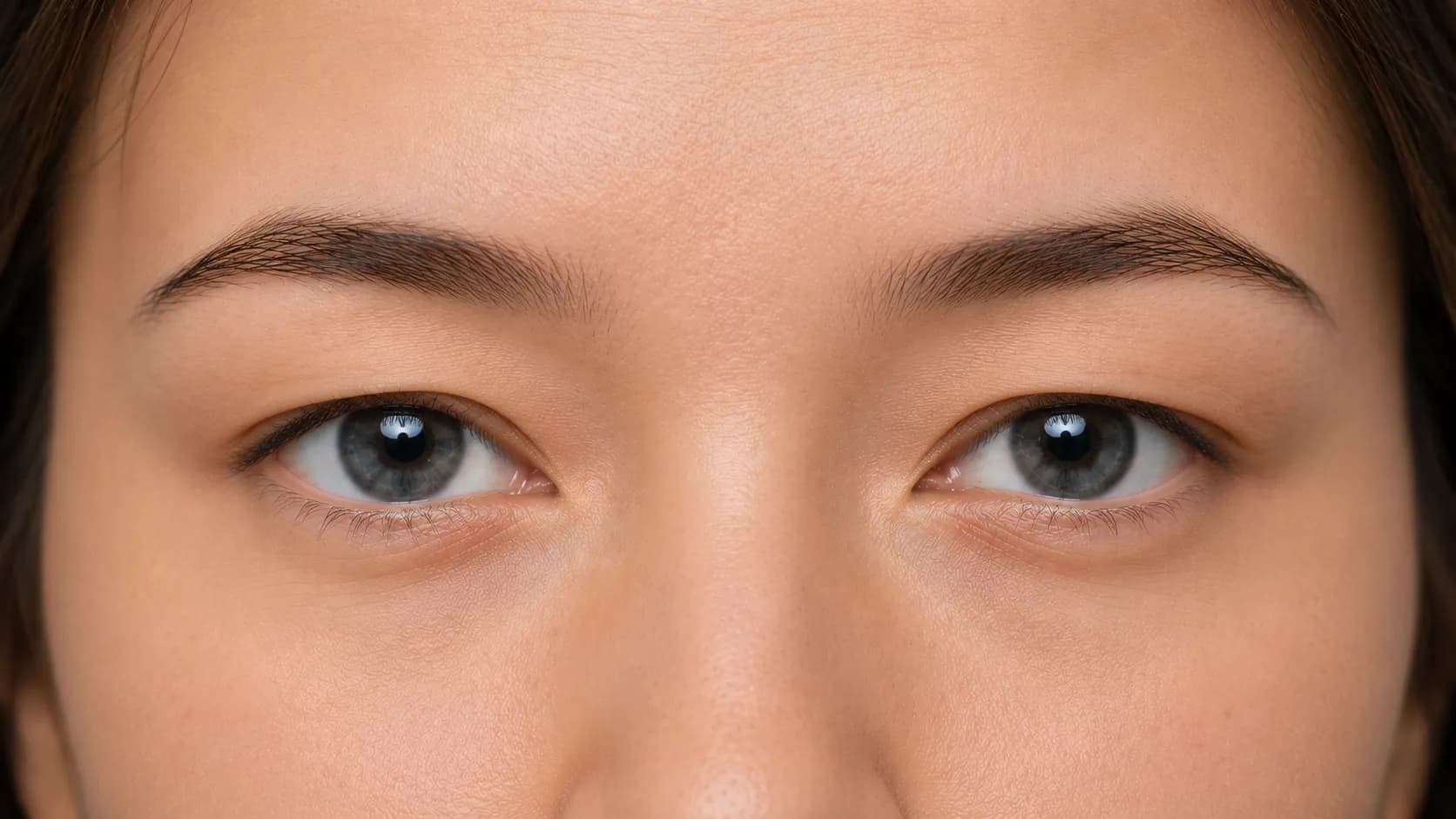
Crease visibility
Hidden when open, shows when closed
Trait type
Modifier, not a primary outline
Most confused with
Monolid Eyes
Best liner move
Tight-line the waterline
Key Characteristics of Hooded Eyes
- 1A crease exists but is hidden when the eye is open — visible only when the eye is closed
- 2The orbital hood reduces visible lid space between the lash line and crease
- 3Hooding is a modifier, not a primary shape — it can combine with almond, round, upturned, or any other outline
- 4Often becomes more pronounced with age as brow-bone skin loses elasticity
Not sure which eye shape you have?
What Causes Hooded Eyes?
Hooded eyes result from excess skin and soft tissue above the eyelid — often called the brow fat pad or orbital hood — descending over the orbital rim and partially or fully covering the mobile eyelid when the eye is open. Unlike a monolid, where the flatness comes from an epicanthal fold that runs over the inner corner and conceals the crease from birth, a hooded eye has a fully formed supratarsal crease created by the same levator-muscle attachment found in any creased eye; the hood simply sits on top of it, hiding it from view in the open-eye position while leaving it visible the moment the eye closes. This is why hooding is classified as a modifier rather than a primary shape descriptor — it can occur alongside an almond, round, upturned, or downturned outline, and the AI eye shape detector assesses lid outline and hood coverage as two independent measurements. Hooding is also distinct from deep-set eyes, where the orbital socket itself sits further back in the skull and the brow bone casts shadow from bone position rather than soft-tissue overhang — the two can combine, but a deep-set eye can have a fully open, visible crease while a hooded eye sits at completely normal orbital depth. Because the fold is soft tissue rather than bone, it is also the one trait on this list most likely to become more pronounced with age, as reduced collagen production and gravitational effects on the brow fat pad gradually increase the overhang.
How to Tell If You Have Hooded Eyes
- 1Look straight ahead into a well-lit mirror with a neutral, relaxed gaze and check whether your upper-lid crease is visible at all.
- 2If brow-bone skin folds down and covers most or all of the space between your lash line and where the crease should sit, that confirms hooding.
- 3Gently close your eye and look for a crease line on the lid — if one appears when closed but vanishes when open, that is the defining hooded pattern.
- 4If there is no crease in either the open or closed position, your eyes are monolid rather than hooded.
- 5Photograph your face head-on in even, front-facing light, since side lighting and raised eyebrows can both make hooding look more or less pronounced than it is at rest.
Analyst's Pro Tip
Apply liner and shadow with your eye open and looking straight into the mirror, never with the eye closed or tilted down — the position you see while applying is the position that will actually show, so what looks too high with the eye shut will look exactly right once it opens.
Hooded Eyes vs Monolid Eyes — What's the Difference?
Hooded eyes have a crease that is hidden when the eye is open — close your eye and it reappears — while monolid eyes have no crease at all, just a smooth, continuous plane from lash line to brow. If you can see a crease line only when the eye is closed, that is hooded; if there is no crease in either position, that is monolid.
Not sure which applies to you? Use our free AI eye shape detector for an instant result. You can also read the Monolid Eyes guide directly.
Makeup and Glasses for Hooded Eyes
Tight-line the upper waterline so definition stays visible even when the hood covers the lid, keep any wing horizontal rather than angled upward since upward wings disappear under the fold, and apply crease shadow above your natural crease line — checked with the eye open, not closed — using a cut-crease technique for shadow that stays visible all day. Prime thoroughly first; the hood traps warmth and oil that break down shadow quickly.
Cat-eye frames and thin rimless or semi-rimless styles work best, since they add minimal visual weight above an already-prominent orbital area and can create an optical lift. Avoid heavy top-bar browline frames, which add mass directly above the eye and emphasize the hood rather than softening it.
Common Mistakes to Avoid
Placing eyeshadow directly in the natural crease line
The crease is exactly the area the hood covers when the eye opens, so shadow applied there disappears from view entirely — it needs to sit above the natural crease instead.
Using an upward-angled winged liner
An upswept wing that works on an open almond eye gets hidden under the overhanging skin on a hooded eye; a wing that stays horizontal and points outward remains visible when looking forward.
Skipping primer before eyeshadow
The hood presses against the lid and traps warmth and oil, which breaks down shadow and increases transfer onto the brow skin far faster than on an open lid — primer is close to mandatory here.
Choosing heavy top-bar browline glasses frames
Thick upper rims add visual mass directly above an already-prominent orbital area, emphasizing the hood rather than the lifting effect a cat-eye or rimless frame provides.
Public Figures Often Cited as Having Hooded Eyes
Blake Lively, Jennifer Lawrence, Brad Pitt are commonly cited in beauty and style coverage as examples of this eye shape. As with any public-facing trait assessment, these are popular reference points rather than clinical classifications.
Hooded Eyes — Frequently Asked Questions
What are hooded eyes?
Hooded eyes are eyes where a fold of skin from the brow bone droops down over the orbital rim and covers part — or all — of the mobile eyelid when the eye is open. This reduces the visible lid space between the lash line and crease. Crucially, hooded eyes do have a crease — it is simply hidden when the eye is open, which distinguishes hooded eyes from monolid eyes, which have no crease at all.
How do I know if I have hooded eyes?
Look straight ahead into a well-lit mirror. If skin from your brow bone folds down and touches or covers your upper lash line — or if your crease is invisible when your eye is open — you have hooded eyes. A secondary check: close your eye and look for the crease in your lid. If the crease exists when closed but disappears when open, that is the classic hooded pattern.
What is the difference between hooded eyes and droopy eyelids?
Hooded eyes are a natural anatomical variation caused by a prominent brow bone or excess skin in the upper orbital area — they are structurally normal and do not impair vision. Droopy eyelids (ptosis) is a medical condition where the levator muscle that lifts the eyelid is weakened or damaged, causing the lid itself to droop over the iris and potentially block vision. Hooded eyes are cosmetic; ptosis may require medical treatment, so consult a doctor if your eyelid itself — not just brow skin — seems to be covering your iris.
What eyeliner is best for hooded eyes?
Tight-lining the upper waterline (liner right at the lash root stays visible even when the hood covers the lid), keeping any wing horizontal rather than angled upward, and stamping rather than swiping to reduce transfer are the most reliable techniques. Gel liner or long-wear felt-tip formulas hold up better on hooded lids than standard pencils.
How do you apply eyeshadow to hooded eyes?
Apply eyeshadow higher than feels natural when the eye is closed, so it stays visible when open. Place darker crease shades above the natural crease line, not in it, and use a cut-crease technique for an edge that remains visible. Always prime first to prevent creasing and transfer onto the brow-bone skin.
Are hooded eyes attractive?
Hooded eyes are extremely common and are widely associated with a distinctive, sultry look in Western beauty culture. Many of the most photographed faces in the world — including Blake Lively, Jennifer Lawrence, and Brad Pitt — have hooded eyes. They are neither rare nor unflattering; they simply require different makeup techniques than open-lid shapes.
Can hooded eyes worsen with age?
Yes. As skin loses elasticity, the excess fold over the orbital rim can become more pronounced — eyes only slightly hooded in your twenties may become significantly more hooded by your forties or fifties. Brow-bone highlighter above the arch, upward-brushed brows, and an upward-extended cut-crease all help counteract the visual effect; blepharoplasty is the surgical option if excess skin becomes a functional concern.
Related Eye Shapes
- →Monolid Eyes — No visible crease — a smooth, single-plane lid
- →Deep-Set Eyes — Eyes recede into the orbital socket
- →Almond Eyes — The most common eye shape — and the makeup baseline
Find Out If You Have a
Hooded Eyes
Upload a photo to our free AI eye shape detector and get an instant result.
Detect My Eye Shape — FreeNo sign-up · 100% private · Works on all devices