How to Find Your
Foundation Shade
Vein, Jewelry & White Paper Tests You Can Do at Home
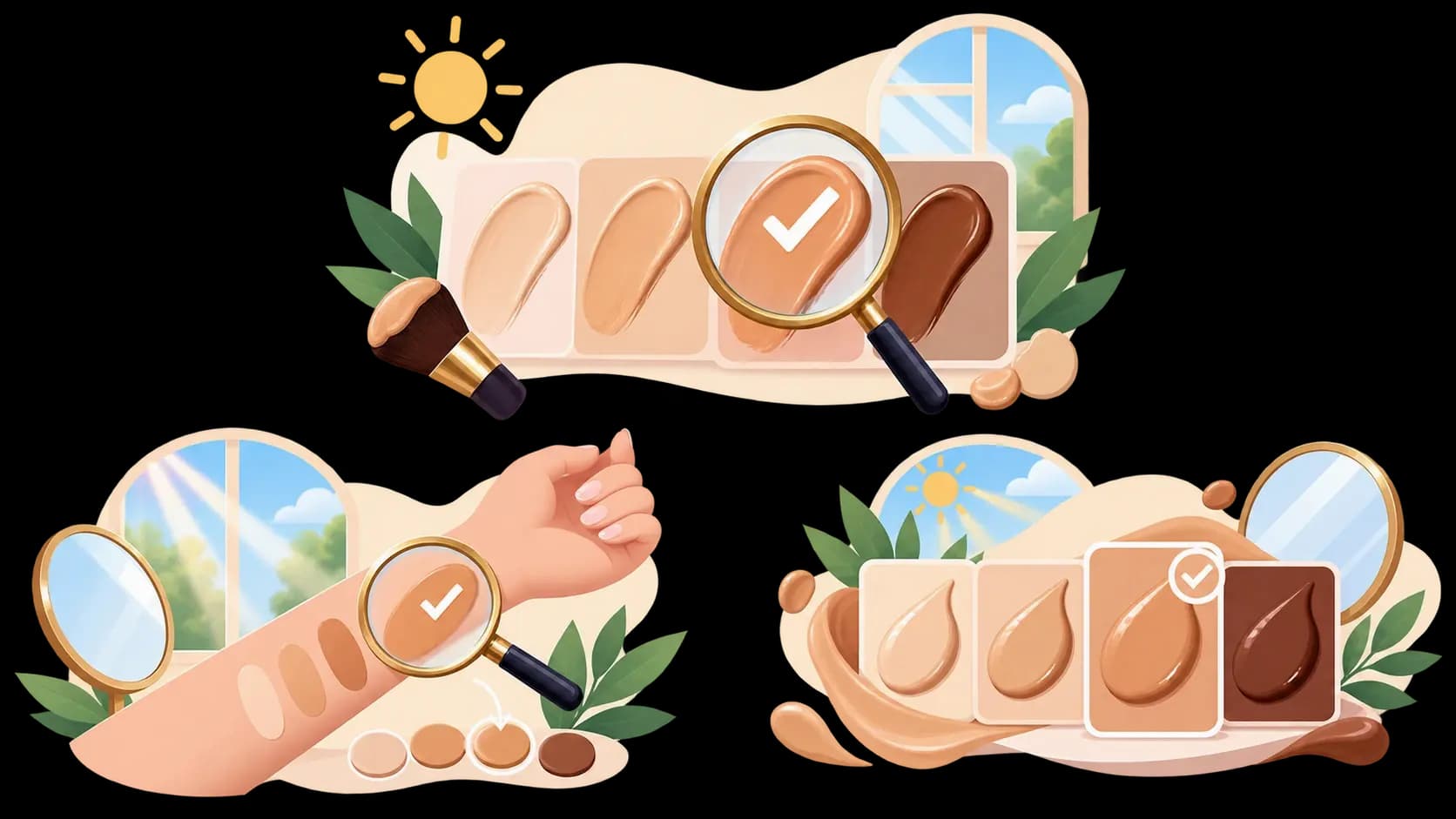
A mismatched foundation shade is one of the most common — and most avoidable — makeup mistakes. It usually isn't a case of a bad product; it's a case of testing the wrong spot, under the wrong lighting, or guessing at undertone instead of checking it. Store lighting, camera white balance, and even your own bathroom bulbs can all make the same shade look noticeably warmer, cooler, lighter, or darker than it actually is.
This guide walks through the undertone tests you can run yourself at home, an honest comparison of in-store versus online shade matching, the mistakes that trip up most people, and where a photo-based shade finder fits into the process. Or skip the guesswork entirely and use our free photo-based foundation shade finder to get a starting shortlist in seconds.
Understand Your Undertone First
Skin tone and undertone are two different things, and confusing them is the single biggest reason foundation shades look wrong. Skin tone is the visible depth of your complexion — how light or dark it is, which shifts with tanning and season. Undertone is the warm, cool, neutral, or olive cast underneath the surface, and it stays constant regardless of tan. Two people can share the same depth of skin tone but have completely different undertones, which is exactly why the same shade number from different brands can look right on one person and slightly off on another.
Getting undertone right matters more than getting depth exactly right. A foundation that's a shade too light or dark can be blended and adjusted with bronzer or concealer; a foundation with the wrong undertone tends to look ashy, gray, or orange no matter how well it's blended.
The Vein, Jewelry & White Paper Tests
These three tests are quick, don't require any special equipment, and are worth running together rather than relying on just one — if two or three point the same direction, you can trust the result with reasonable confidence.
- 1The vein test — look at the veins on the inside of your wrist in natural daylight. Blue or purple veins usually indicate a cool undertone; green veins usually indicate a warm or olive undertone. If you genuinely can't tell, you likely lean neutral
- 2The jewelry test — hold a gold item and a silver item up to your bare skin, one at a time, in good light. If gold makes your skin look more radiant, you likely lean warm. If silver looks better, you likely lean cool. If both look equally good, you likely lean neutral or olive
- 3The white paper test — hold a plain sheet of white paper right against your bare face in natural light. Skin that looks yellow or golden by comparison suggests warm; skin that looks pink or rosy suggests cool; a mix of both, or a slightly gray-green cast, suggests neutral or olive
- 4Cross-check with sun reaction — skin that tans easily and rarely burns is common with warm or olive undertones; skin that burns easily and tans minimally is common with cool undertones. This isn't definitive alone, but adds useful confirmation alongside the tests above
Olive deserves a specific mention: it's a distinct undertone with a green-gold cast that doesn't sit cleanly in either the warm or cool camp. If your veins read greenish, both metals look about equally good, and you tan easily and evenly, olive is worth trying as its own category rather than forcing a warm or cool label. Our skin tone analyzer covers olive undertone in more depth, including how it's distinguished from tanned warm skin.
Testing In-Store vs. At Home
In-store testing has one real advantage: you get to swatch a physical product on your actual skin, in person, and step outside to check it in daylight before buying. That remains the single most reliable way to confirm a match. The tradeoff is that store lighting is very often warmer or cooler than daylight, not every retailer carries every brand or shade range, and testing multiple shades on your face at once can get messy and hard to compare cleanly.
At-home methods — the undertone self-tests above, ordering shade-matched samples, or using a photo-based shade finder — are faster and more convenient, and they're genuinely useful for narrowing down which 2 to 3 shades are worth physically testing. What they can't fully replace is seeing a real product against your real skin in person. The most practical approach for most people is to use at-home methods to build a shortlist, then confirm with a physical swatch before committing to a full-size purchase.
Common Shade-Matching Mistakes
- 1Testing on the back of your hand instead of the jawline — hand skin is very often a different depth than face skin. Swatch along the jawline instead, where a correct shade should visually disappear into your neck
- 2Testing under artificial or single-direction lighting — fluorescent bulbs, warm indoor lighting, and even a bathroom vanity light can all shift how a shade reads. Step near a window or outside before judging a match whenever you can
- 3Not accounting for oxidation — many liquid and cream foundations shift darker or more orange within 10 to 30 minutes of air exposure. Wait at least 15 to 20 minutes before judging whether a swatch is actually a match
- 4Ignoring the neck-to-face transition — a shade that matches your face perfectly can still look mismatched if it stops sharply at the jawline instead of blending down into the neck
- 5Assuming one shade works year-round — skin tone shifts with sun exposure and season even when undertone stays stable — many people keep a slightly lighter winter shade and a slightly deeper summer shade rather than one fixed shade
Using a Photo-Based Shade Finder
A photo-based shade finder samples your skin color directly from a selfie — reading your cheeks, forehead, and chin — and classifies your tone band and undertone in seconds, without you needing to run the manual tests above one by one. It's a fast way to get a starting shortlist, especially useful before shopping online or before a store visit.
It's worth being honest about the limits, though: accuracy depends heavily on your photo's lighting and your screen's color calibration, same as any digital shade-matching method. Treat the result as a shortlist to physically test, not a guaranteed final answer — always confirm with a real sample against your jawline in natural daylight before committing to a full-size purchase.
Try Our Free Foundation Shade Finder
Upload a clear, front-facing photo and our foundation shade finder reads your tone band and undertone using the same on-device AI landmark detection that powers the rest of this site — no upload to a server, no sign-up. For a fuller skin tone and undertone breakdown with color, jewelry, and hair styling guidance, see the skin tone analyzer, or get your complete seasonal color palette with color analysis. If shade matching looks off because of redness, shine, or dark circles rather than undertone, try AI skin analysis to see what's actually going on with your skin.
How We Approached This Guide
This guide covers widely established, testable-by-anyone shade-matching methods — the vein, jewelry, and white paper tests, and the practical tradeoffs of in-store versus at-home testing — in our own words, not attributed to any named expert or study. Where this guide references undertone classification (warm, cool, neutral, olive), it uses the same taxonomy and CIELAB-based color science that powers our skin tone analyzer and foundation shade finder, for consistency across the site.
Frequently Asked Questions
What is the easiest way to find my foundation shade at home?
How do I know if I have a warm, cool, or neutral undertone?
Should I test foundation on my hand or my face?
Why does my foundation look different at home than it did in the store?
What is foundation oxidation and how does it affect shade matching?
Is a photo-based foundation shade finder accurate?
Can my foundation shade change with the seasons?
What if I am between two foundation shades?
Further Reading
Face Shape Detector Editorial
Beauty & Skin Tone Editorial Team
Founder of faceshapedetector.app · 4+ years in facial proportion research · 200,000+ monthly readers
This guide was researched and written by the Face Shape Detector editorial team using the same CIELAB-based undertone classification methodology that powers our skin tone analyzer and foundation shade finder. Every method described here — the vein, jewelry, and white paper tests — is something you can verify yourself at home. We don't claim professional makeup artistry credentials; our expertise is in translating measurement-based color science into clear, testable guidance.